
John Mack Interview
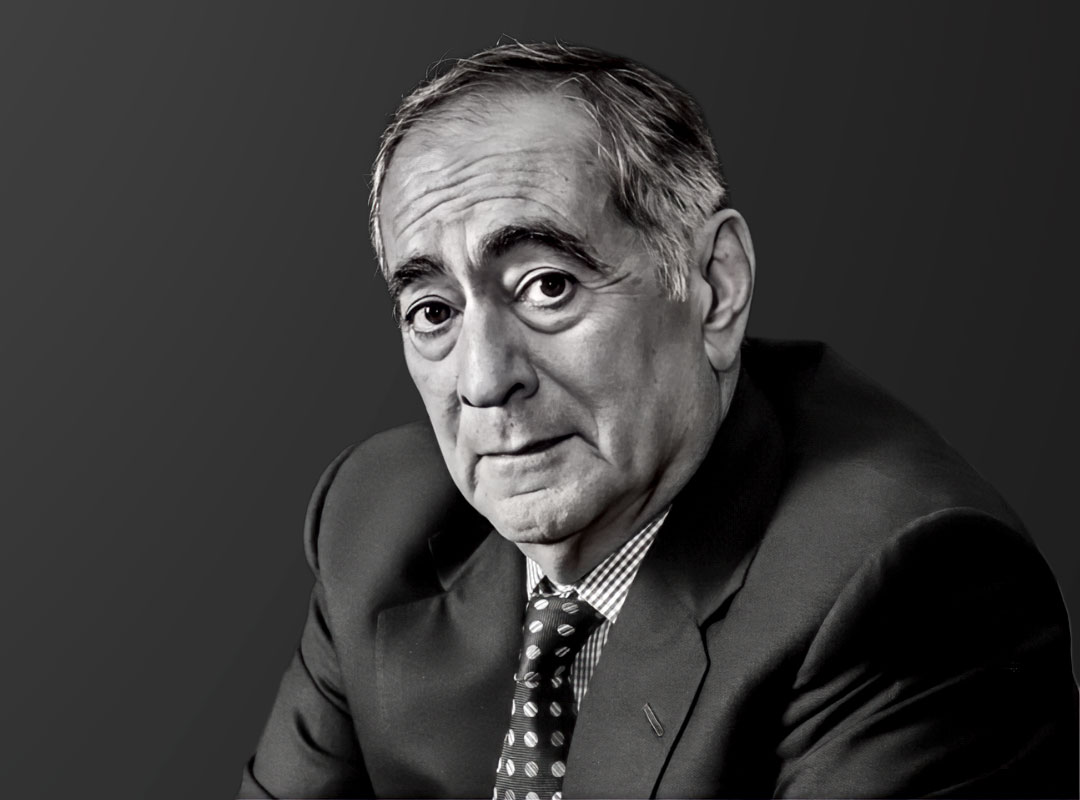
Carolyn and I have appreciated the work of psychiatrist, Pulitzer Prize-winning author, and Harvard Medical School professor John Mack, who is best remembered for his controversial investigations into people reporting alien encounter experiences. Mack served as chairman of its Department of Psychiatry at Harvard Medical School, and he won the 1977 Pulitzer Prize for his biography of T. E. Lawrence, A Prince of Our Disorder, and made important contributions to child and adolescent psychiatry, suicide prevention, and the psychology of religion.
Through books such as Abduction: Human Encounters with Aliens and Passport to the Cosmos, he argued that these experiences deserved serious scientific and psychological study and might represent a profound mystery with transformative spiritual implications, a stance that sparked intense debate and a well-publicized inquiry by Harvard. Beyond psychiatry and UFO research, Mack was also an advocate for nuclear disarmament and explored the psychological roots of war and humanity's relationship with the Earth.
John Edward Mack was born in 1929 in New York City to Jewish parents. His father was an educator and businessman who founded the Bellmore Institute, a school dedicated to helping children with learning and developmental difficulties. He exposed John to ideas about psychology, education, and human potential from an early age. His mother helped provide the supportive and intellectually engaged family environment in which John was raised.
Mack was an intelligent, curious, and highly sensitive child with a vivid imagination and a deep concern for the suffering of others. He grew up in a loving, intellectually stimulating environment and developed an early fascination with human nature, morality, and the larger mysteries of existence. Friends and family remembered him as thoughtful, compassionate, and idealistic — qualities that would remain central to his character throughout his life. Even as a boy, he displayed an independent spirit and a willingness to question conventional assumptions, traits that later led him to explore controversial subjects with unusual openness and courage.
During his teenage years, Mack came of age against the backdrop of World War II and its aftermath. Deeply affected by news of the Holocaust and the destructive power of modern warfare, he developed a lifelong interest in the causes of violence, the psychology of conflict, and humanity’s capacity for both destruction and compassion. He excelled academically and cultivated a broad interest in literature, history, and human behavior. In 1947, at the age of seventeen, Mack entered Oberlin College, where his intellectual horizons expanded and where he began laying the foundations for the medical and psychiatric career that would define his later life.
Mack completed his undergraduate studies at Oberlin College, graduated in 1951, and then entered Harvard Medical School. During these years, he immersed himself in medicine and developed a growing interest in psychiatry and the psychological dimensions of human experience. He earned his M.D. degree in 1955, marking the beginning of his medical career.
During the late 1950s and early 1960s, Mack completed his medical internship and psychiatric training, serving at institutions such as Massachusetts General Hospital and the Massachusetts Mental Health Center. He also spent time in England, where he trained at the renowned Tavistock Clinic and was influenced by psychoanalytic and humanistic approaches to psychiatry. In 1964, Mack joined the faculty of Harvard Medical School. By the mid-1960s, he had established himself as a promising young psychiatrist and had begun developing the compassionate, broad-minded approach that would characterize his later work.
During the late 1960s, Mack founded the psychiatry department at Cambridge Hospital, where he developed innovative programs for children, adolescents, and families. Mack developed a particular interest in child and adolescent psychiatry and began studying the psychological effects of loss, trauma, and violence. The social upheavals of the 1960s, including the civil rights movement and the Vietnam War, deeply influenced him and strengthened his commitment to peace, social justice, and understanding the roots of human aggression.
Mack emerged as one of the leading figures in child and adolescent psychiatry in the early 1970s. He became a full professor at Harvard Medical School in 1972. Around this time, Mack also pursued his deep interest in the life of archaeologist and adventurer T. E. Lawrence, conducting extensive research for what would become his acclaimed biography. In 1976, Mack achieved national prominence with the publication of A Prince of Our Disorder: The Life of T. E. Lawrence. The book was widely praised and earned him the Pulitzer Prize for Biography in 1977.
During this period, Mack expanded his work in child and adolescent psychiatry, family therapy, and the study of trauma and loss. Increasingly concerned with the threat of nuclear war and global violence, Mack began exploring the psychological roots of conflict and became involved in international peace efforts.
Mack served as chairman of the Department of Psychiatry at Harvard Medical School from 1977 to 2004. During these years, he became increasingly active in the international peace movement and devoted much of his attention to understanding the psychological and spiritual dimensions of war and nuclear weapons. He founded the Center for Psychology and Social Change, an organization dedicated to exploring the psychological roots of war, ecological crisis, and social transformation, in 1983, and worked closely with physicians and scholars concerned about the dangers of nuclear conflict.
In 1985, Mack published Vivienne: The Life and Suicide of an Adolescent Girl, an influential study of adolescent suicide that reflected his deep compassion for young people and their families. Throughout the 1980s, he traveled extensively, participated in dialogues with political and spiritual leaders around the world, and broadened his perspective beyond conventional psychiatry, increasingly exploring the connections between consciousness, spirituality, and humanity’s relationship with the Earth.
Mack embraced a broadly spiritual and humanistic worldview that evolved far beyond the boundaries of conventional psychiatry. Although raised in a Jewish family, he did not adhere strongly to any single religious tradition. Instead, he drew inspiration from psychology, mysticism, indigenous wisdom, Eastern philosophies, and the experiences of people who reported encounters with nonordinary realities. Mack came to believe that consciousness could not be fully explained by materialist science and that extraordinary experiences — whether mystical states, near-death experiences, or alien encounters — might reveal dimensions of reality that challenge our ordinary assumptions.
He saw humanity and the Earth as profoundly interconnected and regarded the ecological crisis as, at its core, a spiritual crisis arising from the illusion of separateness. Throughout his life, Mack emphasized compassion, humility, and openness to mystery. Rather than claiming to possess definitive answers, he encouraged people to approach the unknown with curiosity and wonder, believing that a deeper awareness of our interconnectedness could foster both personal transformation and global healing.
During the early 1990s, Mack entered the most controversial and widely recognized phase of his career. In 1990, after meeting several individuals who reported alien encounter experiences, he began conducting extensive interviews and concluded that these accounts deserved serious scientific and psychological attention. An alien encounter is an extraordinary experience in which a person reports direct contact with apparently nonhuman intelligences, often involving missing time, unusual perceptions, profound psychological or spiritual effects, and memories that challenge conventional understandings of reality.
This research culminated in the publication of Mack’s groundbreaking book Abduction: Human Encounters with Aliens in 1994, which brought him international fame and controversy. According to Mack, his study of the alien abduction phenomenon led him to conclude that human consciousness and reality are far more mysterious, interconnected, and multidimensional than materialist assumptions would suggest.
In response to the attention generated by his work, Harvard University initiated an unprecedented inquiry into Mack's clinical methods and professional conduct in 1994. Some colleagues questioned his methods and worried that his openness to extraordinary experiences might undermine scientific standards. Never before had a tenured Harvard professor been subjected to such a review solely because of the subject matter of his research.
Throughout this period, Mack maintained that he was not claiming extraterrestrials were literally visiting Earth, but rather that the experiences pointed to profound mysteries concerning consciousness and reality. Many prominent scholars and civil liberties advocates rallied to his defense, arguing that academic freedom itself was at stake. After more than a year of investigation, Harvard concluded the investigation without imposing any sanctions, affirming his academic freedom and allowing him to continue his work and to pursue controversial lines of inquiry.
Reflecting on the ordeal, Mack later remarked that the experience had taught him humility and strengthened his conviction that scientists and scholars should remain open to mysteries that challenge prevailing paradigms. The episode became a landmark case in the history of academic freedom and remains one of the most remarkable anecdotes associated with Mack’s life. This episode bore striking parallels to the earlier controversy surrounding our friend Timothy Leary. In the early 1960s, Leary and Richard Alpert (Ram Dass) became controversial figures at Harvard because of their research with psychedelics and their challenges to prevailing academic norms.
Both Mack and Leary found themselves exploring subjects considered taboo by the scientific establishment, and both faced institutional resistance from Harvard. However, whereas Leary and Alpert were ultimately dismissed from the university in 1963 for issues involving research practices in psychedelic experiments, Mack retained his position and emerged from the investigation with his academic standing intact. In both cases, Harvard became the stage for larger cultural debates about the boundaries of acceptable inquiry and the willingness of academia to engage with experiences and ideas that challenge prevailing paradigms.
During the late 1990s, Mack increasingly broadened his investigations beyond alien encounter experiences to encompass ecology, spirituality, and humanity's relationship with the living Earth. In 1999, he published Passport to the Cosmos, in which he argued that extraordinary experiences could have transformative effects and might challenge prevailing assumptions about consciousness and reality. During these years, Mack traveled widely, lecturing internationally and engaging with indigenous peoples, spiritual traditions, and environmental activists.
Around this time, Mack became increasingly interested in the phenomenon of children who reported past-life memories and in broader questions concerning the spiritual dimensions of human experience. Although his UFO-related work remained controversial, he had by this time become an influential figure in transpersonal psychology and consciousness studies. By 2003, while continuing to teach at Harvard Medical School, Mack had evolved from a conventional psychiatrist into a public intellectual concerned with the psychological, ecological, and spiritual crises facing humanity, emphasizing the need for a more holistic and interconnected worldview.
In the final year of his life, Mack remained active as a teacher, lecturer, and advocate for a more expansive understanding of consciousness and humanity's relationship with the Earth. He continued speaking internationally and working through the Center for Psychology and Social Change, emphasizing peace, ecological awareness, and the transformative potential of extraordinary experiences. In 2004, while visiting London to deliver a lecture sponsored by the T. E. Lawrence Society, Mack was struck by a drunk driver while crossing the street and died just a few days before his seventy-fifth birthday. His sudden death shocked colleagues, friends, and admirers around the world.
Mack left behind a multifaceted legacy as a pioneering psychiatrist, Pulitzer Prize-winning biographer, humanitarian, and explorer of the frontiers of consciousness. He helped establish child and adolescent psychiatry as a major field, chaired the Department of Psychiatry at Harvard Medical School for more than two decades, and brought greater attention to the psychological roots of violence, war, and humanity's relationship with the Earth. Mack is perhaps best remembered for his courageous and controversial investigations into alien encounter experiences, which challenged conventional assumptions about the nature of reality and consciousness.
Although his conclusions remain debated, his insistence that extraordinary experiences be approached with empathy, intellectual rigor, and openness helped legitimize the study of anomalous phenomena within transpersonal psychology and consciousness studies. More broadly, Mack's life embodied a rare willingness to follow evidence and experience wherever they seemed to lead, even at considerable personal and professional risk. His enduring message was that humanity's greatest challenges — violence, ecological destruction, and spiritual alienation — require not only technological solutions, but a profound transformation in consciousness and a renewed sense of interconnectedness with one another and with the living Earth.
Like psychologist William James before him, Mack believed that the proper response to extraordinary human experiences was neither credulity nor dismissal, but compassionate inquiry and intellectual humility.
In 1994, I interviewed John for my book Conversations on the Edge of the Apocalypse, and found him to be an extremely thoughtful and thought-provoking individual. His calming voice and gentle manner allowed me to see why he was able to gain the trust of so many traumatized people, and the research results that he shared with me deeply inspired my imagination. Here are some excerpts from our conversation:
David: What do you think happens to consciousness after death?
John: The honest answer is, of course, I don’t know. There are various reasons to believe that there is some continuation of consciousness after death from research that’s been done on near-death experiences, and from certain people who, seemingly, have the capacity to enter into that realm and return — to live in both the realm where spirits reside and this realm, and report upon it. I myself am involved in research that has to do with a colleague and friend who died a year and a half ago. She has been communicating with her husband, friends and patients, in ways that leave, in my mind, little doubt it is she. In other words, there’s information being communicated that only she had.
Then there’s a whole body of research, which I’ve been brought in connection with, like the work of Frederic Myers. He talks about the continuation of consciousness after death, and actually did the rather classic experiment in which he communicated from the other side. There are books about this, recording this experiment, where he gave information to four different people, none of which made sense by itself. But when they put the pieces of it together, it was an intelligible communication. So that was an experiment from the other side that has become kind of a classic. Then there’s all the work on spiritism. It’s not proof, but there does seem to be something to it. Then there’s the work on reincarnation, such as Ian Stevenson’s research, work that’s been done with people who report past-life experiences.
David: What is your perspective on the concept of God?
John: The word “God” has become the shortcut term for what has historically been applied to the overarching or the ultimate creative principal in the universe, that is sometimes experienced in human-like terms — because I think that our psyche can grasp things if we anthropomorphize them — but, in its essence, is mysterious, luminous, numinous, and overwhelming in its sense of presence when one is open to it.
The problem is its all concept now, mostly, because the actual experience of the divine has been pretty well eradicated from the Western psyche by what Rilke called “daily parrying,” so that, as he put it, the senses by which we can know the spirit world have atrophied. So you can only know it experientially, and people that know it experientially are not very good at describing it in a way that’s going to create the experience for somebody else. Therefore, somebody who hasn’t had the experience, or whose senses aren’t open, will say, ‘Well, you haven’t convinced me, because I haven’t had the experience.’ So that’s usually where the conversation ends.