
Wavy Gravy Profile
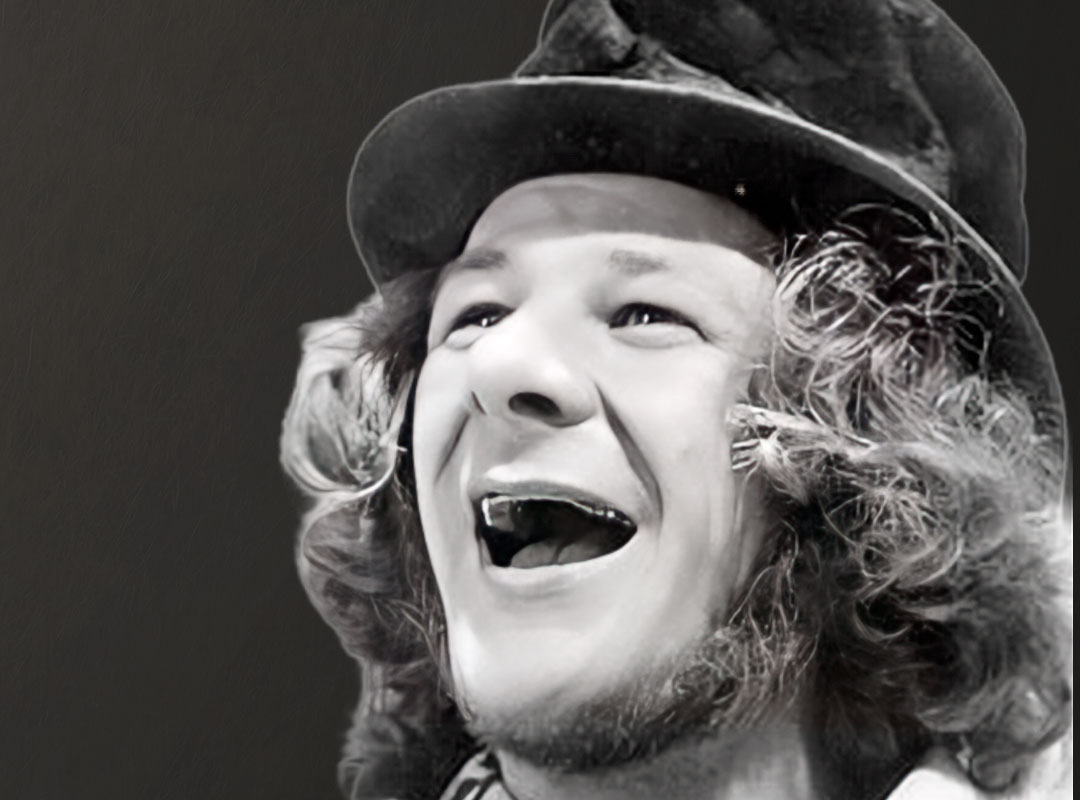
Carolyn and I have appreciated the work of Beat poet, comedian, performer, peace activist, counterculture icon, and beloved “holy fool” Wavy Gravy, who has been a longtime advocate for compassionate social action. He is best known for serving as the “clown prince” and peacekeeper of the 1969 Woodstock Festival, where his Hog Farm Commune helped provide free food, medical assistance, and nonviolent security.
Wavy later co-founded the international humanitarian organization Seva Foundation (with Ram Dass and others), which has helped restore sight to millions of people in underserved communities, and founded Camp Winnarainbow, a circus and performing-arts camp dedicated to creativity, cooperation, and social responsibility. Across more than six decades, Wavy has transformed the playful, communal ideals of the 1960s counterculture into a remarkably enduring life of service, humor, peace activism, and humanitarian work.
Wavy Gravy was born Hugh Nanton Romney Jr. in 1936, in East Greenbush, New York. His father was an architect and engineer whose work took the family to different parts of the United States and, for a period, took him to Venezuela, where he worked on architectural projects. His mother primarily managed the household and raised Hugh and his siblings; she also had a strong interest in the arts and encouraged creativity in the family.
As a child, Romney was imaginative, mischievous, humorous, and naturally drawn to entertaining others. He has described himself as something of a class clown, discovering early that humor could win people over and defuse difficult situations — an instinct he would eventually turn into a philosophy of compassionate clowning and nonviolence. He was also curious and independent-minded, with an attraction to performance and storytelling.
During his early years, Romney’s family spent time in Princeton, New Jersey. Around the age of five, while his father was away working as an architect in Venezuela, their neighbor, acclaimed physicist Albert Einstein, occasionally took young Hugh for walks around the block. Wavy later recalled that he remembered little of what Einstein said, but vividly remembered his wild white hair — and, amusingly, his distinctive smell.
Romney spent much of his childhood moving with his family as his father’s work took them to different places, including New Jersey and later Connecticut. He spent his teenage years in West Hartford, Connecticut, attending William Hall High School and graduating in 1954. Soon afterward, rather than immediately attending college, he volunteered for the U.S. Army, where he served primarily as a sign painter.
Romney completed his army service and, using the G.I. Bill, entered Boston University’s theater program in 1957, where he became fascinated with the emerging combination of Beat poetry and jazz, and he helped stage early East Coast jazz-and-poetry performances. Romney subsequently moved to New York and studied acting at the prestigious Neighborhood Playhouse, graduating in 1961. Romney became poetry and entertainment director at Greenwich Village’s legendary Gaslight Café, immersing himself in the Beat and burgeoning Folk scenes and befriending iconic figures such as Bob Dylan, who used Wavy’s typewriter while they shared space above the Gaslight Café. Around this time, Wavy also performed at the legendary Café Wha? in Greenwich Village, which was owned and operated by our dear friend Jai Italiaander.
By this time Romney’s poetry readings were evolving into the humorous storytelling and improvisational performance that would become central to his Wavy Gravy persona. Comedian Lenny Bruce became his manager and, in 1962, brought him to California, where he recorded the live comedy album Hugh Romney, Third Stream Humor, while opening for jazz great Thelonious Monk — a move that effectively launched the California chapter of his extraordinary countercultural life.
During the 1960s, Romney underwent the transformation from comedian and improvisational performer into one of the defining figures of the 1960s counterculture. In the mid-1960s he met and married actress Bonnie Jean Beecher (later Jahanara Romney) and helped create the Hog Farm, an experimental communal family that began on an actual hog farm near Los Angeles. By 1967 the group was traveling around the country in converted school buses, staging happenings, light shows, and performances while becoming increasingly involved in peace activism and the psychedelic movement.
Psychedelics were an important part of Wavy’s transformation from a Greenwich Village comedian into a central figure of the counterculture; he participated in the legendary Acid Tests associated with Ken Kesey’s Merry Pranksters and the Grateful Dead. Wavy came to regard expanded consciousness as something that should manifest as compassion, community, humor, and service. He thought that the psychedelic opening was valuable, but the enduring spiritual task was to translate insight into helping other people.
Wavy’s spiritual perspective is an eclectic blend of Eastern spirituality, Sufism, Buddhism, Hindu-influenced teachings, psychedelic consciousness, and the radical compassion of the 1960s counterculture, without much concern for religious labels or dogma. Influenced by friends and teachers such as Ram Dass and by his involvement with the Sufi community surrounding Pir Vilayat Inayat Khan, he has emphasized service to others, living in the present, recognizing humanity’s interconnectedness, and meeting suffering with compassion and humor. For Wavy, spirituality is fundamentally something one does: feeding people, restoring sight, helping children, making strangers laugh, and, as he famously puts it, being committed to “putting your good where it will do the most.”
In 1969, at the legendary Woodstock Festival in upstate New York, Wavy and the Hog Farm were recruited to help care for the enormous gathering of almost half a million people. They operated free kitchens, assisted people having difficult psychedelic experiences, and served as the famously nonviolent “Please Force,” with Wavy acting as its highly visible “Please Chief.” Responsible for helping feed hundreds of thousands of rain-soaked festivalgoers, Wavy stood onstage before the enormous muddy crowd and cheerfully announced, “What we have in mind is breakfast in bed for 400,000!” — after which the Hog Farm and volunteers distributed cups of granola through the crowd. The moment perfectly captures Wavy Gravy’s character: faced with near-chaos, he responded with humor, generosity, and practical compassion.
Shortly after the Woodstock Festival, at the Texas International Pop Festival, blues legend B.B. King reportedly gave Hugh Romney the name “Wavy Gravy” — and Romney decided to keep it. During the early 1970s, Wavy and the Hog Farm carried their countercultural experiment overseas, traveling through Europe and Asia and undertaking humanitarian work, including bringing food and medical assistance to people in need; these experiences increasingly transformed Wavy’s activism from psychedelic theater into a lifelong commitment to practical service.
Back in California, Wavy developed his distinctive clown persona, discovering that humor and clowning could be powerful tools for working with hospitalized children and for defusing confrontations at political demonstrations. In 1975, Wavy and his wife founded Camp Winnarainbow, initially providing activities for children whose parents were attending Sufi retreats and eventually developing it into a circus and performing-arts camp emphasizing creativity, cooperation, and compassion. This camp evolved into a lasting educational community where children learn circus and performing arts alongside cooperation, self-confidence, nonviolence, empathy, humor, and social responsibility. Its scholarship program has made the experience accessible to children from economically disadvantaged families, and over five decades the camp has served tens of thousands of young people.
The following year, and for numerous elections afterwards, Wavy launched his wonderfully absurd Nobody for President campaign during the 1976 election — promoting slogans such as “Nobody’s Perfect” and using political satire to advocate peace, humor, and skepticism toward political power. Wavy increasingly turned the ideals of the 1960s counterculture into organized humanitarian service. Most importantly, in 1978 he and his wife joined Larry Brilliant, Ram Dass, and others in founding the Seva Foundation, dedicated to relieving suffering and especially preventing and treating blindness in underserved communities around the world. “Seva” means “selfless service.”
Wavy and Ram Dass were longtime friends, fellow spiritual travelers, and collaborators who shared a belief that inner transformation should express itself through compassionate service. Their contributions complemented one another beautifully: Ram Dass provided much of Seva’s spiritual vision and raised substantial funds through lecture tours, while Wavy drew upon his extraordinary connections in the music world to organize benefit concerts, beginning with the Grateful Dead and later involving artists such as Bonnie Raitt, Jackson Browne, and many others. Seva itself affectionately described Ram Dass as Wavy’s frequent “partner-in-crime”; together they helped turn the spiritual and countercultural ideals of their generation into decades of tangible humanitarian service.
In 1981, Wavy participated in the major anti-nuclear demonstrations at California’s Diablo Canyon Nuclear Power Plant, was arrested with hundreds of other protesters, and while detained organized a makeshift variety show — his wonderfully named Tornado of Talent — with fellow protester Jackson Browne performing guitar.
Wavy became increasingly important as an organizer and emcee of benefit concerts, drawing on his friendships within the music world to raise money for Seva. By the end of the 1980s, Wavy had successfully transformed his 1960s countercultural celebrity into an enduring vehicle for service, fundraising, peace activism, and teaching younger generations the values of cooperation and compassionate play.
In 1992, Wavy published his autobiographical collection Something Good for a Change: Random Notes on Peace Thru Living, recounting his adventures and philosophy of compassionate activism. His public profile received an unexpected boost in 1993, when Ben & Jerry’s introduced “Wavy Gravy” ice cream, a caramel-cashew-Brazil-nut flavor with chocolate-hazelnut fudge and roasted almonds; Wavy directed proceeds from his association with the flavor toward helping disadvantaged children attend Camp Winnarainbow. In 1996, his 60th-birthday celebration became another Seva benefit — a characteristic example of Wavy turning his own celebrity into support for others.
In 1998, Wavy hosted major Seva benefits including Sing Out for Seva and Blues Against Blindness, featuring friends such as David Crosby, Graham Nash, Jackson Browne, Bonnie Raitt, and Ram Dass. In 1999 he returned to Woodstock for its 30th-anniversary festival, and in 2001, his 65th birthday became another large Seva fundraiser. Wavy has continued organizing and appearing at benefits and festivals throughout the 21st century. In 2003, he celebrated Seva’s 25th anniversary with a major concert. His 72nd-birthday benefit in 2008 supported Camp Winnarainbow, and that year he also participated in a major concert celebrating Seva’s 30th anniversary.
By 2011, Camp Winnarainbow had grown to serve roughly 700 children each summer, with Wavy describing the generations of children who had attended as his greatest legacy. A major milestone came in 2009 with the premiere of Michelle Esrick’s acclaimed documentary Saint Misbehavin’: The Wavy Gravy Movie at South by Southwest, presenting Wavy as a lifelong humanitarian devoted to peace, compassion, and service. The film received numerous festival honors and reached a much wider audience through its theatrical release and streaming broadcasts, which helped to introduce Wavy’s remarkable life and philosophy to a new generation.
During the 2010s, Wavy remained active despite increasing mobility problems and multiple spinal surgeries, continuing to serve as an emcee, performer, fundraiser, and guiding presence at Camp Winnarainbow and in the Seva Foundation community. His 80th birthday in 2016 became another major Seva benefit featuring many notable musicians. In 2018, he helped celebrate Seva’s 40th anniversary with benefit concerts in California.
Up to the present day, Wavy has continued to embody the countercultural ideals he helped popularize more than half a century ago. Wavy celebrated his 90th birthday this year with a large Seva benefit concert in San Francisco. He remains closely associated with Seva and Camp Winnarainbow — a living link to the 1960s who has spent more than half a century demonstrating that peace, humor, compassion, and service can be a lifelong practice rather than merely countercultural ideals.
Wavy’s legacy lies in demonstrating that the idealism of the 1960s counterculture could mature into a lifelong practice of compassion, humor, nonviolence, and service. Although forever associated with the Woodstock Festival and the Hog Farm, his more consequential achievements include helping establish the Seva Foundation, whose sight-restoration programs have benefited millions of people, and founding Camp Winnarainbow, which has taught generations of children creativity, cooperation, confidence, and social responsibility. Perhaps his most distinctive contribution has been his philosophy of the “holy fool”: using clowning, absurdity, kindness, and laughter not as escapes from serious problems, but as practical tools for healing, peacemaking, and social change.
Here are some of Wavy Gravy’s most memorable quotes:
Keep your sense of humor, my friend; if you don't have a sense of humor it just isn't funny anymore.
Eternity now.
We’re all the same person trying to shake hands with our self.
If you don't change, you're dead, so I try to keep changing.
Laughter is the valve on the pressure cooker of life. Either you laugh at stuff, or you got your beans or brains on the ceiling.
There's always a little bit of heaven in a disaster area.
We're all bozos on the bus, so might as well sit back and enjoy the ride.
The whole earth is in jail and we're plotting this incredible jailbreak.