
Albert Hofmann Interview
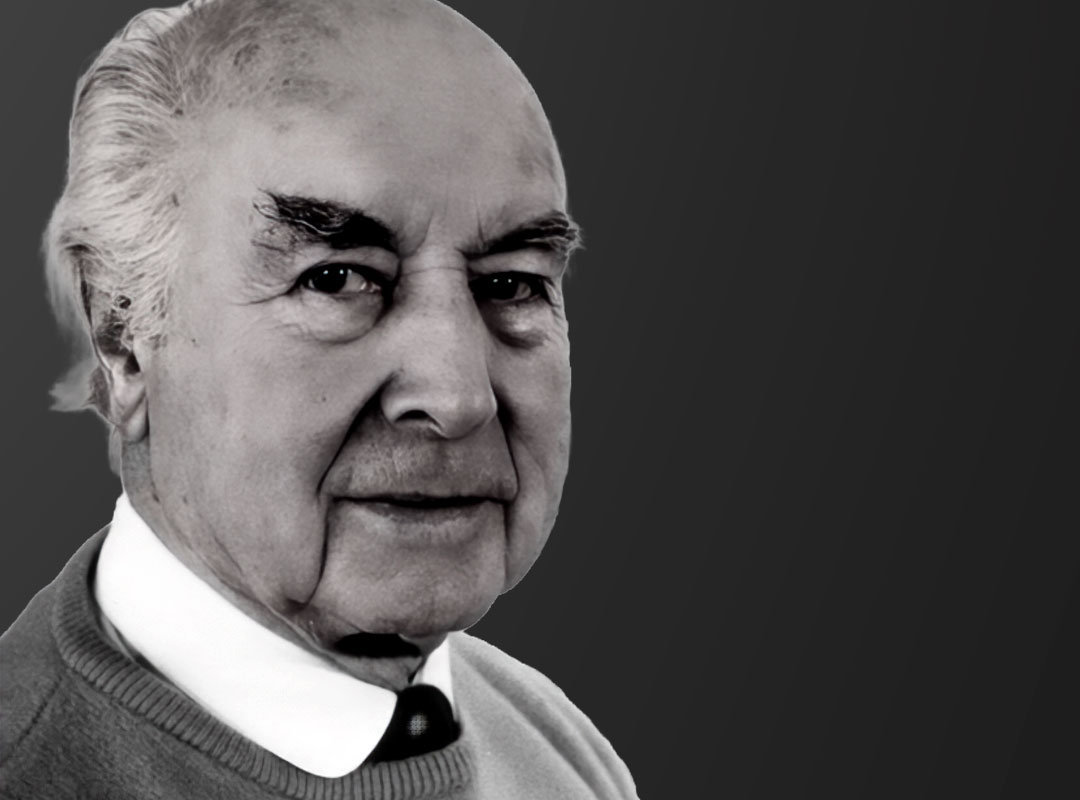
Carolyn and I have long been inspired by the work of Swiss chemist, philosopher, and mystic Albert Hofmann.
Albert Hofmann was born in Baden, Switzerland in 1906. He was the first of four children, and he was baptized Protestant. Hofmann’s father was a factory toolmaker who didn’t make much money. As a child, Hofmann had a mystical experience, while strolling through a forest path, which was to influence him throughout his life.
Hofmann described his childhood mystical experience like this:
As I strolled through the freshly greened woods filled with bird song and lit up by the morning sun, all at once everything appeared in an uncommonly clear light. Was this something I had simply failed to notice before? Was I suddenly discovering the spring forest as it actually looked? It shone with the most beautiful radiance, speaking to the heart, as though it wanted to encompass me in its majesty. I was filled with an indescribable sensation of joy, oneness, and blissful security.
When Hofmann’s father became ill, he obtained a position as a commercial apprentice in chemistry. Since Hofmann’s family didn’t have much money, Hofmann’s godfather paid for his education at the University of Zürich. Hofmann was primarily interested in the chemistry of plants and animals, and he later conducted research on the chemical structure of a common animal substance known as “chitin,” for which he received his doctorate in chemistry in 1929.
After receiving his Ph.D., Hofmann went to work for Sandoz Pharmaceutical (now Novartis) in Basel. Hofmann’s research goal was to work towards the isolation of active principles in known medicinal plants. He worked with Mediterranean squill for several years, before moving on to the study of ergot and ergot alkaloids. Ergot is a fungus that grows on rye and was traditionally used by midwives in Europe to lower blood pressure with birthing mothers.
Over the next few years, Hofmann worked his way through the lysergic acid derivatives in ergot. In 1938, he synthesized LSD for the first time. However, after minimal testing on laboratory animals with no interesting results, he set the compound aside and continued to work with other derivatives.
During the 1940s Hofmann developed a drug known as Hydergine, while researching the chemistry of ergot. Hydergine is a cognitive enhancer, that is prescribed to this day as a treatment for senile dementia and senility, as it improves cerebral function, enhances memory, and improves oxygen flow to the brain. It is also sometimes used by healthy people as a “smart drug.”
In 1943, at the height of World War II, Hofmann re-synthesized LSD because he felt that he might have missed something the first time around. Hofmann said that he had a “peculiar presentiment” to resynthesize LSD and that molecule “spoke” to him. After Hofmann resynthesized LSD, he wrote in his laboratory journal the following words:
“I was forced to interrupt my work in the laboratory in the middle of the afternoon and proceed home, being affected by a remarkable restlessness, combined with a slight dizziness. At home I lay down and sank into a not unpleasant intoxicated condition, characterized by an extremely stimulated imagination. In a dreamlike state, with eyes closed…I perceived an uninterrupted stream of fantastic pictures, extraordinary shapes with intense, kaleidoscopic play of colors. After some two hours this condition faded away.”
Apparently, Hofmann accidentally ingested a minute amount of the LSD — possibly through his fingertips — and since the drug is active in extremely small doses, Hofmann became the first person in human history to experience its psychedelic effects. Three days later, he decided to verify his results by intentionally ingesting 250 micrograms of LSD. Compared to other known drugs, this would appear to have been a very conservative dose, since no other drug was known to have effects in such small quantities. However, it turned out that this was actually quite a hefty dose of the drug, and he had a powerful and frightening experience.
Hofmann told me that he was “convinced from the very beginning of the fundamental impact” of LSD. Although Hofmann had always seen great spiritual value and creative potential in LSD, he was often dismayed by the way that many young people used it merely to enhance sensory experiences, and by the strict prohibitive reactions toward the drug by virtually every government in the world. Because of the enormous controversy that surrounded LSD, Hofmann referred to this mighty mind-morphing molecule as his “problem child.”
Today, LSD is not nearly as controversial as it once was, and has been shown to have numerous therapeutic applications, such as helping patients with terminal illness facing their dying process, assisting in psychotherapy, and helping with cluster headaches, as well enhancing creativity and fostering life-transforming mystical experiences.
In 1958 Hofmann discovered and isolated psylocibin and psilocin, the psychoactive components of the Mexican “magic mushroom,” which are today being studied at Johns Hopkins University and other institutions for their wide-ranging therapeutic properties.
Hofmann continued to work for Sandoz until 1971, when he retired as Director of Research for the Department of Natural Products. After his retirement, he continued to write and lecture for several decades. He was a member of the Nobel Prize Committee, Fellow of the World Academy of Sciences, member of the International Society of Plant Research, and the American Society of Pharmacognosy. Hofmann is also the author of the books LSD: My Problem Child, Insight Outlook, and coauthor of Plants of the Gods and The Road to Eleusis.
Carolyn and I were both involved with the Albert Hoffman Foundation in Los Angeles during the early 1990s, which was started by our beloved friend Dr. Oscar “Oz” Janiger to preserve the work of the legendary chemist. Oz had used LSD in his psychotherapy practice during the late 1950s and early 1960s, while it was legal to do so, and he was responsible for administering it to many Hollywood celebrities, including Cary Grant and Anais Nin. He also conducted groundbreaking LSD creativity studies with several hundred artists. Carolyn had a showing of her artwork at the initial location of the foundation, and we met Hofmann at Oz’s house in Santa Monica, following a fundraiser for the foundation.
Hofmann remained healthy and active up until the end of his life. In 2006, at his 100th birthday party that I attended in Switzerland, I witnessed him give a remarkable speech. In 2008 Hofmann died at the age of 102 at his home in Switzerland.
I interviewed Albert Hofmann in 2006, shortly after his 100th birthday. Here are some excerpts from our conversation:
David: What do you think happens to consciousness after death?
Albert: I think that each individual’s consciousness becomes part of the universal mind.
David: What is your perspective on the concept of God and spirituality?
Albert: God is the name of the universal creative spirit.
David: What sort of relationship do you see between science and mysticism?
Albert: Science is objective knowledge
David: Are you hopeful about the future, and how do you envision the future evolution of the human species?
Albert: I am hopeful about the future evolution of the human species. I am hopeful because I have the impression that more and more human individuals are becoming conscious, and that the creative spirit, which we call “God,” speaks to us through his creation — through the endlessness of the starry sky, through the beauty and wonder of the living individuals of the plant, the animal, and the human kingdoms.
We human beings are able to understand this message because we possess the divine gift of consciousness. This connects us to the universal mind and gives us divine creativity. Any means that helps to expand our individual consciousness—by opening up and sharpening our inner and outer eyes, in order to understand the divine universal message — will help humanity to survive. An understanding of the divine message — in its universal language — would bring an end to the war between the religions of the world.