
David Attenborough Profile
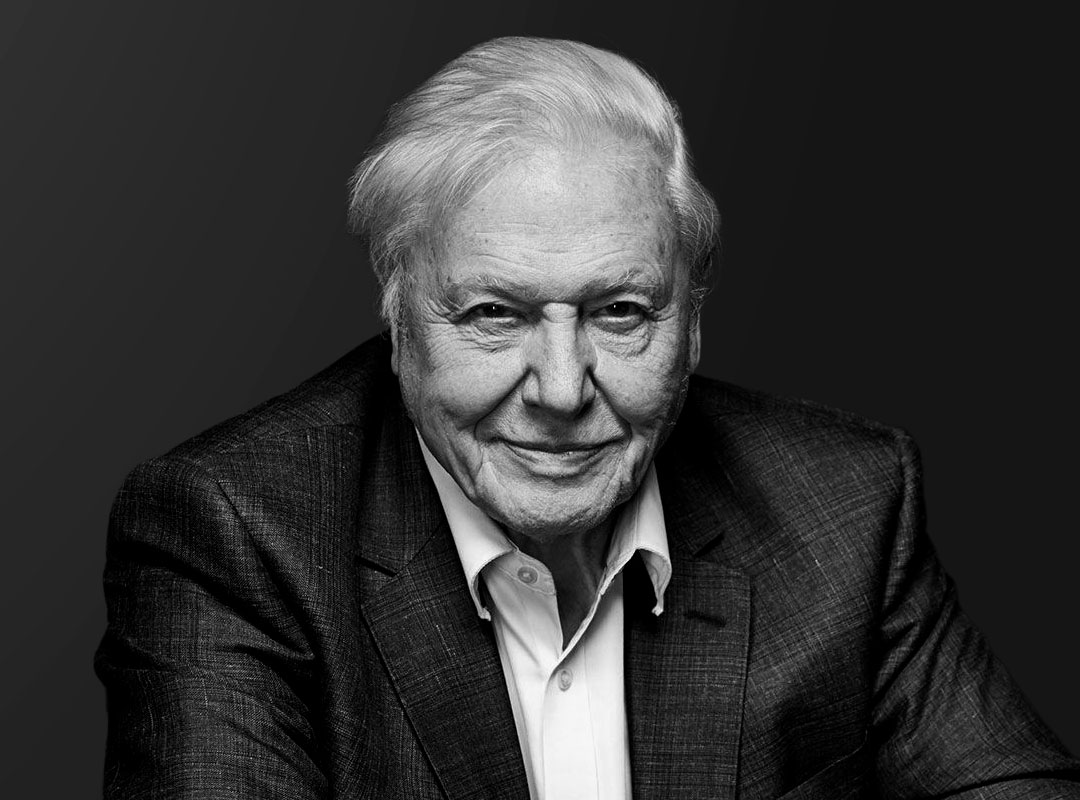
Carolyn and I have appreciated the work of English broadcaster, natural historian, and author David Attenborough, who is one of the world's most influential science communicators, best known for bringing the wonders of the natural world into millions of homes through groundbreaking wildlife documentaries. Over a career spanning more than seven decades, he revolutionized nature filmmaking with landmark television shows such as Life on Earth, The Blue Planet, Planet Earth, and Our Planet, combining scientific insight with breathtaking cinematography. In recent decades, he has also become one of the world's leading advocates for biodiversity conservation and climate action, inspiring generations to appreciate, protect, and restore the Earth's extraordinary web of life.
David Attenborough was born in 1926, in London, and was raised from infancy on the campus of University College, Leicester, where his father served as principal. Attenborough was born to two highly educated and compassionate parents who profoundly influenced his outlook on life. His father was a scholar and educator, who fostered an environment that encouraged intellectual curiosity and learning. His mother was deeply involved in charitable and humanitarian work, and during the years leading up to and throughout the Second World War, she helped care for refugee children fleeing Nazi persecution. Together, his parents instilled in him a love of knowledge, compassion for others, and a deep respect for the living world.
As a child, Attenborough was intensely curious, observant, and happiest when exploring the outdoors. He spent countless hours collecting fossils, minerals, bird eggs, insects, and plants, carefully cataloging his discoveries and developing an early fascination with geology, zoology, and natural history. Quiet, patient, and deeply inquisitive, he preferred observing wildlife to seeking the spotlight, displaying the keen powers of observation and lifelong sense of wonder that would later make him one of the world's most beloved natural history storytellers.
Attenborough attended Wyggeston Grammar School for Boys in Leicester, where his passion for the natural sciences continued to flourish. During the Second World War, Attenborough continued his education while Britain endured wartime hardships, including air raids, rationing, and uncertainty. His family helped care for two Jewish refugee girls who had escaped Nazi persecution, an experience that reinforced the values of compassion and humanitarianism instilled by his parents. Throughout these years, Attenborough's passion for natural history remained undiminished, and by the end of the war he had decided to pursue the study of the natural sciences.
Attenborough studied natural sciences at Clare College in Cambridge, graduating in 1947 with a degree in geology and zoology. After completing his compulsory service in the Royal Navy, he briefly worked in educational publishing before joining BBC in 1952 as a trainee producer. During the 1950s, Attenborough rose rapidly at the BBC as a producer and presenter of innovative television programs. In 1954, he co-created and hosted the landmark series Zoo Quest, traveling to remote regions of the world to film wild animals in their natural habitats — a groundbreaking approach that transformed wildlife broadcasting.
In 1955, one memorable moment from Attenborough's career occurred while filming Zoo Quest in New Guinea. While searching for the elusive bird-of-paradise, Attenborough and his team spent days trekking through dense rainforest before finally witnessing the male's spectacular courtship display — a dazzling explosion of color and movement that few outsiders had ever seen. Attenborough later recalled the moment with deep excitement, describing it as one of the great privileges of his life and an unforgettable reminder that patient observation can reveal some of nature's most extraordinary wonders.
During the early 1960s, Attenborough expanded his reputation as one of the BBC's most talented producers and presenters, continuing to make acclaimed wildlife programs while taking on increasing leadership responsibilities. He became controller of the new BBC Two in 1965, where he helped transform the channel into a center for innovative and educational programming. Under his leadership, BBC Two pioneered the regular use of color television in Britain, marking a major milestone in British broadcasting.
During the late 1960s, Attenborough became one of Britain's most influential television executives. In 1969, he was appointed Director of Programs for the BBC, overseeing all of the organization's television output and helping commission a wide range of acclaimed dramas, documentaries, and educational programs. Although highly successful as an executive, Attenborough increasingly missed filmmaking and fieldwork, and in 1973 he resigned from management to return to his lifelong calling— traveling the world to create natural history documentaries.
After Attenborough returned to full-time filmmaking, he embarked on the most ambitious project of his career: the landmark series Life on Earth. Traveling to dozens of countries over several years, he documented the diversity and evolutionary history of life with unprecedented scope and scientific rigor. When the series premiered in 1979, it became an international sensation, captivating hundreds of millions of viewers and establishing Attenborough as the world's foremost natural history broadcaster, while setting a new standard for wildlife documentaries.
During the 1980s, Attenborough built on the extraordinary success of Life on Earth by creating a series of equally acclaimed natural history documentaries. He presented The Living Planet, which explored how living organisms adapt to Earth's diverse environments, and continued filming in remote locations across the globe. During this period, he also became an increasingly influential public advocate for wildlife conservation, using his growing international reputation to foster a deeper appreciation of biodiversity and the urgent need to protect the natural world.
Attenborough continued his celebrated Life Series with The Trials of Life, an ambitious exploration of animal behavior that first aired in 1990 and became one of the most acclaimed wildlife documentaries ever produced. More acclaimed documentaries followed, including Life in the Freezer in 1993, the first major television series devoted to Antarctica and its remarkable wildlife. The Private Life of Plants followed in 1995, and then The Life of Birds in 1998, The Blue Planet in 2001, Life of Mammals in 2002, Life in the Undergrowth in 2005, Planet Earth in 2006, and Life in Cold Blood in 2008. Planet Earth, filmed in high definition using groundbreaking camera technology, became one of the most celebrated nature documentaries ever made and reached audiences around the globe.
These productions showcased revolutionary filming techniques that revealed the hidden lives of plants, birds, and the world's oceans in unprecedented detail. During this period, Attenborough also emerged as an increasingly prominent voice for biodiversity conservation and climate awareness, using his unparalleled reputation to encourage the protection of Earth's rapidly changing ecosystems. Behind these extraordinary achievements was a philosophy rooted in awe, humility, and a profound respect for the living world.
Though Attenborough rarely speaks in overtly spiritual terms, his lifelong reverence for the beauty, complexity, and interconnectedness of life has inspired millions to experience nature with a sense of wonder that many would describe as sacred. Attenborough has devoted his life to observing, documenting, and celebrating the natural world, approaching it with an enduring sense of curiosity and wonder. Rather than viewing humanity as separate from nature, he has consistently emphasized that humans are one species within a vast, interconnected web of life whose survival depends on the health of Earth's ecosystems. Through his films and public advocacy, he has encouraged millions of people to develop a deeper appreciation for wildlife while recognizing our shared responsibility to protect the planet's extraordinary biodiversity for future generations.
Attenborough’s sense of the sacred is directed toward nature itself, with a reverence for the astonishing improbability, beauty, and interconnectedness of life as revealed through evolution. In that respect, he reminds me of Carl Sagan, Jacques Cousteau, and Jane Goodall — people whose scientific understanding deepened, rather than diminished, their sense of wonder.
Throughout his remarkable career, Attenborough has experienced countless moments of awe that bordered on the mystical. He has described quietly sitting among wild mountain gorillas in Rwanda as one of the greatest privileges of his life, marveling at their unmistakable intelligence, gentleness, and kinship with humanity. Trekking through the rainforests of New Guinea to witness the spectacular courtship displays of birds-of-paradise filled him with amazement at nature's seemingly limitless creativity, while exploring untouched coral reefs, ancient forests, and other pristine wildernesses left him with an enduring sense of humility before the immense beauty, complexity, and antiquity of life on Earth. Although he rarely speaks in explicitly spiritual terms, these encounters have inspired in him a profound reverence for the natural world that permeates all of his work.
Attenborough remained at the forefront of natural history broadcasting with more acclaimed series including Life Series in 2009, Frozen Planet in 2012, Africa in 2013, and Life Story in 2014. These productions combined extraordinary advances in filming technology with compelling storytelling, revealing aspects of animal behavior and ecosystems that had never before been captured on camera. During this period, Attenborough also became an increasingly influential global advocate for addressing climate change, habitat destruction, and biodiversity loss, urging governments and the public to take action to protect the natural world for future generations.
During the last decade, Attenborough reached perhaps the widest global audience of his career with acclaimed series including Planet Earth II, Blue Planet II, Our Planet, A Perfect Planet, and The Green Planet. During these years, he also became one of the world's leading voices on the intertwined crises of climate change and biodiversity loss, delivering powerful documentaries such as David Attenborough: A Life on Our Planet that combined personal reflection with an urgent call to restore Earth's ecosystems.
Attenborough has remained an extraordinarily active and influential voice for the natural world well into his late nineties. He narrated major documentary series including Planet Earth III and Asia, continuing to showcase the beauty and complexity of Earth's ecosystems with the cinematic excellence for which he is renowned. In 2025, he released Ocean with David Attenborough, a powerful documentary focusing on the vital importance of the world's oceans and the urgent need to protect them.
Attenborough celebrated his 100th birthday this past May, and his lifetime of work continues to inspire scientists, conservationists, filmmakers, and millions of viewers around the world. Widely regarded as the most influential natural history broadcaster in history, his enduring legacy lies not only in transforming wildlife filmmaking but also in helping awaken a global appreciation for biodiversity and humanity's responsibility to safeguard the living planet for future generations.
Attenborough transformed the way humanity sees the natural world, setting the global standard for wildlife filmmaking through his pioneering documentaries, compelling storytelling, and unwavering commitment to scientific accuracy. Over more than seven decades, he inspired countless people to develop a deeper appreciation for biodiversity while helping to elevate conservation and climate change into matters of worldwide public concern. His legacy endures not only in the extraordinary body of films he created, but also in the generations of scientists, filmmakers, educators, conservationists, and nature lovers he inspired to explore, understand, and protect the living planet.
After writing this profile, I was struck by how peaceful it feels. Many of my weekly profiles are driven by conflict, controversy, or tragedy. This one feels different. It has the feeling of walking through an old-growth forest with a trusted guide.
Here are some memorable quotes by David Attenborough:
It seems to me that the natural world is the greatest source of excitement; the greatest source of visual beauty; the greatest source of intellectual interest. It is the greatest source of so much in life that makes life worth living.
Every breath of air we take, every mouthful of food that we take, comes from the natural world. And if we damage the natural world, we damage ourselves.
We moved from being a part of nature to being apart from nature. . . We need to work with nature, not against it.
The fact is that no species has ever had such wholesale control over everything on Earth, living or dead, as we now have. That lays upon us, whether we like it or not, an awesome responsibility. In our hands now lies not only our own future, but that of all other living creatures with whom we share the earth.
We live our comfortable lives in the shadow of a disaster of our own making. That disaster is being brought about by the very things that allow us to live our comfortable lives.
We must rewild the world.
Give and take, that is the essence of what balance is all about.
The best motto to think about is not to waste things. Don’t waste electricity; don’t waste paper; don’t waste food. Live the way you want to live but just don’t waste. Look after the natural world and the animals in it and the plants in it too. This is their planet as well as ours. Don’t waste them.
Nature is our biggest ally and greatest inspiration.
The future of life on earth depends on our ability to take action.