
David Lynch Profile
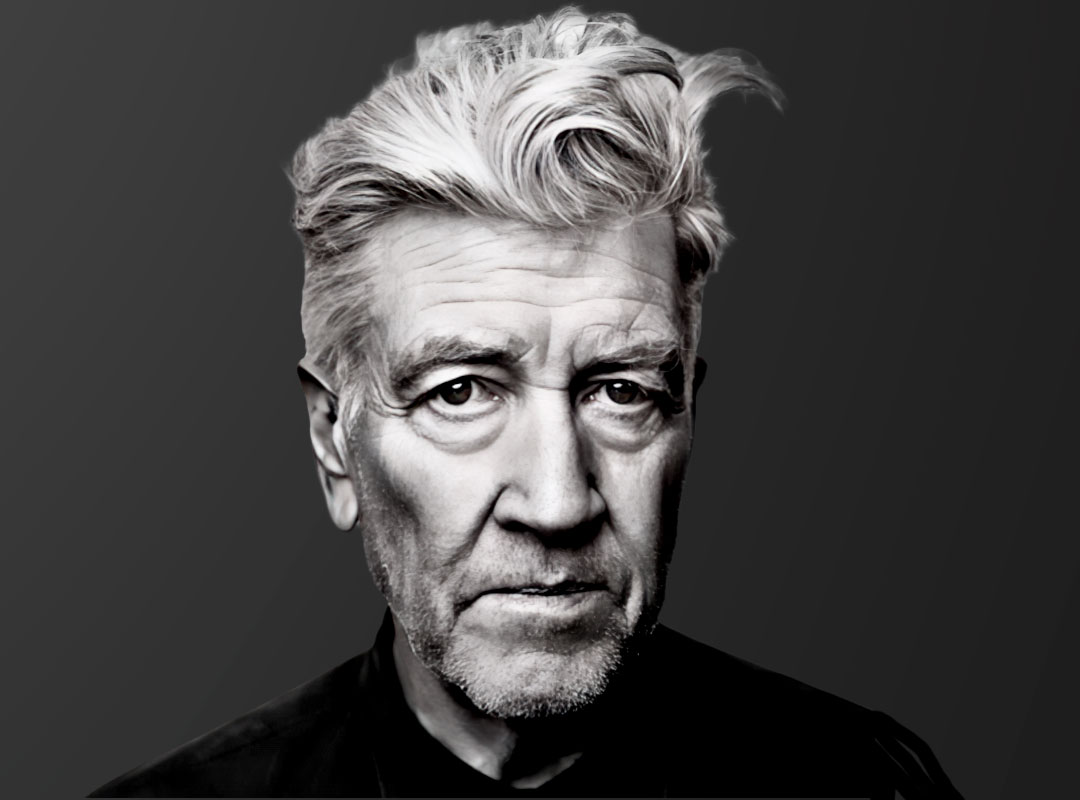
Photo: ©Globe Photos/ZUMAPRESS.com/Alamy
Carolyn and I have appreciated the work of revolutionary filmmaker, author, musician, sculptor, meditation advocate, and creativity teacher David Lynch, who is widely regarded as one of the greatest and most influential filmmakers in the history of cinema. Lynch is celebrated for creating dreamlike, psychologically unsettling works that blur the boundaries between reality, memory, and the unconscious. He is best known for films such as Eraserhead, Blue Velvet, and Mulholland Drive, and for co-creating the groundbreaking television series Twin Peaks, which transformed the possibilities of serialized television. Beyond filmmaking, Lynch was also an accomplished painter, photographer, musician, and advocate of Transcendental Meditation, founding the David Lynch Foundation to promote meditation for stress reduction, creativity, and healing. His distinctive artistic vision gave rise to the term “Lynchian,” now used to describe works that evoke an uncanny blend of beauty, mystery, humor, and existential unease.
David Lynch was born in 1946 in Missoula, Montana. Lynch’s father was a research scientist with the U.S. Department of Agriculture, specializing in forestry and agricultural science. His work required the family to relocate frequently throughout the Pacific Northwest and other parts of the United States, giving Lynch firsthand experience of rural landscapes and small-town communities. His mother was an English-language tutor who encouraged creativity and imagination while fostering a warm, intellectually curious home environment. Together, his parents provided a stable upbringing that combined scientific rigor with artistic openness — an unusual blend that would later be reflected in Lynch’s fascination with both the natural world and the mysteries that seem to lie beneath everyday reality.
As a child, Lynch was imaginative, curious, and quietly observant, with an early fascination for drawing, nature, and the hidden mysteries beneath ordinary life. He later described his childhood as happy and idyllic on the surface, yet he was deeply affected by strange, dreamlike experiences and unsettling moments that hinted at a darker reality lurking beneath suburban normality. Even from an early age, he displayed the vivid imagination, sensitivity, and attraction to the uncanny that would later become the defining hallmarks of his art.
Lynch’s family continued to move frequently because of his father’s work, living in Idaho, Washington, and finally Alexandria, Virginia. During these years, Lynch developed a lifelong passion for drawing and painting, spending much of his free time creating artwork while also enjoying outdoor adventures with neighborhood friends. Lynch attended high school in Alexandria, where his passion for art flourished under the encouragement of inspiring teachers and friends. During this period, he met fellow aspiring artists and began experimenting seriously with painting while dreaming of a career as an artist.
After graduating in 1964, Lynch briefly attended the School of the Museum of Fine Arts at Tufts in Boston but soon realized it was not the right fit. He left after only a short time, traveled to Europe in hopes of studying with Austrian Expressionist painter Oskar Kokoschka, and, after that plan fell through, returned to the United States, where he enrolled at the Pennsylvania Academy of the Fine Arts in Philadelphia—a decision that marked the beginning of his transformation from painter to filmmaker.
In 1967, while he was a painting student at the Academy, Lynch stared at one of his paintings and suddenly imagined the image moving. He heard what he later described as the sound of wind emerging from the canvas. This startling moment inspired him to ask, “Why shouldn’t paintings move?” This led him to create his first experimental film, Six Men Getting Sick (Six Times). Lynch often pointed to this experience as the pivotal moment that transformed him from a painter into a filmmaker.
During this period, Lynch married fellow art student Peggy Reavey, and their daughter was born in 1968. In 1970, Lynch moved to Los Angeles to study at the AFI Conservatory, where he began work on his first feature film, Eraserhead — an ambitious independent project that would consume him for nearly five years because of chronic financial difficulties and intermittent production, but was destined to establish him as one of cinema’s most distinctive new voices. Yet even as he labored to realize his cinematic vision, Lynch was on the verge of discovering a spiritual practice that would become the deepest wellspring of his creativity, transforming not only his artistic process but also his entire philosophy of consciousness and creativity.
In 1973, Lynch learned Transcendental Meditation and practiced it twice daily for the rest of his life, often describing it as the single most transformative influence on both his creativity and personal well-being. He believed that meditation allowed him to access what he described as a limitless field of pure consciousness — a realm from which inspiration naturally arises — and likened the creative process to “catching the big fish” by diving beneath the surface of ordinary thought. Lynch spoke of profound inner stillness, heightened awareness, and direct experiences of deep consciousness that nourished his creativity, intuition, and sense of interconnectedness. These experiences became the spiritual foundation for both his life and his art.
Released in 1977, Eraserhead gradually became a midnight-movie sensation, earning widespread critical acclaim for its haunting imagery and surreal atmosphere and establishing Lynch as one of the most original new voices in American cinema. Eraserhead is a surreal psychological horror film about a timid young man who struggles with fatherhood, anxiety, isolation, and nightmarish visions in an oppressive industrial landscape that blurs the boundaries between reality and the subconscious. I saw *Eraserhead* as a college student, and it made a huge impression on me; I thought that it came closer than any other film to capturing the uncanny logic of dreams.
Lynch’s growing artistic reputation attracted the attention of major Hollywood producers, paving the way for his breakthrough into mainstream filmmaking. During the early 1980s, Lynch emerged as one of America’s most celebrated filmmakers. His critically acclaimed historical drama The Elephant Man earned eight Academy Award nominations, including a nomination for Best Director, bringing him international recognition. Although his ambitious adaptation of the science-fiction novel Dune was a commercial and critical disappointment, he rebounded spectacularly with Blue Velvet, a provocative psychological thriller that became a landmark of modern American cinema and firmly established his signature “Lynchian” style.
During the late 1980s and early 1990s, Lynch reached the height of his cultural influence with his co-creation of the groundbreaking television series Twin Peaks. The series became an international phenomenon, revolutionizing television storytelling with its blend of mystery, humor, and surrealism. During this period, Lynch also directed the acclaimed film Wild at Heart, which won the Palme d’Or at the Cannes Film Festival, and Twin Peaks: Fire Walk with Me, a darker prequel to the television series that was initially divisive but later came to be regarded as one of his most important works.
Following Twin Peaks, Lynch co-created the short-lived television series On the Air in 1992 and Hotel Room in 1993. He directed the surreal psychological mystery Lost Highway, which was released in 1997, and surprised critics with the deeply humane road film The Straight Story. Lynch also became increasingly active as a painter, photographer, musician, and designer, demonstrating that his creativity extended well beyond filmmaking. By the turn of the millennium, Lynch had established himself as a singular multidisciplinary artist whose work defied conventional genres and expectations.
Lynch reached another creative peak with Mulholland Drive in 2001, widely regarded as one of the greatest films of the twenty-first century. The film earned him the Best Director Award at the Cannes Film Festival and his third Academy Award nomination for Best Director. During this period, Lynch also embraced digital filmmaking with Inland Empire, an ambitious experimental work that pushed the boundaries of cinematic storytelling.
Beyond film, Lynch became a prominent advocate of meditation, establishing the David Lynch Foundation in 2005 to promote meditation as a means of reducing stress, enhancing creativity, and improving education and mental health. Lynch sought to bring meditation to students, veterans, trauma survivors, and others experiencing chronic stress. His wonderful book, Catching the Big Fish: Meditation, Consciousness, and Creativity, was published in 2006 and explores how Transcendental Meditation can deepen consciousness, dissolve stress, and unlock the intuitive wellspring of creativity from which profound artistic ideas emerge.
Lynch believed that creativity arises from deep levels of consciousness that can be accessed through inner stillness. After practicing Transcendental Meditation for more than five decades, he often described meditation as a way of “catching the big fish” — discovering profound ideas by diving beneath the surface turbulence of the mind into an ocean of pure awareness. Although he rarely aligned himself with any formal religion, Lynch embraced a spiritual worldview that celebrated consciousness, intuition, mystery, and the transformative power of direct experience. His films frequently explored the coexistence of light and darkness, suggesting that beneath the apparent chaos of life lies a deeper, hidden reality that can be glimpsed through dreams, art, meditation, and heightened awareness.
Dreams occupied a central place in Lynch’s creative philosophy, not simply as sources of stories but as windows into deeper levels of the unconscious mind. Rather than directly adapting his own dreams, he sought to recreate the emotional logic and mysterious atmosphere of dreaming—where time, identity, memory, and reality flow together in unexpected ways. Lynch believed that by combining the intuitive insights of dreams with the heightened awareness cultivated through Transcendental Meditation, artists could access profound creative ideas that lie beyond ordinary rational thought. Many of his most celebrated works, including Twin Peaks, Lost Highway, Mulholland Drive, and Inland Empire, are structured less like conventional narratives than like vivid dreams, inviting viewers to experience mystery and symbolism rather than search for a single definitive interpretation.
During the early 2010s, Lynch devoted much of his energy to visual art, music, photography, and expanding the work of the David Lynch Foundation, which grew into an internationally recognized organization. He released the solo albums *Crazy Clown Time* and *The Big Dream*, further demonstrating his eclectic artistic vision. Although he directed no feature films during this period, his influence continued to grow through major art exhibitions, documentaries, and retrospectives celebrating his unique contribution to contemporary culture.
In 2017, Lynch returned triumphantly to one of his greatest creations with Twin Peaks: The Return, an eighteen-part continuation of Twin Peaks that was widely hailed as one of the most ambitious achievements in television history. In 2019, he received an Academy Honorary Award in recognition of his lifetime contributions to cinema. During these years, Lynch also remained active as a painter, musician, and online creator, launching popular videos that revealed his warm, eccentric personality to a new generation of fans.
In 2020, he publicly disclosed that he had been diagnosed with emphysema after decades of smoking, though he continued to create and inspire despite increasing health challenges. Lynch died in 2025, just days before his seventy-ninth birthday, prompting an outpouring of tributes from filmmakers, artists, musicians, and admirers around the world.
Lynch left behind one of the most distinctive and influential bodies of work in modern art and cinema. Through films such as Blue Velvet and Mulholland Drive, and the groundbreaking television series Twin Peaks, he transformed the language of visual storytelling by blending dreams, mystery, psychological depth, and the uncanny into a uniquely original artistic vision. Beyond filmmaking, his paintings, music, photography, and advocacy through the David Lynch Foundation reflected his lifelong commitment to creativity, meditation, and inner exploration. The term “Lynchian” has entered the cultural lexicon, a testament to the enduring impact of an artist whose work continues to inspire filmmakers, writers, musicians, and dreamers around the world.
Although Lynch is often remembered as a surrealist filmmaker, I think his deeper contribution was that he treated mystery as something to be experienced rather than solved. He resisted reducing his films to explanations, believing that preserving ambiguity allowed audiences to have a more direct, intuitive encounter with meaning. That perspective harmonizes beautifully with his meditation practice and with his idea of “catching the big fish” from deeper levels of consciousness. I think his deepest message was ultimately one of hope. He believed that beneath the turbulence of the mind lies an inexhaustible field of peace, creativity, and happiness — a conviction that informed not only his art but also his lifelong commitment to meditation. In that sense, his films may explore darkness, but his philosophy was fundamentally one of light.
Here are some of David Lynch’s most memorable quotes:
Ideas are like fish. If you want to catch little fish, you can stay in the shallow water. But if you want to catch the big fish, you’ve got to go deeper. Down deep, the fish are more powerful and more pure. They’re huge and abstract. And they’re very beautiful.
I love paint. I like watercolors. I like acrylic paint... a little bit. I like house paint. I like oil-based paint, and I love oil paint. I love the smell of turpentine and I like that world of oil paint very, very, very much.
I learned that just beneath the surface there's another world, and still different worlds as you dig deeper. I knew it as a kid, but I couldn't find the proof. It was just a kind of feeling. There is goodness in blue skies and flowers, but another force— a wild pain and decay— also accompanies everything.
I don't know why people expect art to make sense. They accept the fact that life doesn't make sense.
Keep your eye on the doughnut, not on the hole.
Everything I learned in my life, I learned because I decided to try something new.
Don’t fight the darkness. Don’t even worry about the darkness. Turn on the light and the darkness goes. Turn up that light of pure consciousness: Negativity goes.
This whole world is wild at heart and weird on top.
Negativity is the enemy of creativity.
Every viewer is going to get a different thing. That's the thing about painting, photography, cinema.
Transcendental meditation is an ancient mental technique that allows any human being to dive within, transcend and experience the source of everything. It's such a blessing for the human being because that eternal field is a field of unbounded intelligence, creativity, happiness, love, energy and peace.