
E.E. Cumming Profile
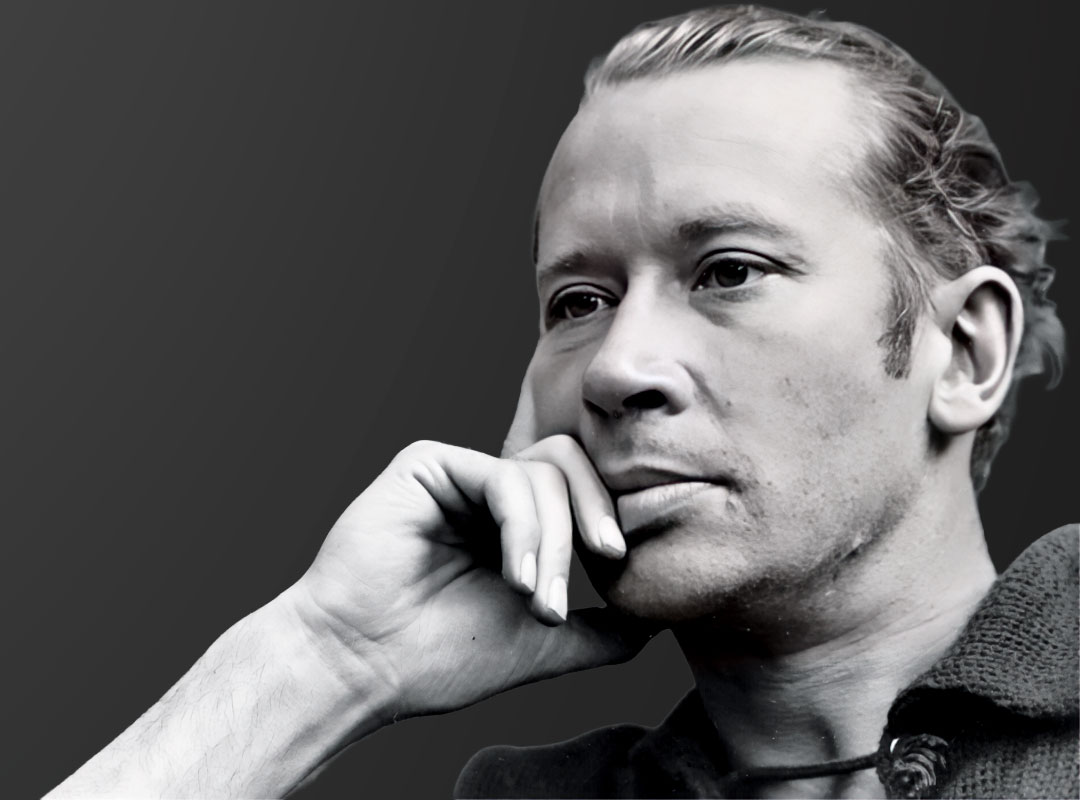
Carolyn and I have appreciated the work of E.E. Cummings, who is recognized as one of the most innovative American poets of the 20th century. Cummings is best known for his radically experimental style, playing with typography, syntax, spacing, punctuation, and lowercase letters to stretch the expressive possibilities of language. He published nearly 3,000 poems, along with plays, essays, novels, and paintings, and became especially celebrated for his lyrical love poems, which combined emotional directness with formal daring. His work helped redefine modern poetry by proving that deep feeling and avant-garde technique could coexist, making him a central figure in literary modernism.
Edward Estlin Cummings was born in 1894 in Cambridge, Massachusetts. His parents were both highly educated and civically engaged. His father was a professor of sociology and political science at Harvard University before becoming a prominent Unitarian minister in Cambridge, where he was active in social reform and community service. His mother was well-educated, artistically inclined, and deeply supportive of her son’s creative interests, helping to foster the intellectual and imaginative atmosphere in which he was raised.
Cummings was an imaginative, bright, and playful child who showed an early fascination with language and storytelling. He began writing poems at a very young age and delighted in wordplay, inventiveness, and creative self-expression. Raised in a loving and intellectually stimulating home, he was confident, curious, and encouraged to think independently — qualities that later blossomed into the bold originality for which he became famous.
Cummings attended the Cambridge Latin School, where he received a rigorous classical education in Latin and Greek that sharpened his sensitivity to language and form. During these years, he continued writing poetry prolifically and began developing the intellectual independence that would later define his style. In 1911, he entered Harvard University, and by 1912, he was already publishing poems and immersing himself in the literary and artistic culture that would help shape his emerging modernist voice.
At Harvard University, Cummings earned both his B.A. and M.A., and became deeply engaged with modernist art and literature. In 1917, during World War I, he volunteered as an ambulance driver in France. During this time, Cummings and a friend wrote letters expressing skeptical, even irreverent views about the war. French authorities intercepted the correspondence, and Cummings was arrested and imprisoned for more than three months in a detention camp in Normandy on suspicion of disloyalty. Rather than breaking his spirit, the experience strengthened his lifelong distrust of authoritarianism.
Returning to the United States in 1918, Cummings briefly served in the U.S. Army before being discharged in 1919, emerging from the war years with a strengthened commitment to artistic autonomy. During the early 1920s, Cummings established himself as a bold new voice in American modernism. In 1922, he published The Enormous Room, an autobiographical novel based on his World War I imprisonment, which brought him critical attention. Throughout the early 1920s, Cummings lived intermittently in Paris, absorbing avant-garde influences, and in 1923 released his first major poetry collection, Tulips and Chimneys, showcasing the typographical experimentation that became his trademark.
During these years, his personal life was equally intense and complex; Cummings married three times, experienced passionate and sometimes turbulent relationships, and became the father of a daughter. These romantic entanglements — at times ecstatic, at times painful — deeply informed the emotional immediacy and vulnerability that animate his love poems.
Cummings developed a radically distinctive grammatical style by deliberately breaking conventional rules of capitalization, punctuation, spacing, and syntax. He often used lowercase letters — even for the pronoun “i” — to diminish the ego or challenge hierarchical norms embedded in language, while capital letters were sometimes reserved for emphasis or irony. Cummings also incorporated numbers and unconventional typography (such as fragmented words, scattered spacing, and visual arrangements on the page) to create poems that functioned both as linguistic experiences and visual art. These techniques were not random; they were carefully crafted to slow the reader down, intensify perception, and embody meaning through form itself.
During the late 1920s and early 1930s, Cummings continued to solidify his reputation as a leading modernist poet. He published several important poetry collections during this period, including is 5 in 1926 and ViVa in 1931, refining his distinctive style of typographical experimentation and lyrical intensity. In 1931, he also traveled to the Soviet Union, an experience that left him disillusioned with authoritarian politics and resulted in his satirical travel memoir Eimi in 1933. These years marked both artistic maturity and a deepening of his fiercely individualistic worldview.
During the late 1930s, Cummings continued publishing poetry while refining his distinctive voice, bringing out collections such as No Thanks in 1935, which he famously self-published after being rejected by numerous publishers. During these years, he became increasingly outspoken in his defense of individual liberty and his criticism of totalitarianism, views sharpened by his earlier trip to the Soviet Union. He also deepened his commitment to painting alongside poetry, while living between New York and his family’s summer home in New Hampshire.
Cummings continued writing and publishing poetry during the World War II years, including the collection 1 × 1 in 1944, which reflected both wartime tensions and his enduring celebration of love and individuality. In the years that followed, he remained artistically active, giving public readings and solidifying his reputation as one of America’s most distinctive poetic voices. It was this same fierce devotion to individuality and lived experience — tested by war and sustained by love — that lay at the heart of his spiritual vision.
Cummings held a deeply individualistic and experiential spiritual perspective rooted less in organized religion than in direct, lived awareness. Though raised in a Unitarian household, he rejected dogma and celebrated a kind of personal mysticism grounded in love, nature, eros, and the sacredness of the present moment. His poetry often suggests that divinity resides not in institutions but in authentic feeling, in the body, in the beloved, and in the miracle of simply being alive — an ecstatic reverence for existence itself. Cummings’ poetry reveals repeated moments of intense, almost mystical awareness — especially experiences of unity, wonder, and sacred immediacy in love and in nature. Poems such as i thank You God for most this amazing day express a radiant, ecstatic gratitude that feels contemplative and devotional, suggesting that his spirituality was rooted in heightened perception and direct experience rather than formal religious doctrine.
During the late 1940s and early 1950s, Cummings entered a period of heightened recognition and professional acclaim. In 1948, he published Poems 1923–1947, a substantial collected volume that affirmed his stature in American poetry, followed by the new collection XAIPE in 1950. During 1952 and 1953, he returned to Harvard as the Charles Eliot Norton Professor of Poetry, delivering a series of lectures later published as i: six nonlectures in 1953, in which he articulated his fiercely individualistic artistic philosophy. These years marked his transition from avant-garde outsider to widely respected literary figure.
During the late 1950s, Cummings enjoyed widespread recognition as one of America’s most distinctive living poets. He continued publishing new collections, including 95 Poems in 1958, and gave popular public readings across the United States, where his dramatic delivery further enhanced his reputation. In 1957, he received the Bollingen Prize for Poetry, one of the nation’s highest literary honors.
In the final year of his life, Cummings remained creatively active, continuing to write poetry and give public readings despite declining health. He divided his time between New York City and his family’s home in New Hampshire, where he had long found inspiration and solace. In 1962, Cummings died of a stroke at the age of 67 in North Conway, New Hampshire, leaving behind a constellation of poems that permanently reshaped modern American poetry.
Cummings’s legacy rests on his fearless reinvention of poetic form and his passionate defense of individuality. By breaking conventional rules of grammar, punctuation, and typography, he expanded the expressive possibilities of language while proving that experimental technique could coexist with emotional clarity — especially in his enduring love poems. He remains one of the most widely read and quoted American poets of the 20th century, cherished for his luminous celebration of love, personal freedom, and for the quiet yet radical courage to be fully oneself in a world that so often rewards conformity.
Here are some memorable quotes by E.E. Cummings:
We do not believe in ourselves until someone reveals that deep inside us something is valuable, worth listening to, worthy of our trust, sacred to our touch. Once we believe in ourselves, we can risk curiosity, wonder, spontaneous delight, or any experience that reveals the human spirit.
Unbeing dead isn't being alive.
The world is mud-luscious and puddle-wonderful.
Lovers alone wear sunlight.
Yours is the light by which my spirit's born: - you are my sun, my moon, and all my stars.
I will take the sun in my mouth
and leap into the ripe air
Alive
with closed eyes
to dash against darkness
listen: there’s a hell
of a good universe next door; let’s go
i thank you God for this most amazing day, for the leaping greenly spirits of trees, and for the blue dream of sky and for everything which is natural, which is infinite, which is yes.
Love is the voice under all silences, the hope which has no opposite in fear; the strength so strong mere force is feebleness: the truth more first than sun, more last than star...
One's not half of two; two are halves of one.