
Emma Kunz Profile
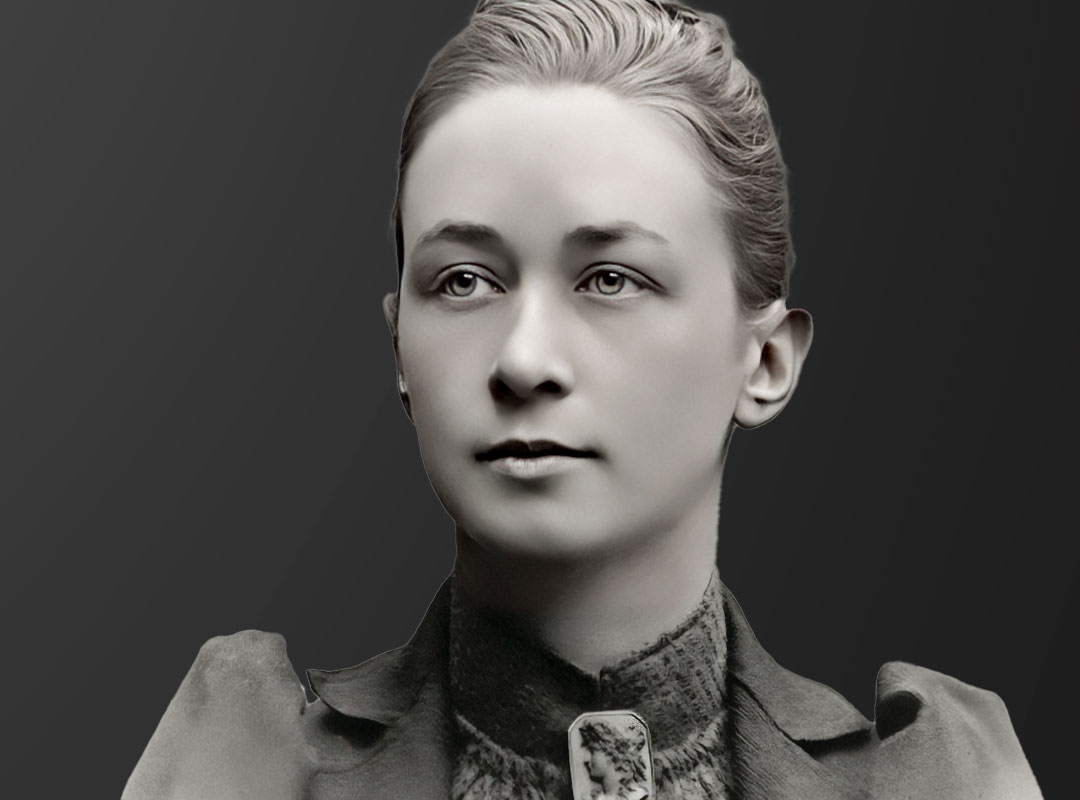
Carolyn and I have appreciated the work of Swiss visionary artist, healer, and researcher Emma Kunz, who is best known for her intricate geometric drawings created using a pendulum and graph paper as tools of spiritual inquiry. Though self-taught and never exhibiting her work during her lifetime, she produced over 500 large-format drawings that she believed held healing and metaphysical properties. She also discovered the healing stone “AION A,” in a Roman quarry in Würenlos, Switzerland, which is still used today for its therapeutic qualities. Revered posthumously, Kunz is now recognized as a pioneer of spiritual and outsider art, with her work bridging art, science, and mysticism.
Emma Kunz was born in 1892 in Brittnau, a small village in the canton of Aargau, in the German-speaking region of Switzerland, to a working-class Swiss family. She was raised in a rural environment that nurtured her deep sensitivity to nature and intuitive awareness. Kunz’s parents were working-class Swiss laborers. Her father worked as a weaver, and her mother was employed as a seamstress. Their modest means and rural lifestyle provided a humble and practical upbringing.
As a child, Kunz was known to be highly sensitive, intuitive, and inwardly focused. Kunz was said to feel a close affinity with plants, and to have exhibited unusual perceptiveness and psychic abilities — including telepathic, clairvoyant, and healing tendencies — from an early age that set her apart from her peers. Despite her modest upbringing and limited formal education, Kunz showed an early fascination with nature, energy, and unseen forces. During her teenage years, Kunz completed her basic schooling and began working to support herself and her family by doing modest, local jobs.
When Kunz was in her late teens and early twenties, she started to develop her healing abilities and began gaining recognition in her local community for her intuitive insights and natural remedies. Her treatments were often successful, and she is said to have cured a boy of polio. Kunz saw herself as a conduit who activated the powers that lie dormant in everyone, and she relied on a pendulum to diagnose ailments and offer treatments, marking the beginning of her lifelong use of radiesthesia. Radiesthesia is the practice of detecting subtle energies or vibrations — often using tools like a pendulum or divining rod — to gain information about people, objects, or environments.
During the 1920s, Kunz expanded her reputation as a healer and began attracting a growing number of patients who sought her intuitive diagnoses and holistic approach to health. Kunz increasingly refined her use of the pendulum as a diagnostic tool and to explore unseen energetic forces, developing a unique system of energetic healing that combined spiritual insight with precise observation. This period marked a deepening of her commitment to exploring the invisible dimensions of life, setting the stage for her later artistic revelations.
During the early 1930s, Kunz’s work as a healer and spiritual researcher intensified. She began conducting deeper experiments with radiesthesia, using a pendulum not only for healing but also to explore philosophical and energetic principles. During this time, Kunz laid the groundwork for the large-scale drawings she would later create, viewing them as tools for healing and consciousness expansion. Though still working quietly outside mainstream recognition, these years were pivotal in shaping her synthesis of art, science, and spirituality. This synthesis would soon find visual form in her most iconic creations.
During the late 1930s and early 1940s, Kunz began creating the large-format, geometric drawings for which she would later become renowned. Using graph paper and a pendulum, she produced intricate works she believed held healing energies and encoded universal knowledge. Her artistic practice was inseparable from her spiritual worldview, which gave meaning and purpose to the patterns she revealed on paper.
Kunz’s spiritual perspective was rooted in the belief that all life is governed by invisible energetic forces, patterns, and rhythms that can be perceived through intuition and inner sensitivity. She saw the universe as an interconnected field of vibrations, where form, number, and symbol held deep healing and metaphysical significance. Her drawings were not art in the traditional sense, but visual revelations — tools for spiritual insight and energetic realignment. She believed her work was guided by a higher intelligence and meant to serve humanity’s evolution into greater harmony and understanding.
Untitled and undated, Kunz’s ‘energy field’ pencil drawings on graph paper are truly mesmerizing. Art historian Jennifer Higgie describes them well: “More than five hundred softly colored, detailed mandalas, stars within stars, squares dissected by ragged green lines, circles floating in a dusty blue expanse that seem to spin and pulsate. Often created in forty-eight-hour marathons, her pictures were the physical manifestation of her research, what she described as 'Shape and form expressed as measurement, rhythm, symbol, and transformation of figure and principle.' Kunz thought of them as: holograms, spaces to enter, answers to questions — ‟...be they physical, political, spiritual, or philosophical. You don’t need to know anything about either art or mysticism to appreciate their beauty.”
Kunz, who never attended art school, only began creating her drawings at age forty — exploring sacred geometry and the balance inherent in plants, which she believed revealed vegetal intelligence —in order to help heal her patients of both physical and spiritual imbalances. Kunz said that she “channeled the forces of the universe.” She would ask the pendulum a question — anything from the health of a patient to politics — and in response her hand would be guided to make a drawing. Kunz also used her pendulum to “polarize marigolds in her garden to produce multiple flower heads” and she documented the process with her photography.
In 1942, Kunz made a major breakthrough by discovering a healing stone, a mineral that she named “AION A,” in a Roman quarry in Würenlos, Switzerland — a site she believed had powerful energetic properties. (The word “aion” is Greek for “without limits.”) Guided by her pendulum and intuitive vision, Kunz located a specific spot in the quarry that she believed emitted powerful energetic vibrations. Composed of a fine, greenish mineral-rich rock, “AION A,” was believed by Kunz to emit subtle healing vibrations that could support physical and energetic well-being. She believed that it could cure numerous ills, in particular rheumatism and inflammation.
Kunz began using the fine, greenish rock from this site in her healing treatments, claiming it had remarkable regenerative properties. This discovery became central to her healing practice and cemented her belief in the energetic interconnectedness of matter, form, and consciousness. To this day, “AION A,” is used at the Emma Kunz Center, where visitors can experience its reputed healing energy firsthand. It’s also available from the Emma Kunz Center website as a ground powder, immersed in a variety of lotions, and is widely available in Swiss pharmacies, where it is used for a range of health benefits. The quarry where Kunz discovered the healing mineral is known as the Emma Kunz Grotto and is open to visitors “who need to recharge their batteries.”
During the 1940s, Kunz continued her intensive healing work and expanded her body of visionary drawings, creating increasingly complex geometric compositions that she believed served as both diagnostic tools and sources of energetic healing. Kunz became more widely known within alternative healing circles for her intuitive methods. She also began documenting her theories on form, rhythm, and energy, laying the intellectual foundation for her later publications.
During the 1950s, Kunz intensified her efforts to articulate the principles behind her healing and artistic work. In 1953, she published two important texts— The Miracle of Creative Revelation and Innovative Drawing Method — which outlined her philosophy of form, rhythm, and energy as pathways to spiritual understanding and transformation. Kunz continued to create her large-format, pendulum-guided drawings, now numbering in the hundreds. She also worked closely with patients, and her reputation as a healer and spiritual researcher steadily grew.
During her final years, Kunz maintained her private practice and remained dedicated to her healing practice and spiritual research, staying deeply devoted to her drawings and the energetic principles they embodied. She viewed her artistic creations as tools for healing and consciousness expansion, and she continued exploring the spiritual and energetic dimensions of her work. Although her art had not yet been publicly recognized, she persisted in creating and refining her large-format drawings, believing they held vital healing properties for future generations.
Kunz passed away in 1963, at the age of 70, in Waldstatt, Switzerland, leaving behind a remarkable legacy of hundreds of visionary drawings and a body of work that would only be fully appreciated posthumously.
Kunz’s artwork began to receive widespread recognition in 1973, a decade after her death, when her drawings were first exhibited to the public at the Aargauer Kunsthaus in Switzerland. Kunz had never considered herself an artist in the conventional sense, and her intricate geometric works — created as spiritual tools for healing and meditation — remained largely unknown outside her circle of patients and followers. The 1973 exhibition revealed the profound aesthetic and metaphysical depth of her creations, sparking international interest and leading to her inclusion in major exhibitions of visionary and outsider art. Kunz once said that she designed her drawings for the twenty-first century, and in this, she was prophetic.
In 2019, the Serpentine Gallery in London held the first U.K. solo exhibition of Kunz’s artwork. For the exhibition of her work at the Serpentine Gallery, the Cypriot artist Christodoulos Panayiotou designed a series of simple stone benches made from “AION A,” that were placed in front of Kunz's drawings. In 2021, an exhibition opened in Aargau in Switzerland titled Emma Kunz Cosmos: A Visionary in Dialogue with Contemporary Art. It comprised a display of Kunz's work alongside that of fourteen artists inspired by her. Today, Kunz’s work is housed in prominent museum collections and celebrated for its fusion of art, science, and spiritual inquiry.
Kunz’s legacy lies in the powerful intersection of art, healing, and spiritual science. Though unrecognized in her lifetime as an artist, she left behind over 500 intricate, pendulum-guided drawings that are now celebrated as visionary masterpieces of sacred geometry and energy-based art. Her discovery of the healing stone “AION A,” and her pioneering use of radiesthesia have influenced alternative medicine and holistic healing practices. Today, she is revered as a mystic, healer, and outsider artist whose work continues to inspire explorations into consciousness, intuition, and the unseen forces that shape our reality.
Here are some of Emma Kunz’s most memorable quotes:
Nature-mystical movements are experiencing a revival, invoking the unity of humankind and the natural world. The question of whether and how art can heal no longer arises only in the context of art therapy but also at a societal level.
Everything happens according to a certain regularity which I sense inside me and which never lets me rest.
Kunz described her drawings as: design and shape expressed as measurement, rhythm, symbol, and transformation of figure and principle.
My drawings are designed for the 21st Century. They convey composition and form as dimension, rhythm, symbol, and transformation of numbers and principles.