
Ernst Fuchs Interview
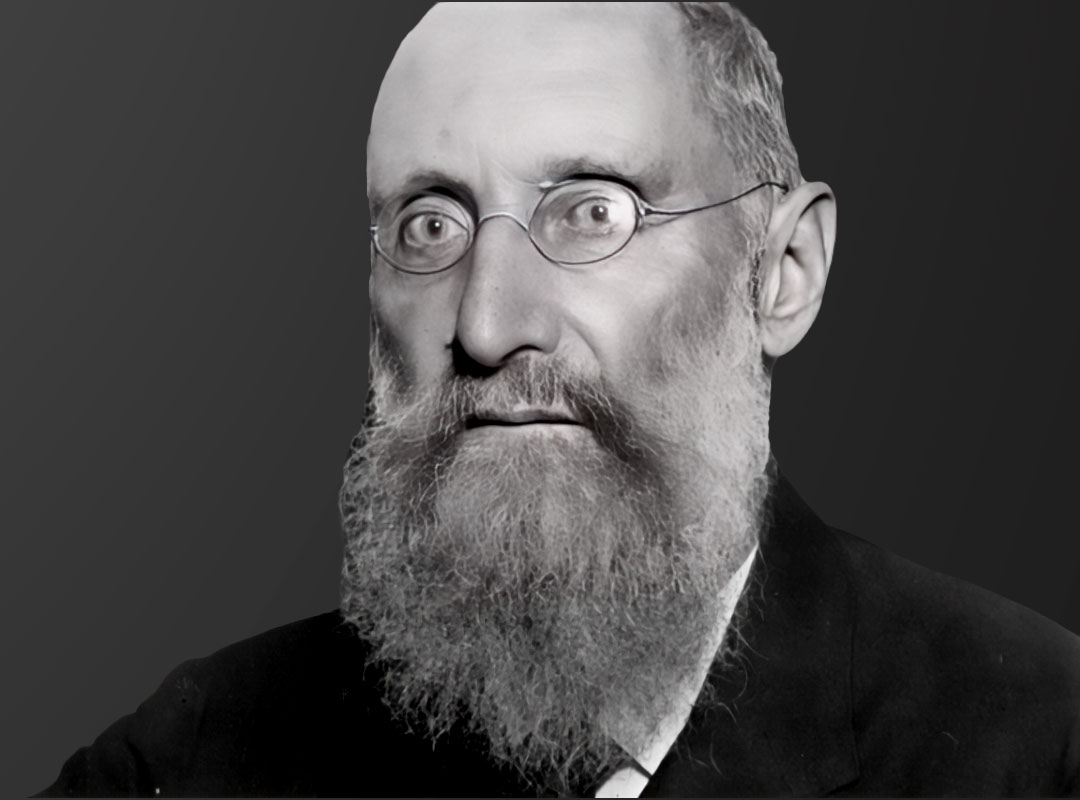
Carolyn and I have appreciated the work of Austrian painter, sculptor, architect, stage designer, and visionary mystic Ernst Fuchs, who is best known as one of the founders of the Vienna School of Fantastic Realism, a movement that fused classical Renaissance techniques with surreal, mythological, esoteric, and psychedelic imagery. Deeply influenced by symbolism, Jungian Psychology, alchemy, Christianity, and Jewish Mysticism, Fuchs developed an intricate painting style filled with luminous colors, dreamlike beings, archetypal symbolism, and visionary landscapes. He became internationally celebrated for reviving the meticulous glazing techniques of the Old Masters while channeling intensely imaginative spiritual and metaphysical themes.
Beyond painting, Fuchs transformed the Otto Wagner Villa in Vienna into the fantastical Ernst Fuchs Museum, which houses many of his works and stands as a living expression of his artistic universe. His influence extended into psychedelic and visionary art movements worldwide, inspiring generations of artists interested in altered states, mysticism, and transcendent imagery. He is especially remembered for helping legitimize visionary art within the fine art world and for creating some of the most elaborate and spiritually charged paintings of the twentieth century.
Ernst Fuchs was born in Vienna, Austria, in 1930 to a Jewish father and a Catholic mother during a period of rising political instability in Europe. His father worked in commerce and was involved in the business world of Vienna, though he died relatively young and was less central in Ernst’s upbringing. Fuchs’s mother raised him primarily on her own, and she played a major role in nurturing his early artistic and spiritual sensibilities, encouraging his imagination, religious curiosity, and creative development.
Fuchs’ early childhood was profoundly shaped by the growing threat of Nazism and antisemitism in Austria. Fuchs was baptized Roman Catholic, a circumstance that likely helped protect him during the Nazi era because his Jewish heritage otherwise placed him in grave danger. When Austria was annexed by Nazi Germany in 1938, Fuchs was still a small child, and many members of his father’s family were persecuted or killed in the Holocaust. The atmosphere of fear, religious symbolism, existential anxiety, and survival that surrounded his earliest years deeply influenced the mystical and apocalyptic qualities that later became central to his visionary artwork.
Fuchs was an intensely imaginative, introspective, and artistically gifted child who showed unusual creative abilities from a very early age. He was deeply drawn to religion, mythology, dreams, and symbolic imagery, spending much of his time drawing and immersing himself in fantasy and spiritual ideas. The trauma and uncertainty of growing up during the Nazi era also contributed to a heightened inner world, and he often retreated into art and imagination as a refuge. Fuchs became increasingly absorbed in drawing, religious imagery, mythology, and mystical symbolism.
Fuchs lived in Vienna amid bombings, scarcity, and the psychological aftermath of Nazi rule, experiences that intensified his fascination with suffering, spirituality, death, and transcendence. After the war ended, he began his artistic training at the Vienna Academy of Fine Arts in 1945. It was here that he became associated with a circle of young artists who would later form the Vienna School of Fantastic Realism. During these years, Fuchs immersed himself in the techniques of the Old Masters, especially the layered glazing methods of Renaissance painters, while also exploring symbolism, mythology, Christian mysticism, alchemy, and the emerging ideas of depth psychology.
During the 1950s, Fuchs emerged as one of Europe’s leading visionary artists and became a central figure in the Vienna School of Fantastic Realism. His early exhibitions began attracting international attention for their astonishing technical precision and spiritually charged symbolism. In the early 1950s, Fuchs also traveled extensively, including important visits to Paris, England, and Israel, where he deepened his interest in Jewish mysticism, biblical themes, and sacred art. Around this time, he wrote theoretical reflections on visionary aesthetics and developed his concept of Fantastic Realism as a spiritually transformative art form.
Fuchs embraced a deeply mystical and syncretic spiritual perspective that blended elements of different religions and philosophies with Jungian Psychology. He viewed art as a sacred transformational practice capable of revealing hidden spiritual realities and archetypal dimensions beneath ordinary perception. Rather than treating religion as rigid dogma, Fuchs approached spiritual symbolism as a universal language expressing humanity’s connection to divine consciousness, transcendence, suffering, death, rebirth, and cosmic evolution. His paintings often depict luminous beings, angelic forms, mythic creatures, and symbolic dramas that suggest the visible world is only a thin veil over deeper metaphysical realms. Fuchs believed the imagination could serve as a gateway to spiritual revelation, and his work reflects a lifelong attempt to unite mystical insight, visionary experience, and artistic mastery into a single sacred aesthetic.
During the early 1960s, Fuchs’ exhibitions throughout Europe and beyond brought increasing acclaim, and his richly detailed works — filled with biblical imagery, alchemical symbolism, erotic mysticism, and dreamlike archetypes — became closely associated with the expanding Fantastic Realist movement. During this period, he also continued refining his elaborate glazing techniques inspired by Renaissance Masters such as Jan van Eyck and Albrecht Dürer. He increasingly saw art as a sacred and transformative practice capable of revealing hidden spiritual dimensions.
Fuchs described art itself as a form of mystical revelation and appears to have experienced visionary states throughout his life that profoundly shaped his work. He spoke about encounters with archetypal imagery, sacred symbolism, and transcendent spiritual realities emerging through dreams, imagination, meditation, and intense artistic concentration. His paintings suggest a worldview in which the visible world is permeated by hidden dimensions populated by mythic beings, angels, demons, and symbolic forces. Fuchs came to believe that visionary art could function as a gateway to higher consciousness and spiritual awakening, revealing universal patterns underlying religion, mythology, and human experience. Many admirers of his work have described his paintings as evoking altered states of consciousness or resembling visionary and psychedelic experiences.
During the late 1960s, Fuchs’ exhibitions expanded across Europe and the United States, and his fantastically detailed paintings resonated strongly with the counterculture’s growing fascination with altered states of consciousness, mysticism, symbolism, and spiritual awakening. During this period, he also worked in sculpture, architecture, stage design, and printmaking, broadening the scope of his creative influence. Fuchs deepened his exploration of esoteric Christianity, Kabbalah, alchemy, Jungian Psychology, and archetypal mythology, integrating these themes into increasingly elaborate and luminous works. In the late 1960s, he also became associated with younger generations of visionary artists and musicians inspired by psychedelic culture.
One of the most significant developments of this period was Fuchs’ acquisition and restoration of the historic Otto Wagner Villa in Vienna in the early 1970s, which he gradually transformed into a visionary artistic environment filled with ornate symbolism, fantastical interiors, and his own artworks. When he purchased the abandoned Otto Wagner Villa in Vienna, it was a decaying Art Nouveau mansion once designed by the famous architect Otto Wagner. Rather than simply restoring it, Fuchs transformed the villa into a fantastical visionary environment filled with symbolic murals, elaborate furnishings, sculptures, occult imagery, and dreamlike architectural modifications. The building became an extension of his imagination and spiritual worldview, blurring the line between artwork, temple, and living space. This project eventually evolved into the Ernst Fuchs Museum and remains one of the most immersive examples of visionary art architecture in the world. Visitors often describe the experience of entering it as feeling like stepping directly into one of Fuchs’s mystical paintings.
During the 1980s, Fuchs continued producing highly intricate paintings, sculptures, architectural designs, and graphic works infused with mystical symbolism, biblical imagery, alchemy, and esoteric philosophy. His exhibitions and retrospectives attracted international audiences, and his influence grew among younger generations of visionary, fantasy, and psychedelic artists emerging in Europe and the United States. Fuchs also devoted considerable attention to expanding and refining the Ernst Fuchs Museum, transforming it into an immersive artistic sanctuary reflecting his spiritual and imaginative universe. Throughout this period, he became increasingly recognized not only as a painter, but as a visionary cultural figure whose work bridged Renaissance craftsmanship, surrealism, sacred art, and contemporary explorations of consciousness and transcendence.
During the 1990s, Fuchs continued creating paintings, sculptures, prints, and architectural designs characterized by luminous symbolism, mystical archetypes, and elaborate spiritual imagery. Major exhibitions and retrospectives celebrated both his technical mastery and his profound influence on modern visionary art. Fuchs also became increasingly recognized as a spiritual and artistic mentor to younger generations of painters associated with fantasy, surrealist, and psychedelic-inspired art movements. Fuchs profoundly influenced visionary artists such as Mati Klarwein and Amanda Sage through both his mystical symbolic approach and his revival of the Old Masters’ glazing techniques, inspiring them to merge technical precision with transcendent, psychedelic, and spiritually transformative imagery.
After the turn of the century, Fuchs continued producing paintings, drawings, sculptures, and design projects infused with mystical symbolism, sacred imagery, and fantastical archetypes, while major retrospectives and exhibitions honored his lifelong contributions to Fantastic Realism and visionary art. His work increasingly came to be viewed as a bridge between classical sacred art traditions and modern explorations of consciousness, spirituality, and imagination. During this period, the Ernst Fuchs Museum became firmly established as a cultural landmark and pilgrimage site for admirers of visionary art from around the world.
During his final years, Fuchs’ work was celebrated through exhibitions, retrospectives, publications, and documentaries highlighting his extraordinary technical skill and his lifelong exploration of mysticism, mythology, religion, and archetypal consciousness. By this time, Fuchs had become internationally recognized as one of the great bridge figures between classical sacred art and the modern visionary art movement. Even in advanced age, he remained creatively active and continued refining paintings and artistic projects connected to his spiritual and imaginative worldview. The Ernst Fuchs Museum increasingly served as the central monument to his legacy, drawing artists, collectors, and seekers from around the world. Retrospectives, interviews, and publications during this period increasingly framed him as one of the most important mystical and symbolic artists of the twentieth century.
Fuchs died in Vienna in 2015, at the age of 85. Fuchs left behind a monumental legacy as one of the twentieth century’s greatest visionary artists and as a founding force behind the Vienna School of Fantastic Realism. He revitalized the meticulous techniques of the Renaissance Masters while fusing them with surrealism, mysticism, mythology, Kabbalah, alchemy, Jungian psychology, and transcendent spiritual symbolism. His luminous and intricately detailed paintings helped legitimize visionary art within the fine art world and inspired generations of fantasy, psychedelic, and spiritually oriented artists.
Beyond his paintings, Fuchs created an entire imaginative universe through sculpture, architecture, stage design, and the transformation of the Ernst Fuchs Museum into a living temple of visionary aesthetics. His work continues to influence artists exploring altered states of consciousness, archetypal imagery, sacred symbolism, and the intersection of spirituality and imagination. Today, he is widely regarded as one of the great bridge figures between classical sacred art and the modern visionary art movement.
In 1963, Fuchs was interviewed by The Paris Review at his studio in Vienna. Here are some excerpts from the conversation:
Interviewer: Could you explain what inspiration is?
Fuchs: Inspiration is being contacted by spirits. You are always being contacted by spirits, good ones and bad ones. Artistic inspiration is just one level of this. Inspiration is an angel giving you a message. When Moses was told to build the Ark of the Covenant, he was told to build it according to the plan which God had shown him on the Mount. … If you do something like that, by inspiration, you do it according to a pattern which is pre-existent. The artist is nothing but a medium, to a greater or lesser degree according to his gift, of wrangling with what he sees or feels.
Interviewer: Then inspiration is somehow connected with a gift which the artist has, to receive it and bring it to expression.
Fuchs: Yes, if you put three or four people in front of a tree, they will all agree that they see a tree, but they will draw it differently according to how they are gifted. The source of that information and inspiration is the experience of nature, the contact with their surroundings. It could as well be the contact with an angel.
Interviewer: What is an angel? Aren't they symbols or parables for the forces of nature?
Fuchs: No, an angel is a creature like any other creature. They can descend as messengers, and can suddenly be seen or dreamt of. What I paint is usually a reflection of these things that I see or that I dream of. Maybe there are certain people who are gifted to see that which for ordinary people is invisible. Other people are gifted to interpret reality, like Cezanne. Some people can open their eyes as wide as they want, but they will never see the things I paint. Even the subject matter is for them invisible. So the artist of the fantastic is to be compared more to a madman by people who cannot understand.
Interviewer: Then many people think you mad because your pictures are not within their experience?
Fuchs: Yes, yet some people know what the subject matter is without even having to be told. Last summer when I was in Israel, I showed a drawing to a twelve-year-old boy. He said, “Yes, it is well done; you know how to draw.” When I asked what he thought the drawing was, he answered, “I don't know the English word, but we call it Malachim (angels).” Sometimes I felt myself completely mad if I should call that an angel. But now I have more proof; I have met a few people who call the drawing an angel without being told what it is. There must be a common contact in the subconscious with some people that makes spiritual contact less subjective.
Interviewer: Are you consciously trying to shock and disturb people with your paintings?
Fuchs: No, I am attempting to make invisible things visible. These things are there, and I try to represent them for people who cannot see them. I have no choice actually what to do; it is like being under a power that is greater than you. When painting, I am painting something that I don't know until it becomes clear and takes shape. Then I think what it is. I made the comparison between prophecy and painting. In Vienna, they say, “We don't need Fuchs' private revelations.” But I didn't ask for them; I have these inspirations, and I give myself to them.