
Friedrich Nietzsche Profile
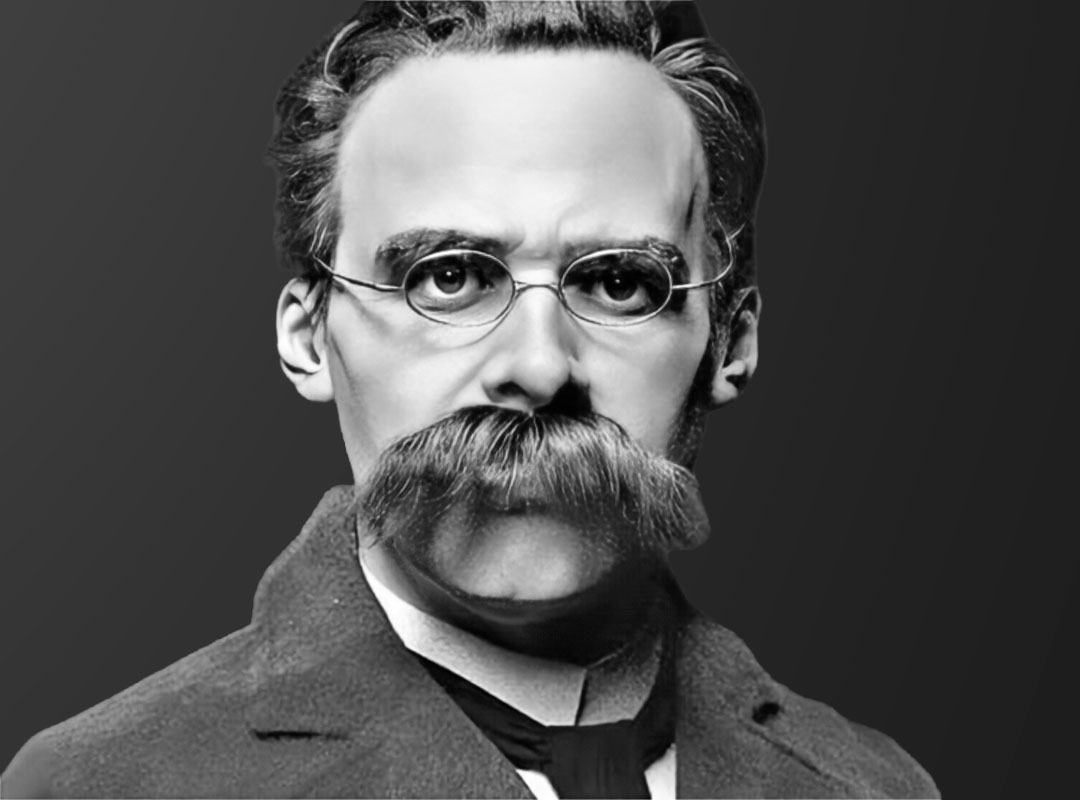
Carolyn and I have appreciated the work of German philosopher, philologist, cultural critic, and classical scholar Friedrich Nietzsche, whose writings profoundly reshaped modern thought about morality, religion, psychology, and the nature of human existence. He is best known for declaring the “death of God,” critiquing traditional Christian Morality, and advancing influential ideas such as the will to power, the Übermensch (overman/superman), and eternal recurrence. Through works like Thus Spoke Zarathustra, Beyond Good and Evil, and On the Genealogy of Morality, Nietzsche helped lay the groundwork for Existentialism, Depth Psychology, and Postmodern Philosophy, and remains one of the most widely read and debated thinkers in Western Intellectual history.
Friedrich Nietzsche was born in 1844, in Röcken, a small village in Prussia, into a devout Lutheran family. His father was a Lutheran pastor who served a rural parish and was known for his piety and gentle demeanor. His mother came from a family of pastors as well, and devoted herself primarily to managing the household and raising her children.
Nietzsche’s early childhood was marked by tragedy: his father died in 1849 after a prolonged illness, followed shortly by the death of his younger brother. After these losses, Nietzsche moved with his mother and sister to Naumburg, where he was raised in a household dominated by women and shaped by both religious piety and an atmosphere of mourning — experiences that later influenced his complex relationship with Christianity and authority.
Nietzsche was a quiet, serious, and unusually introspective child, often described as thoughtful beyond his years. He showed early intellectual gifts, and enjoyed writing poems and short compositions from a young age. Shy and sensitive, he was also deeply affected by the early death of his father, an experience that contributed to his reflective, inward-looking temperament and precocious maturity.
Nietzsche attended local schools where his exceptional abilities in classical languages, literature, and music quickly became evident. In 1858, Nietzsche entered the prestigious boarding school Schulpforta, in a former monastery near Naumburg, Germany, where he received a rigorous classical education that deeply shaped his intellectual development. During these years, he excelled in Greek and Latin, wrote poetry and essays, and began composing music, while also immersing himself in ancient philosophy and literature. By 1863, he had emerged as an exceptionally gifted student with a strong passion for classical antiquity.
In 1864, Nietzsche began his studies at the University of Bonn, initially focusing on theology and classical philology (the study of language), before transferring to Leipzig University, where he fully committed to philology and encountered the philosophy of Arthur Schopenhauer, which deeply influenced him. In 1868, Nietzsche met Richard Wagner, forming an intense intellectual and personal bond that would shape his early worldview. Despite brief military service that ended due to injury, Nietzsche’s scholarly brilliance led to his extraordinary appointment in 1869, at just 24 years old, as Professor of Classical Philology at the University of Basel — marking a major turning point in his career.
In 1872, Nietzsche published his first major work, The Birth of Tragedy, which explored Greek culture through the tension between Apollonian and Dionysian forces. He maintained a close but increasingly strained friendship with Wagner, while also releasing a series of essays later collected as Untimely Meditations. By the mid-1870s, worsening health and growing philosophical independence led Nietzsche to distance himself from Wagner and begin moving toward the more radical, critical style of thought that would define his mature philosophy.
In 1879, Nietzsche resigned from his professorship at the University of Basel due to severe and persistent health problems and began living as an independent writer, moving between Switzerland, Italy, and southern France. During this highly productive period, he published Human, All Too Human, Daybreak, and The Gay Science, marking a decisive break from his earlier Wagnerian and metaphysical influences and the emergence of his mature, aphoristic style.
Nietzsche first articulated the famous declaration “God is dead” in his book The Gay Science in 1882, in the parable of the “madman” who runs into a marketplace announcing that humanity has killed God. Nietzsche did not mean that a literal deity had died, but that modern science, historical criticism, and secularization had eroded widespread belief in the Christian God and the absolute moral framework that depended on it. The statement expresses a cultural and existential crisis: with traditional sources of meaning collapsing, humanity faces the terrifying and exhilarating task of creating new values and purposes for itself.
Nietzsche held a profoundly unconventional spiritual perspective that rejected traditional religious belief while affirming life as a creative, self-transcending process. Rather than worshiping a transcendent God, he envisioned spirituality as an inner path of self-overcoming — the continual transformation of one’s values, instincts, and identity into higher, more life-affirming forms. For Nietzsche, the sacred was not found in obedience or otherworldly salvation, but in the courageous embrace of existence, the creation of meaning through one’s own will, and the cultivation of a joyful, tragic, and fiercely creative relationship with life itself.
Between 1883 and 1884, Nietzsche wrote the first parts of Thus Spoke Zarathustra, introducing the concepts of the Übermensch, eternal recurrence, and the creative self-overcoming individual that would become central to his legacy. The Übermensch (often translated as Overman or Superman) was presented as an ideal of a future human who creates their own values rather than accepting inherited moral systems, embodying self-overcoming, creativity, and life-affirmation. The Übermensch is not a ruler over others, but a master of oneself — someone who transforms suffering, instinct, and chaos into strength and meaning.
Eternal recurrence is the idea that one should live as if every moment of one’s life would be repeated infinitely, exactly as it is. Nietzsche used this concept as a psychological and ethical test: can you affirm your life so completely that you would joyfully embrace its endless repetition? Together, these ideas express Nietzsche’s vision of radical responsibility, self-creation, and a passionate “yes” to existence.
Nietzsche completed Thus Spoke Zarathustra in 1885 and went on to write a series of powerful late works, including Beyond Good and Evil, On the Genealogy of Morality, The Case of Wagner, and Ecce Homo, in which he sharpened his critiques of morality, religion, and modern culture. Although these books sold poorly during his lifetime, they represent the culmination of his mature philosophy. Behind these final works, however, was an intensely inward dimension of Nietzsche’s life — one shaped not only by rigorous thinking, but by extraordinary states of vision and inspiration that felt to him like direct encounters with deeper forces of existence.
Nietzsche did not describe mystical experiences in a traditional religious sense, but he did report rare, intense states of visionary insight and ecstatic clarity that strongly resemble mystical or altered states of consciousness. He spoke of moments of overwhelming inspiration in which ideas arrived with lightning-like force, especially during the composition of Thus Spoke Zarathustra, which he felt was “dictated” to him in a condition of heightened awareness. These experiences reinforced his sense that profound truths arise not from rational argument alone, but from deep, intuitive encounters with the forces of life, creativity, and becoming.
Nietzsche struggled for much of his adult life with severe physical and psychological symptoms, including chronic migraines, digestive problems, insomnia, depression, and periods of emotional instability. Nietzsche experienced one of the most famous and poignant episodes of his life in 1889 in Turin, Italy. According to multiple accounts, he saw a horse being brutally whipped in the street, ran to embrace the animal, and then collapsed in tears. This incident immediately preceded Nietzsche’s complete mental breakdown, after which he was no longer capable of independent thought or writing.
After his mental collapse in Turin, Nietzsche experienced profound cognitive impairment, likely involving psychosis and possibly neurological disease (such as late-stage syphilis or a form of Frontotemporal Dementia, though the exact cause remains debated). Nietzsche spent the following years in a state of severe mental incapacity, unable to write or participate in intellectual life. He lived first under the care of his mother in Naumburg, and after her death in 1897, under the guardianship of his sister in Weimar. During this period, his sister began organizing and promoting his unpublished writings, helping to establish his growing posthumous reputation even as Nietzsche himself remained withdrawn from the world.
However, Nietzsche’s philosophy was misrepresented by his sister. After the Nazi rise to power, she selectively edited and rearranged his unpublished writings, emphasizing nationalist, authoritarian, and antisemitic-sounding fragments while downplaying or ignoring Nietzsche’s explicit opposition to antisemitism, German nationalism, and herd mentality. This manipulation helped falsely portray Nietzsche as a Proto-Nazi thinker, despite the fact that his core philosophy strongly criticized mass ideology, obedience, and racial thinking, making the Nazi appropriation a profound distortion of his actual views.
Nietzsche spent his final year in a state of mental and physical decline under the care of his sister in Weimar. He suffered a series of strokes that further weakened him and left him largely unresponsive. Nietzsche died in 1900, at the age of 55, marking the quiet end of a life whose ideas would soon ignite immense influence across philosophy, literature, psychology, and modern culture.
Nietzsche left a legacy as one of the most radical and transformative thinkers in Western Philosophy, challenging foundational assumptions about truth, morality, religion, and human nature. His ideas deeply influenced existentialism, depth psychology, modernism, postmodernism, and contemporary cultural criticism, shaping figures from Jean-Paul Sartre and Martin Heidegger to Sigmund Freud and Michel Foucault. Nietzsche is remembered as a fearless interrogator of values who urged humanity toward self-overcoming, creative freedom, and the continual reimagining of what it means to be human.
Here are some memorable quotes by Friedrich Nietzsche:
Without music, life would be a mistake.
That which does not kill us makes us stronger.
That which is done out of love is beyond good and evil.
And those who were seen dancing were thought to be insane by those who could not hear the music.
Whoever fights monsters should see to it that in the process he does not become a monster. And if you gaze long enough into an abyss, the abyss will gaze back into you.
He who has a why to live for can bear almost any how.
We should consider every day lost on which we have not danced at least once.
The higher we soar the smaller we appear to those who cannot fly.
In individuals, insanity is rare; but in groups, parties, nations and epochs, it is the rule.
No one can construct for you the bridge upon which precisely you must cross the stream of life, no one but you yourself alone.
You must have chaos within you to give birth to a dancing star.