
G.I. Gurdjieff Profile
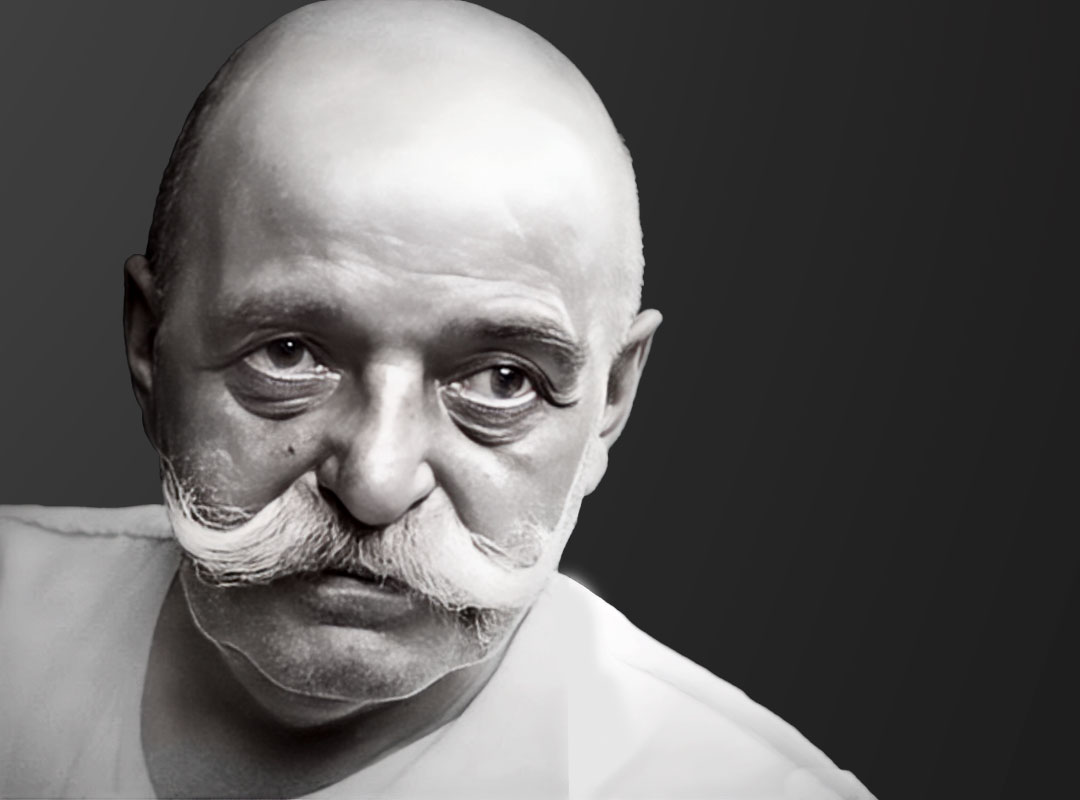
Carolyn and I have appreciated the work of mystic, philosopher, composer, and spiritual teacher G.I. Gurdjieff, who is best known for developing a system of self-development known as The Fourth Way. Few spiritual teachers of the modern era have been as enigmatic, controversial, and influential as Gurdjieff, whose ideas about human consciousness challenged many conventional assumptions about what it means to be truly awake. Unlike traditional spiritual paths that rely primarily on the body, emotions, or intellect, Gurdjieff taught a method that integrates all three aspects of human nature simultaneously within everyday life.
Gurdjieff founded the Institute for the Harmonious Development of Man in the 1920s, where he taught practices aimed at awakening higher consciousness, including disciplined self-observation, group work, and sacred movement practices known as the Gurdjieff Movements. Gurdjieff is also well known for his influential writings — especially Beelzebub's Tales to His Grandson — and for inspiring generations of spiritual seekers and thinkers with his provocative idea that most humans live in a state of “waking sleep” and must consciously work to awaken to their true potential.
To understand how these unusual ideas developed, it helps to look at the remarkable life experiences that shaped Gurdjieff’s thinking.
George Ivanovich Gurdjieff was born around 1866 (the exact year is uncertain) in Alexandropol, Yerevan Governorate, the Caucasus region of the Russian Empire (now Gyumri, Armenia), to a Greek father and an Armenian mother. His father worked primarily as a carpenter and cattle dealer, but he was also known locally as an ashugh (a traditional bard and storyteller) who recited ancient epic poems and stories from memory — something that deeply influenced Gurdjieff’s imagination and later philosophical outlook. His mother was an Armenian woman who managed the household and raised the children in a traditional family setting, contributing to the stable domestic environment in which Gurdjieff grew up.
During his earliest years, Gurdjieff grew up in a culturally diverse environment on the frontier of the Russian Empire, where Armenian, Greek, Russian, Kurdish, and other traditions mixed, exposing him from childhood to a wide range of religions, myths, and customs. These early influences helped shape the deep curiosity about ancient wisdom and hidden knowledge that would define his later life.
As a child, Gurdjieff was known for being intensely curious, independent-minded, and fascinated by mysteries about life, death, and the nature of the universe. He was especially interested in unusual phenomena — such as strange healings, prophetic dreams, and unexplained natural events — which led him to question conventional religious explanations. These early curiosities reportedly sparked his lifelong quest to discover hidden knowledge and ancient wisdom traditions.
The young Gurdjieff received much of his early education in the multicultural Caucasus region, particularly in Kars, where his family later moved. During these years, he came under the influence of several important mentors, especially Dean Borsh, who introduced him to scientific ideas, literature, and religious philosophy. Exposure to both modern science and ancient religious traditions during this period reportedly deepened Gurdjieff’s fascination with unexplained phenomena and the deeper laws of reality.
As Gurdjieff entered adolescence, he became increasingly absorbed in questions about the deeper meaning of life and the nature of consciousness. He continued his studies and reportedly considered careers in medicine or the priesthood. During this period, he also formed a circle of friends and seekers whom he later referred to as The Seekers of Truth, with whom he began investigating ancient traditions, unusual phenomena, and esoteric knowledge.
In his autobiographical book Meetings with Remarkable Men, Gurdjieff described a formative spiritual turning point that occurred around this time. After years of questioning religion, science, and unexplained phenomena, he became convinced that humanity had lost access to ancient knowledge about consciousness and the deeper laws governing life. This realization sparked what he portrayed as a lifelong quest for awakening and understanding.
During the late 1880s, Gurdjieff began the long period of extensive travel and exploration that he later described in his autobiographical writings. With the Seekers of Truth, Gurdjieff journeyed through parts of the Middle East, Central Asia, and North Africa in search of ancient wisdom traditions, hidden monasteries, and esoteric teachings. Although many details remain uncertain and partly legendary, Gurdjieff claimed that these travels exposed him to mystical schools, sacred dances, and spiritual practices that later formed the basis of his teachings on human awakening.
Gurdjieff continued his travels across Central Asia and the Middle East in search of ancient spiritual knowledge in the 1890s. He described encounters with hidden schools and monasteries, including the legendary Sarmoung Brotherhood, where he claimed to have studied sacred dances, psychological disciplines, and teachings about human consciousness. During these years, he also began synthesizing the diverse ideas and practices he encountered, gradually forming the foundations of the teaching that he would later present in the West as a practical system for awakening human awareness.
Gurdjieff gradually began shifting from a period of wandering and study toward presenting his ideas more openly. He started gathering small groups of students and sharing the psychological and spiritual principles he had developed from these experiences. During this time, he reportedly spent periods living and working in parts of the Russian Empire, supporting himself through various business ventures while continuing to refine the teachings that would later become known as the Fourth Way — Gurdjieff’s method of spiritual development that seeks to awaken higher consciousness by integrating the body, emotions, and intellect through conscious effort while living an ordinary life, rather than withdrawing from the world.
Gurdjieff increasingly emerged as a spiritual teacher, beginning to gather small groups of students and present his system of psychological and spiritual development. During this period, he lived in several cities of the Russian Empire — particularly Moscow and St. Petersburg — where he lectured privately and introduced students to practices involving self-observation, disciplined attention, and sacred movements. By the early 1910s, Gurdjieff had begun attracting a circle of serious seekers interested in his unconventional ideas about human consciousness.
Gurdjieff’s spiritual perspective centered on the idea that most human beings live in a state of mechanical “waking sleep,” reacting automatically to habits, emotions, and social conditioning. He taught that genuine spiritual development requires conscious effort and self-observation, through which a person gradually awakens higher levels of awareness and develops a unified, stable sense of self. Gurdjieff proposed that spiritual awakening does not require withdrawal from ordinary life but can occur within everyday activity, by integrating work with the body, emotions, and intellect. His teachings combined insights from ancient mystical traditions with practical psychological methods aimed at helping individuals become more conscious, present, and internally free.
During the late 1910s, Gurdjieff began attracting a dedicated group of students in Moscow and St. Petersburg, including the influential philosopher P. D. Ouspensky, who later helped introduce Gurdjieff’s ideas to a wider audience. During this time, he started teaching more systematically about human “waking sleep,” self-observation, and methods for awakening consciousness. The upheavals of the Russian Revolution forced Gurdjieff and his students to relocate repeatedly across the Caucasus, including periods in Tiflis and Constantinople.
During the 1920s, Gurdjieff brought his teachings to Western Europe and the United States. In 1922, he established the Institute for the Harmonious Development of Man at the Prieuré Estate in Fontainebleau-Avon, France, where students lived and practiced his system of self-development, including disciplined work, psychological exercises, and the sacred movement practices later called the Gurdjieff Movements. In 1924, Gurdjieff was involved in a serious automobile accident while driving near Fontainebleau that nearly killed him. Doctors believed he might not survive, but he recovered after a long and difficult convalescence. Gurdjieff later treated the event as a turning point in his life. After the accident, he reduced many of his public teaching activities and devoted much more of his time to writing.
During the early 1930s, Gurdjieff shifted much of his focus from running a formal spiritual school to writing and guiding smaller circles of students. After closing the Institute for the Harmonious Development of Man, he settled mainly in Paris, where he continued teaching informally. During these years, Gurdjieff devoted much of his energy to completing and editing his major literary work, Beelzebub's Tales to His Grandson, the first volume of his ambitious trilogy All and Everything. He also continued working with groups of dedicated students, refining his psychological and spiritual teachings while preparing them for wider publication.
During the late 1930s, Gurdjieff lived primarily in Paris, where he continued working privately with small groups of dedicated students rather than operating a formal school. He spent much of this time writing and editing the texts that formed his philosophical trilogy All and Everything, which he circulated among students for reading and discussion. Despite the growing tensions in Europe leading up to World War II, Gurdjieff maintained intimate teaching gatherings in his Paris apartment, using shared meals, conversation, and practical psychological exercises to continue transmitting his ideas about awakening consciousness and overcoming humanity’s habitual “waking sleep.”
Gurdjieff taught that most human beings live in a state he called “waking sleep,” meaning that people believe they are conscious and in control of their actions, but in reality they behave largely through automatic habits, emotional reactions, and social conditioning. In this sense, he said humans function like machines or “robots,” mechanically responding to external stimuli rather than acting from true awareness or a unified will. According to Gurdjieff, genuine consciousness is rare and must be deliberately cultivated through disciplined inner work, including self-observation and intentional effort. His teachings aimed to help people awaken from this mechanical state and gradually develop a more stable, conscious sense of self.
During the 1940s, Gurdjieff continued teaching small groups of students in Paris, even during the hardships of World War II and the German occupation. During these years, he also finalized preparations for the publication of Beelzebub's Tales to His Grandson, which was completed shortly before his death. The book is an allegorical philosophical novel in which the cosmic being Beelzebub recounts stories about Earth and humanity to his grandson, using satire and myth to explore why humans live in unconscious “waking sleep” and how they might awaken to higher consciousness. Gurdjieff also continued refining the remaining volumes of his trilogy All and Everything.
Despite declining health, Gurdjieff remained active. In the final year of his life, he continued meeting regularly with close students in Paris, giving instructions and supervising the preparation of his major writings for publication. In 1949, Gurdjieff died in an American Hospital in Neuilly-sur-Seine and was buried at the Sainte-Geneviève-des-Bois Russian Cemetery, close to Paris. Shortly after his death, Gurdjieff’s students ensured the publication and preservation of his work, which helped secure his lasting influence on modern spiritual philosophy and the study of consciousness.
Gurdjieff’s legacy lies in the enduring influence of his system of self-development known as the Fourth Way. His teachings spread widely through students such as P. D. Ouspensky, whose writings introduced Gurdjieff’s ideas to a broad international audience. Gurdjieff’s books — especially Beelzebub's Tales to His Grandson — along with the continued practice of the Gurdjieff Movements and study groups around the world, have ensured that his ideas about awakening from humanity’s “waking sleep” remain influential in modern spiritual philosophy, psychology, and the study of consciousness.
Both Timothy Leary and Robert Anton Wilson were influenced by the ideas of Gurdjieff, particularly his view that most people live in a kind of unconscious “waking sleep” and must awaken to higher levels of awareness. They admired Gurdjieff’s emphasis on self-observation and the deliberate evolution of consciousness, and saw his work as an early precursor to modern explorations of expanded consciousness and human potential.
Gurdjieff expressed many of his most powerful insights in brief, striking statements. Here are some memorable quotes from his teachings:
You are in prison. If you wish to get out of prison, the first thing you must do is realize that you are in prison. If you think you are free, you can't escape.
Practice love on animals first; they react better and more sensitively.
It is very difficult also to sacrifice one's suffering. A man will renounce any pleasures you like, but he will not give up his suffering.
Man has no individual “I”. But there are, instead, hundreds and thousands of separate small "I"s, very often entirely unknown to one another, never coming into contact, or, on the contrary, hostile to each other, mutually exclusive and incompatible. Each minute, each moment, man is saying or thinking, "I". And each time his “I” is different. Just now it was a thought, now it is a desire, now a sensation, now another thought, and so on, endlessly. Man is a plurality. Man's name is legion.
I ask you to believe nothing that you cannot verify for yourself.
There is a cosmic law which says that every satisfaction must be paid for with a dissatisfaction.
The greatest untold story is the evolution of God.
It is the greatest mistake to think that man is always one and the same. A man is never the same for long. He is continually changing. He seldom remains the same even for half an hour.
In order to awaken, first of all one must realize that one is in a state of sleep. And in order to realize that one is indeed in a state of sleep, one must recognize and fully understand the nature of the forces which operate to keep one in the state of sleep, or hypnosis.