
Jacques Cousteau Profile
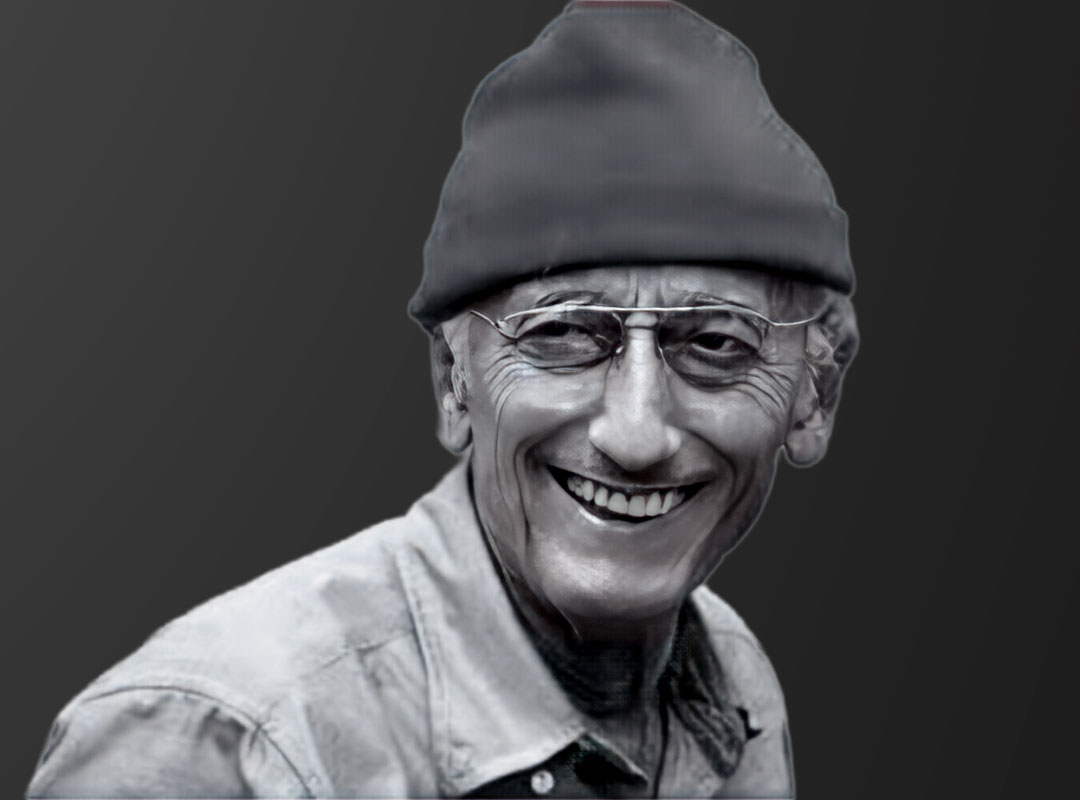
Carolyn and I have appreciated the work of pioneering French oceanographer, explorer, filmmaker, inventor, author, and conservationist Jacques Cousteau, who transformed humanity's understanding of the underwater world. He co-invented the modern Aqua-Lung scuba system, allowing divers to explore the oceans with unprecedented freedom, and brought the mysteries of marine life into millions of homes through his award-winning documentaries and television series, including The Undersea World of Jacques Cousteau. Through decades of exploration aboard his research vessel, Calypso, he helped inspire the modern marine conservation movement, raising global awareness of the importance of protecting the world's oceans and their extraordinary biodiversity.
Jacques Cousteau was born in 1910, in Saint-André-de-Cubzac, near Bordeaux, France. His father was an international lawyer and legal adviser for an American businessman, a position that required frequent travel throughout Europe and North America. Cousteau’s mother managed the household and nurtured her sons, providing a stable and supportive home while encouraging their curiosity and education.
As a child, Cousteau was curious, imaginative, and deeply fascinated by how things worked. Although he was often a frail child and prone to illness, he loved building mechanical devices, experimenting with gadgets, and exploring the natural world. He was also adventurous and independent, traits that, combined with his fascination for science and discovery, foreshadowed his lifelong passion for exploration and innovation.
Cousteau spent much of his childhood traveling with his family due to his father's work. These experiences exposed him to different cultures, languages, and technologies, nurturing a lifelong curiosity about the wider world. During these years, he also developed a growing fascination with mechanics, often taking objects apart to understand how they worked — a passion that would later lead to many of his innovations in underwater exploration.
During the 1920s, Cousteau attended a strict boarding school in Alsace, France, after struggling in conventional school. Although he was not an outstanding student academically, he possessed an insatiable curiosity and a remarkable aptitude for mechanics, often preferring to tinker with machines and cameras rather than focus on classroom studies. As a teenager, he became an avid swimmer and disciplined athlete, qualities that prepared him for the demanding physical challenges of his later career. By the end of the decade, he had decided to pursue a naval career and, in 1930, was admitted to the prestigious French Naval Academy, École Navale, setting him on the path toward a life of exploration and scientific discovery.
During the early 1930s, Cousteau studied at the École Navale, where he trained as a naval officer before serving aboard ships of the French Navy. A serious automobile accident in 1933 left him with multiple broken bones and forced him to undergo a long rehabilitation, nearly ending his naval career. During his long rehabilitation, his doctors recommended swimming to rebuild his strength. What began as physical therapy soon led him to discover the joy of diving beneath the surface of the sea — an experience that redirected the course of his life. Cousteau later reflected that this seemingly disastrous accident became the turning point that ultimately led him to explore, film, and help protect the underwater world.
In 1936, Cousteau experienced scuba diving for the first time using early underwater breathing equipment, an event that ignited his lifelong passion for exploring the oceans and ultimately transformed the course of his career. In 1937, he married Simone Melchior, with whom he would have two sons. During this period, he became increasingly devoted to underwater exploration, experimenting with diving techniques, underwater photography, and filmmaking alongside fellow French naval officers.
In 1943, working with engineer Émile Gagnan, Cousteau co-invented the revolutionary Aqua-Lung, the first practical open-circuit self-contained underwater breathing apparatus — SCUBA, making extended, untethered underwater exploration possible and forever changing the field of diving.
In the following years, Cousteau helped refine and popularize the Aqua-Lung, demonstrating its extraordinary potential for scientific research, underwater archaeology, and exploration. He directed some of the world's first underwater documentary films, including Épaves and Around a Reef, showcasing marine life in ways audiences had never seen before. In 1950, he acquired the former British warship, a minesweeper, that he renamed Calypso, which became his legendary floating laboratory and the base for decades of groundbreaking oceanographic expeditions.
During the 1950s, Cousteau led a series of pioneering expeditions aboard the Calypso, advancing marine science through underwater exploration, photography, and filmmaking. In 1953, he published his bestselling book The Silent World, which introduced millions of readers to the wonders of the oceans. Cousteau’s 1956 documentary film The Silent World won both the Palme d'Or at the Cannes Film Festival and the Academy Award for Best Documentary Feature, making him an international celebrity. In 1957, he was appointed director of the Oceanographic Museum of Monaco, further solidifying his role as one of the world's leading ocean explorers and conservationists.
During the 1960s, Cousteau led more groundbreaking expeditions aboard the Calypso, expanding scientific knowledge of marine ecosystems, perfecting new techniques in underwater filming, and producing acclaimed documentaries that brought the beauty and fragility of the oceans to an international audience. His television specials and films helped make marine science accessible to millions, while his advocacy increasingly focused on protecting the seas from pollution and overexploitation.
In 1962, Cousteau pioneered the ambitious Conshelf Undersea Habitat experiments, demonstrating that humans could live and work beneath the sea for extended periods. The project explored the possibility of establishing underwater habitats where oceanographers could live and conduct research directly on the seabed. Through his documentaries, books, and public lectures, Cousteau became one of the world's most recognizable advocates for ocean exploration, inspiring a new generation of scientists and divers.
During the 1970s, Cousteau also emerged as one of the world's foremost voices for marine conservation, using his growing international influence to campaign against ocean pollution, overfishing, and environmental destruction. In 1973, he co-founded the Cousteau Society to support ocean research, education, and the protection of marine ecosystems. During these years, his acclaimed television series, The Undersea World of Jacques Cousteau, reached audiences around the globe, inspiring millions to appreciate and safeguard the world's oceans.
In 1979, Cousteau endured the devastating loss of his younger son, who was killed in a seaplane accident while working on one of the family's documentary projects. Despite this personal tragedy, Cousteau continued leading expeditions aboard the Calypso and producing acclaimed documentaries that promoted marine science and environmental stewardship. During these years, he became an increasingly influential international advocate for ocean conservation, urging governments and the public to protect the world's seas from pollution, habitat destruction, and overexploitation.
Cousteau expressed a deeply reverential and almost spiritual appreciation for the natural world, especially the oceans. He often spoke of the sea with a sense of wonder, humility, and interconnectedness, believing that humanity is part of nature rather than separate from it and has a moral responsibility to protect it. His worldview blended scientific curiosity with awe, emphasizing that exploring the oceans was not merely an intellectual pursuit but also a profoundly meaningful experience that could inspire respect, stewardship, and a deeper sense of humanity's place within the living Earth.
Cousteau frequently spoke of underwater sea diving as a deeply transformative experience. He described descending beneath the ocean's surface as entering another world — one that evoked profound awe, silence, and humility, fostering a sense of unity with the living planet. Cousteau often suggested that prolonged encounters with the sea could fundamentally change a person's perspective, inspiring a deeper appreciation for life's interconnectedness and a profound ethical commitment to protecting the natural world.
Cousteau viewed the natural world, especially the oceans, not merely as a subject of scientific investigation, but as a living, interconnected system deserving of respect and protection. His decades of exploration deepened his conviction that humanity's well-being is inseparable from the health of Earth's ecosystems, leading him to become one of the world's most influential advocates for marine conservation. Through his films, books, and public outreach, he sought to cultivate a sense of wonder about nature while encouraging people to see themselves as responsible stewards rather than masters of the planet.
During the late 1980s, Cousteau received some of the world's highest honors for his contributions to exploration and conservation, including the Presidential Medal of Freedom in 1985. He intensified his global environmental advocacy, speaking before world leaders and international organizations about the urgent need to protect the oceans and the planet's fragile ecosystems.
During the early 1990s, Cousteau remained an internationally respected champion of ocean conservation despite declining health. He continued to advocate for the protection of marine ecosystems through public appearances, books, and documentaries, urging governments and citizens alike to safeguard the world's oceans for future generations.
During the final year of his life, Cousteau remained a revered global symbol of ocean exploration and environmental stewardship, even as his health continued to decline. He continued speaking out on behalf of marine conservation and the protection of Earth's fragile ecosystems, leaving a powerful message about humanity's responsibility to care for the oceans. Cousteau died in 1997, at the age of 87 in Paris. He was remembered as the man who opened the underwater world to millions through his pioneering inventions, documentaries, and lifelong dedication to exploring and protecting the sea.
Cousteau left a profound legacy as one of the greatest explorers, filmmakers, and conservationists of the twentieth century. By co-inventing the Aqua-Lung, pioneering underwater cinematography, and producing acclaimed books and documentaries, he transformed the oceans from a mysterious frontier into a world that millions could experience and appreciate. His work inspired generations of marine scientists, divers, filmmakers, and environmental advocates, while helping to spark the modern marine conservation movement and permanently changing humanity's relationship with the sea. The enduring impact of Cousteau's life extended well beyond his death into popular culture. In 2004, the film The Life Aquatic with Steve Zissou, starring Bill Murray, paid affectionate tribute to him; Murray's eccentric oceanographer was loosely based on Cousteau.
Carolyn had the pleasure of meeting Jacques Cousteau on several memorable occasions. During a flight to Tahiti, Cousteau was seated near Carolyn and delighted her daughters, Carla and Claudia, by decorating their arms with whimsical drawings. They treasured his impromptu artwork so much that they refused to wash it off for weeks. On another occasion, Cousteau visited Carolyn’s home in Malibu, where he spent time with Carolyn and Patricia Holt discussing their dreams of founding a publishing house devoted to visionary art and literature. Reflecting on their ambitious plans, he remarked, “No one will understand what you are doing.” Time would prove otherwise. Not only were Carolyn and Patricia’s publishing dreams realized, but they flourished far beyond anything they had imagined, helping to bring visionary art and transformative ideas to readers around the world.
Few individuals have expanded humanity's sense of wonder as profoundly as Cousteau, whose lifelong journey beneath the waves revealed that the greatest frontiers are often those closest to home. By revealing the hidden wonders of the oceans, Cousteau reminded humanity that exploration is not merely about discovering new worlds — it is about learning to cherish and protect the one we already inhabit.
Here are some of Jacques Cousteau’s most memorable quotes:
For most of history, man has had to fight nature to survive; in this century he is beginning to realize that, in order to survive, he must protect it.
Water and air, the two essential fluids on which all life depends, have become global garbage cans.
The Sea, once it casts its spell, holds one in its net of wonder forever.
Sometimes we are lucky enough to know that our lives have been changed, to discard the old, embrace the new, and run headlong down an immutable course.
All life is part of a complex relationship in which each is dependent upon the others, taking from, giving to, and living with all the rest.
We are living in an interminable succession of absurdities imposed by the myopic logic of short-term thinking.
“It takes generosity to discover the whole through others. If you realize you are only a violin, you can open yourself up to the world by playing your role in the concert.
There’s about as much educational benefit studying dolphins in captivity as there would be studying mankind by only observing prisoners held in solitary confinement. . . It is certain that the study of human psychology, if it were undertaken exclusively in prisons, would also lead to misrepresentation and absurd generalizations.
We only protect what we love, we only love what we understand, and we only understand what we are taught.
How many of these people rise to their feet or fall to their knees in cathedrals, temples, synagogues, mosques, reciting the word of their God by rote, all the while ignoring the living word of God just outside the window? How many read scriptures that praise their God’s creation but acquiesce when damage is done to it? Daily newspapers report on politicians, presidents, ayatollahs who righteously and regularly proclaim that they lead their nations in accordance with the word of their God; we hear of martyrs who have died because they have refused to repudiate their beliefs, of revolutions, civil wars, holy wars — all waged by people who are willing to fight for the right to believe what they choose. They choose to believe in a God who has issued divine commands; how many honor His divine commands to safeguard the environment? How many instead behave as latter-day Peters, vociferously attesting to their belief in God but denying Him when the opportunity arises to protect the environment as holy writings mandate?