
Mary Oliver Profile
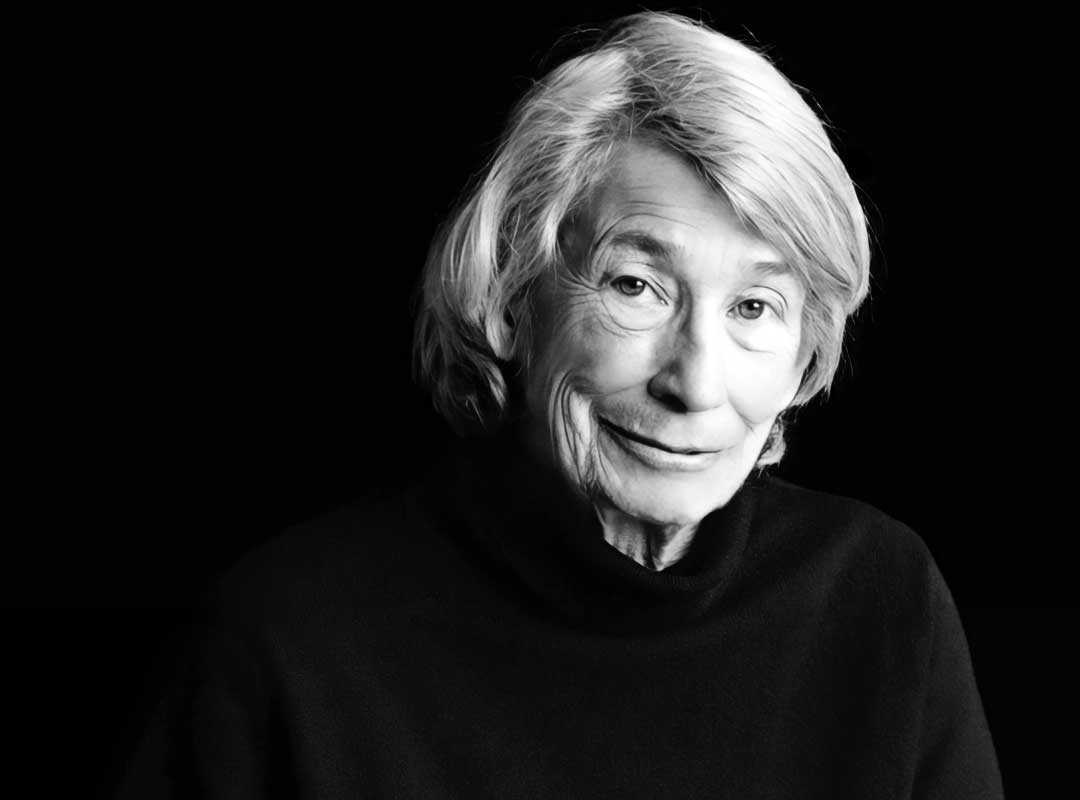
Carolyn and I have long appreciated the work of poet Mary Oliver, who is celebrated for her clear, lyrical meditations on nature, spirituality, and the human experience. She published more than 15 poetry collections, including American Primitive, which won the Pulitzer Prize in 1984, and New and Selected Poems, which earned the National Book Award in 1992. Oliver is best known for her accessible yet profound style, her deep reverence for the natural world, and her ability to connect everyday observation with spiritual insight. Her poem Wild Geese remains one of the most beloved works in contemporary poetry for its message of acceptance and belonging.
Mary Jane Oliver was born in 1935 in Maple Heights, Ohio, a semi-rural suburb of Cleveland. Oliver’s father worked as a teacher and later as an athletics coach, while her mother was a homemaker. Oliver grew up in a household marked by both the beauty of the surrounding woods and the tension of a difficult family life, which she later described as emotionally troubled and sometimes abusive. Although her home life was often strained, Oliver later spoke of finding refuge from that environment in the woods near her house. Her father encouraged her early love of reading and writing to some extent, but her deepest sense of belonging and inspiration came from nature rather than her family.
As a child, Oliver was quiet, introspective, and deeply attuned to the natural world. She often spent long hours alone outdoors, exploring the woods, streams, and fields near her Ohio home, finding in nature a sense of peace and companionship that she lacked at home. Oliver found solace in nature — wandering through the nearby fields and forests, observing animals, and deepening her connection to the living landscape. She began writing poetry at a very young age, inspired by both her solitude and the beauty she observed around her. Curious and independent, Oliver preferred the company of animals and trees to that of people, traits that foreshadowed the contemplative and nature-centered voice of her later poetry.
Oliver’s early adolescent years were marked by a growing dedication to reading and writing — she began composing her own poems and immersing herself in literature. She attended high school in Maple Heights, where she began writing seriously and drawing inspiration from poets like Walt Whitman and Robert Frost. During the early 1950s, when Oliver was still a teenager, she wrote a letter to Norma Millay, the sister of poet Edna St. Vincent Millay, expressing her admiration for Edna’s work. Impressed by Oliver’s sincerity and talent, Norma invited her to visit the Millay estate in Austerlitz, New York. That visit blossomed into a lasting friendship, and Oliver later returned to the Millay estate in 1953 to help organize Millay’s papers after her death. The experience profoundly influenced Oliver’s poetic development and deepened her sense of literary purpose.
Oliver studied briefly at Ohio State University and then at Vassar College, though she left without completing a degree. During this period, she also met photographer Molly Malone Cook, who became her lifelong partner and literary agent. During the 1960s, Oliver lived in New York City with Cook, where they became part of the city’s creative and intellectual circles. In 1963, Oliver published her first poetry collection, No Voyage and Other Poems, marking her official debut as a poet. During these years, she also began developing the meditative, ecological style that would define her later work, while balancing periods of solitude and writing with her growing public recognition.
During the late 1960s, Oliver and Cook settled in Provincetown, Massachusetts, a seaside community that became Oliver’s home and a central inspiration for her poetry. In 1972, Oliver published The River Styx, Ohio, and Other Poems, which established her as a distinctive voice in American poetry. Immersed in the natural beauty of Cape Cod, she developed the contemplative, earth-based vision that would characterize her later, award-winning work. Oliver entered a period of growing literary acclaim and creative maturity. She enjoyed living quietly in Provincetown with Cook, drawing deep inspiration from the Cape Cod landscape. In 1978, she published Twelve Moons, a collection that reflected her evolving themes of nature, mortality, and spiritual renewal. These years also saw her developing the poems that would appear in American Primitive, which was published in 1983.
During the 1980s, Oliver achieved major national recognition and solidified her place as one of America’s leading poets. In 1984, she won the Pulitzer Prize for American Primitive, the collection that brought her widespread acclaim for its lyrical explorations of nature and spirituality. She continued to publish significant works, including Dream Work in 1986, which delved into themes of loss, transformation, and the sacredness of the natural world. During this time, Oliver also began teaching at Bennington College in Vermont, further expanding her influence as both a poet and mentor.
Oliver continued to gain prominence as one of America’s most beloved poets. In 1992, she received the National Book Award for New and Selected Poems, a collection that brought together many of her best-known works and reached a wide readership. She published House of Light in 1990 and White Pine in 1994, both reflecting her deepening spiritual perspective and intimate connection with nature. Living in Provincetown with Cook, Oliver maintained a life of quiet reflection and writing, even as her poetry became increasingly celebrated for its clarity, wisdom, and accessibility.
In 1997, Oliver released West Wind, and in 2000, she published The Leaf and the Cloud, an extended meditative poem considered one of her most ambitious works. Her collection Why I Wake Early was published in 2004, and like West Wind, was a work that reflected her evolving sense of wonder and gratitude for the earth’s quiet holiness. Oliver’s poetry became increasingly reflective, focusing on themes of love, aging, and the sacredness of everyday life.
In 2005, Oliver’s longtime partner and literary agent, Cook, passed away — a loss that deeply affected her life and poetry. During this period, Oliver published several acclaimed works, including Thirst in 2006, which expressed her grief and spiritual longing, and Red Bird in 2008, which reflected renewal and resilience through her continued communion with nature. She released Evidence in 2009, further affirming her role as one of America’s most spiritually insightful poets, blending sorrow and gratitude with luminous clarity.
Oliver’s spiritual perspective was rooted in a deep, personal reverence for nature rather than adherence to organized religion. She viewed the natural world as sacred, seeing divinity expressed in every leaf, bird, and sunrise. Her spirituality emphasized mindfulness, gratitude, and wonder — finding holiness in presence and attention. Through her poetry, she invited readers to experience a form of earthly transcendence, where love for the world and awareness of its impermanence became paths to both awe and peace.
During the 2010s, Oliver continued to write and publish widely praised poetry and prose while maintaining her reputation as one of America’s most cherished poets. She released A Thousand Mornings in 2012, and a year later, she moved to Hobe Sound, Florida. In 2014, she published Blue Horses, which reflected a sense of renewed vitality and wonder. In 2017, Oliver published Devotions, a career-spanning collection that gathered more than fifty years of her work, offering readers a comprehensive view of her poetic evolution. During these years, she also faced health challenges, yet she continued to write with grace, gratitude, and deep spiritual insight.
In the final year of her life, Oliver faced declining health due to lymphoma, a form of cancer she had been battling for several years. Despite her illness, she remained reflective and composed, surrounded by the natural beauty of her home in Florida. Oliver passed away peacefully in 2019, at the age of 83. Even in her final years, she continued to remind us that attention is the beginning of devotion. Her death was widely mourned, and she was celebrated for leaving behind a legacy of poetry that inspired millions with its clarity, compassion, and reverence for the more-than-human world.
Oliver’s legacy rests on her extraordinary ability to unite poetry, spirituality, and the natural world in language that is both simple and profound. Widely regarded as one of the most beloved American poets of the modern era, her work encouraged readers to slow down, observe the world closely, and find the sacred in everyday life. Through collections like American Primitive, Dream Work, and Devotions, she made poetry accessible to millions while exploring themes of mortality, love, gratitude, and the wild intelligence of nature. Her voice, gentle yet deeply wise, continues to inspire readers to live more attentively, compassionately, and joyfully.
Through her words, Mary Oliver taught us that to live fully is to be astonished by the ordinary and to let gratitude become a form of prayer. Here are some of her most memorable quotes:
Someone I loved once gave me a box full of darkness. It took me years to understand that this too, was a gift.
Instructions for living a life.
Pay attention.
Be astonished.
Tell about it.
Keep some room in your heart for the unimaginable.
The most regretful people on earth are those who felt the call to creative work, who felt their own creative power restive and uprising, and gave to it neither power nor time.
You must not ever stop being whimsical. And you must not, ever, give anyone else the responsibility for your life.
“I believe in kindness. Also in mischief. Also in singing, especially when singing is not necessarily prescribed.
To pay attention, this is our endless and proper work.
You can have the other words— chance, luck, coincidence, serendipity. I'll take grace. I don't know what it is exactly, but I'll take it.
When I am alone I can become invisible. I can sit
on the top of a dune as motionless as an uprise of weeds,
until the foxes run by unconcerned. I can hear the almost
unhearable sound of the roses singing.
Poetry is a life-cherishing force. For poems are not words, after all, but fires for the cold, ropes let down to the lost, something as necessary as bread in the pockets of the hungry.