
Riane Eisler Profile
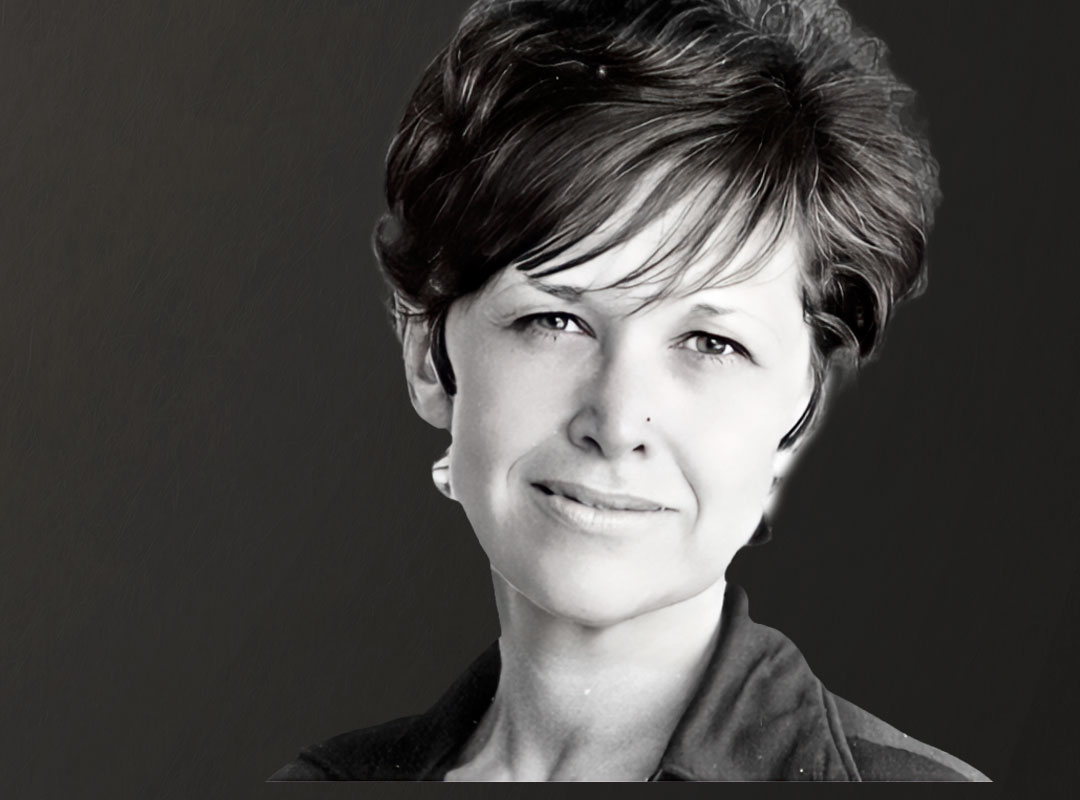
Carolyn and I have appreciated the work of social scientist, cultural historian, attorney, legal scholar, and author Riane Eisler, who has written extensively on how gender politics have influenced society throughout history, including in her groundbreaking book The Chalice and the Blade.
Riane Tennenhaus Eisler was born in 1931 in Vienna, Austria. In 1939 her family fled from the Nazis and sailed to Cuba, on the last ship before the ill-fated German-liner St. Louis was refused sanctuary by Cuba’s government and the United States. Eisler and her family lived in a slum in Havana for seven years before emigrating to the U.S. They first moved to Miami, then to New York and Chicago, before settling in Los Angeles.
Eisler attended the University of California in Los Angeles, where her early experience with the dark side of human culture led her to study sociology and anthropology. Eisler went on to obtain a Juris Doctorate Degree from the UCLA School of Law, and after graduating, she taught at UCLA and the Immaculate Heart College in Los Angeles.
In Los Angeles Eisler pioneered legislation to protect the rights of women and children, and she founded an organization called the Los Angeles Women’s Center Legal Program. In 1977 Eisler published her first book, Dissolution: No-Fault Divorce, Marriage, and the Future of Women, and this was followed in 1979 by The Equal Rights Handbook: What ERA Means to Your Life, Your Rights, and Your Future.
In 1987, Eisler published her third book, The Chalice and the Blade, which caused quite a stir in intellectual and academic circles. Anthropologist Ashley Montagu called this book “the most important book since Darwin’s Origin of Species.” Mathematician Ralph Abraham and ethnobotanist Terence McKenna praised the book and often referenced it in their talks and books. Authors such as Bell Hooks and Tao Lin have also referenced her book, which has sold over 500,000 copies and been translated into 25 languages.
In The Chalice and the Blade, Eisler coins the terms "partnership" and "dominator" to describe the two underlying forms of society. According to Eisler, partnership societies are characterized by “gender equality, peace, sustainability, and caring,” while dominator societies are characterized by “sexism, chronic war, ecological destruction, and unsustainability.”
Eisler supports these views with abundant research by archaeologists, such as Marija Gimbutas and James Mellaart, and she describes how for millennia human societies were built on partnership and shared responsibility, in which the human capacity to give, nurture and sustain life was held in high regard. The fall into domination societies occurred around 6,500 years ago, and, according to Eisler, this switch from partnership to dominator societies has led to gender biased monogamy, as well as women’s dependence on men. This is why Eisler believes that our world is currently in such peril, with continual wars and near ecological collapse.
Also in 1987, with her husband David Elliot Loye, Eisler co-founded The Center for Partnership Studies (which was later renamed The Center for Partnership Systems). The organization is "dedicated to research, education, and building tools to construct economic and social systems that support human beings and the planet that sustains us.”
In 1990, Eisler coauthored The Partnership Way: New Tools for Living and Learning with her husband, which is a handbook for applying the partnership model. In 1995 Eisler wrote Sacred Pleasure: Sex, Myth, and the Politics of the Body, and in 2000 her book Tomorrow’s Children: A Blueprint for Partnership Education in the 21st Century was published. Some of her other books include: The Power of Partnership: Seven Relationships that Will Change Your Life, and The Real Wealth of Nations: Creating a Caring Economy.
Eisler is also a popular speaker, who is eloquent and dynamic with her words, and has lectured at many universities, such as Harvard and UCLA, as well as being the keynote speaker at many conferences. In her talks she interweaves a vast expanse of information, which allows for a fascinating and revelatory discussion on the politics of anthropology, the roots of civilization, the lost aspects of religion, and a cease-fire recipe for humanity’s “war of the sexes.” This has had led to a re-evaluation of the work of many philosophers and psychologists, in light of new discoveries in brain research, human prehistory, and the systems dynamics of cultural evolution.
In 2019 Eisler published her book Nurturing Our Humanity: How Domination and Partnership Shape Our Brains, Lives, and Future, which “offers a new perspective on our personal and social options in today's world, showing how we can build societies that support our great human capacities for consciousness, caring, and creativity.”
Eisler is currently editor-in-chief of the Interdisciplinary Journal of Partnership Studies at the University of Minnesota.
I interviewed Riane Eisler in 1988 at her home in Carmel, California, for my book Mavericks of the Mind, which also includes my interview with Carolyn, published by Hilaritas Press.
Here is an excerpt from our conversation:
David: How do you envision civilization and human consciousness to be one hundred years from now?
Riane: That depends on whether we take the dominator or the partnership route. But I’m convinced that if we take the dominator route, there won’t be much in the way of any kind of human consciousness in a hundred years, because chances are that we won’t be here. If we do take the partnership route, I see a tremendous growth of empathy in both women and men. Even in women, in the dominator model, it’s very selective. We’ve been permitted empathy for those around us, but we’re not permitted any action to follow that empathy.
So, what good does it do? I see a society where doing good will not be an insult, as it is now, as in the pejorative “do gooder” or “bleeding-heart.” I see a world where the most highly valued work will have the consciousness of caring. Marx spoke of the alienation of labor. I speak of the alienation of caring labor, which is the work that’s traditionally been relegated to women, and to volunteers, and has not been paid, or has been paid very poorly. So, I think we’ll become much more conscious of what’s really valuable. I think that our consciousness will not make the artificial distinction between spirituality and nature, with the male being associated with the spirit and woman being associated with nature.
We will also have gotten over our ridiculous love affair with technologies of destruction, which is inherent in the dominator system, because here the technological emphasis has to be on technologies that make it possible to more efficiently dominate— be it the new technologies of mind control, be it weaponry, or be it exploitative technologies. I think we’ll become conscious that women’s issues are not secondary or peripheral, but rather the most critical issues. Take population, for example. That’s a women’s issue, an issue of reproductive freedom, of access to birth control technologies.
Even more important, it’s an issue of life choices for women other than breeders of sons for men. If you look at the most overpopulated, poorest, and most violent regions in the world today, the Middle East, Latin America, or parts of Africa and Asia, you see there the dominator configuration. So with a new partnership consciousness we will be able to see reality far more clearly. I think that we’ll be much saner.