
Stanley Krippner Interview
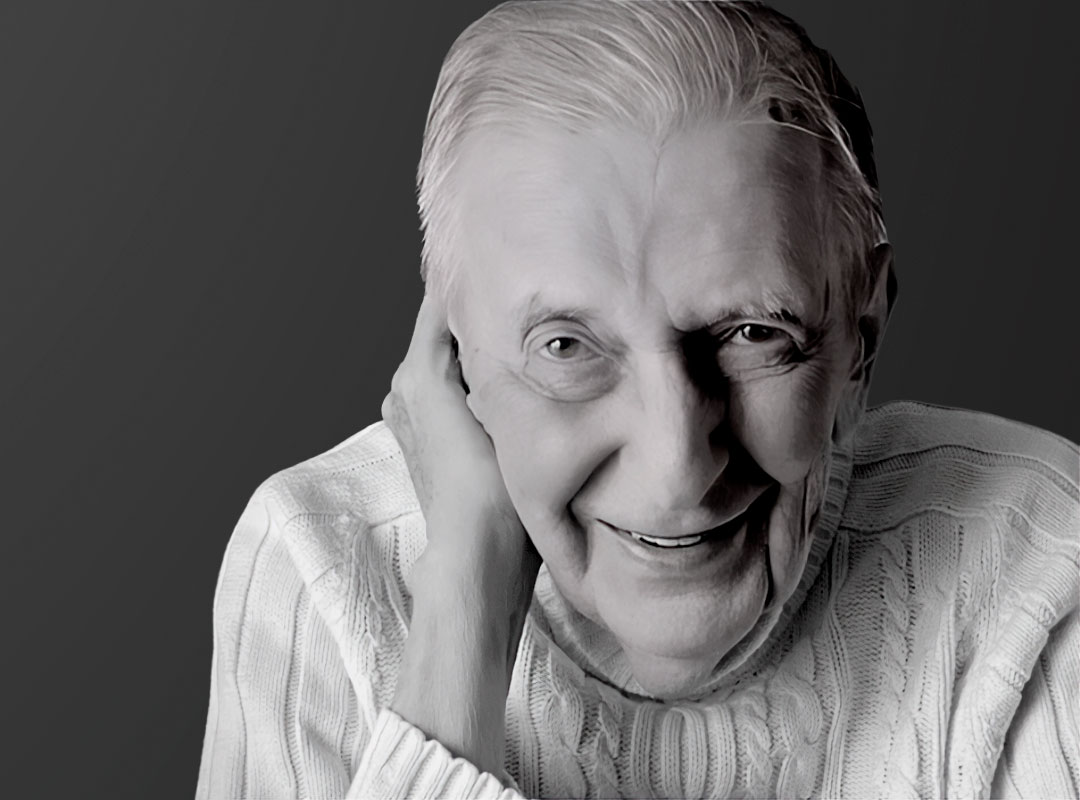
Carolyn and I met Dr. Stanley Krippner through our friend Nina Graboi in the late 1980s, and he has been a wonderful friend and colleague over the years.
Born in 1932, Stanley is a humanistic psychologist, a parapsychologist, researcher, author, and one of the world's leading experts on altered states of consciousness, dreaming, psychic phenomena, post-traumatic stress disorder, anomalous experiences, indigenous healing, and shamanism.
Stanley has explored many research areas where other researchers fear to tread. He’s done studies on group telepathy, psychic phenomena in dreams, hypnosis, alternative forms of healing, and other fascinating topics that are normally outside the bounds of conventional research.
As the director of the Maimonides Medical Center Dream Laboratory in Brooklyn, New York from 1964 to 1972, Stanley conducted studies to determine whether people could receive telepathic communications while they were dreaming. The results were quite compelling, and Stanley coauthored a groundbreaking book on the subject called Dream Telepathy.
Stanley was also the director of the Kent State University Child Study Center in Ohio from 1961 to 1964, and he was a professor of psychology and a founding faculty member at Saybrook University in California, where he held the Alan Watts Chair in Consciousness Studies, for nearly 42 years.
Sadly, Stanley was fired from Saybrook University at the age of 87, two weeks before reaching emeritus status, and legal battles have ensued.
Stanley has received many awards for his valuable work, including the Distinguished Lifetime Contributions to Humanistic Psychology Award in 2013 for his research in dream studies, humanistic psychology, and parapsychology, and the American Psychological Association's Award for Distinguished Contributions to the International Advancement of Psychology in 2000.
Stanley is the author, editor, coeditor, or coauthor of over 40 books, and he authored or co-authored over 1,000 monographs and articles. A collection of essays that explore Stanley’s intellectual contributions and personal influence can be found in the book Stanley Krippner: A Life of Dreams Myths and Visions, edited by Jeannine A. Davies and Daniel B. Pitchford.
Here’s what Stanley had to say about Carolyn’s poetry:
Carolyn Kleefeld’s poems remind us of our common humanity, with all of its triumphs, tragedies, passions, and paradoxes. These evocative verses that stimulate and warm your heart will also nurture your soul.
I interviewed Stanley in 2014 for my book Frontiers of Psychedelic Consciousness. Stanley is a golden-hearted man and a treasure of unusual knowledge. Here are some excerpts from our conversation:
David: What do you think happens to consciousness after death?
Stanley: One can certainly make a case that some aspect of consciousness survives death. Parapsychologists have studied this topic for over a century, and there are hundreds of well-attested instances of survival that can be found in the literature on mediumship, reincarnation, and near-death experiences (NDEs).
For me, the amusing aspects of NDEs is that people who come back from Heaven (or sometimes from Hell) provide reports that are not consistent with descriptions given by mainstream Western religions. There are instances in which a departed loved one will appear in a dream, or even in a psychedelic session, giving specific directions on where a lost object can be found, or what decision should be made on a puzzling life issue.
I was lecturing in Mexico when Rolling Thunder's wife, Spotted Fawn, died. That night I dreamed that she came to me to say good-bye, commenting, "You know, I won't be seeing you anymore. "There are numerous examples of what I call visitation dreams, and I doubt that all of them can be written off as coincidence, prevarication, or wish fulfillment. As to what happens to consciousness, I suppose that sooner or later it returns to what is often called the Godhead. But it can take its time, at least according to those who hypothesize that there is a gauntlet of lives that must be passed through first.
Western logic maintains that when the body dies, the mind also dies, but that is taking a limited view of the body. Many Native American traditions speak of the long body, which is embedded in a community and that can extend itself through space and time. This long body can exist after so-called physical death, and can even show up in the future. Rolling Thunder told me that he remembers his past life very well and can recall portions of two previous lives. For Rolling Thunder and other Native American shamans and sages, there was no mind-body problem, the issue that has perplexed Western philosophers for centuries.
David: What is your perspective on the concept of God?
Stanley: . . . I do not conceptualize God as an entity that created the universe from an external vantage point. Rather, there is a self-organizing force that is responsible for the cosmos as we know it. And if people want to call this principle of self-organization God, I would not object.
David: If you could summarize the basic message of your life in a few words or sentences, what would they be?
Stanley: . . . I have had my share of failures, hardships, and crises. But I try not to take myself too seriously, to live every day to the fullest, and extend love to my fellow human beings and to the projects I find worthy of my time and effort. And we have talked about many of those projects today.