
Yayoi Kusama Profile
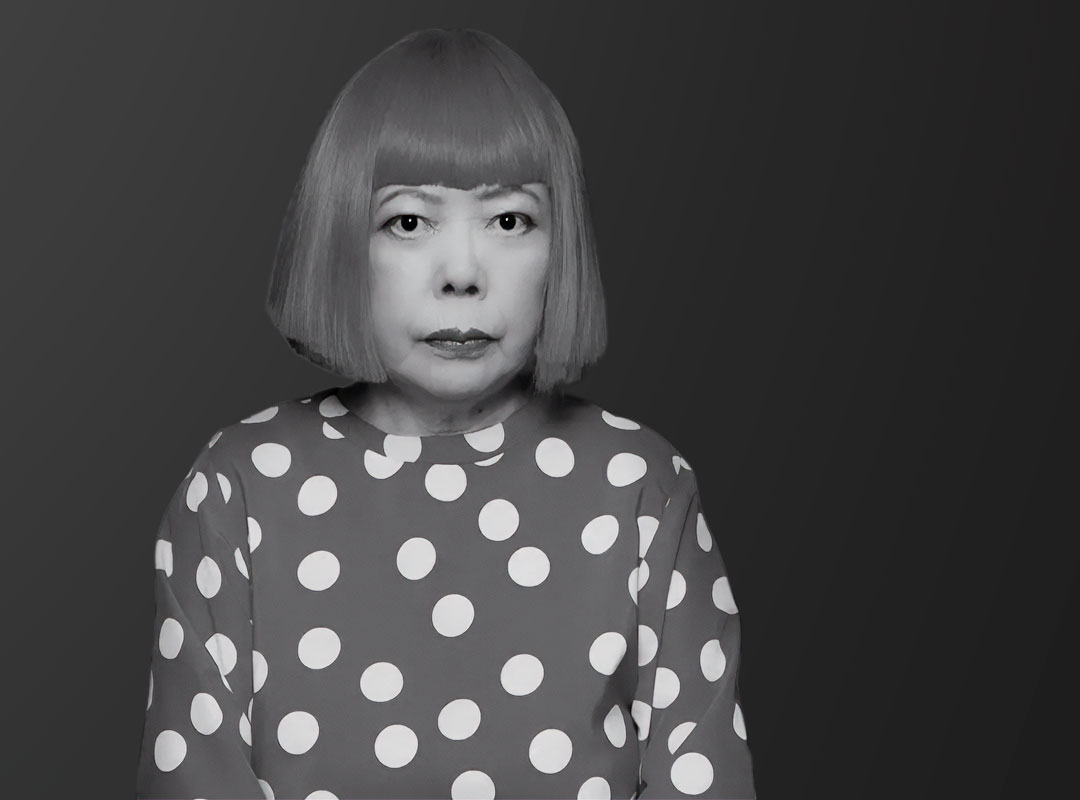
Carolyn and I have appreciated the work of Yayoi Kusama, who is one of Japan’s most celebrated contemporary artists. Kusama is best known for her immersive Infinity Mirror Rooms, repeating polka-dot motifs, and large-scale installations that explore themes of infinity, self-obliteration, and cosmic unity. Over her long career, she has worked across painting, sculpture, performance art, fashion, and literature, becoming a central figure in both the New York avant-garde of the 1960s and the global art world today. Her achievements include representing Japan at the Venice Biennale in 1993, having major retrospectives at leading museums worldwide, and transforming public spaces with monumental pumpkin sculptures. She is most well-known for her visionary, psychedelic aesthetic and for turning her personal experiences with hallucinations and mental illness into universally resonant, groundbreaking art.
Yayoi Kusama was born in 1929 in Matsumoto, Japan, into a conservative, upper-middle-class family. Kusama’s parents owned and operated a prosperous plant and seed nursery in Matsumoto, which made the family relatively wealthy. Her father focused on running the business, while her mother managed the household and expected Yayoi to follow a traditional, domestic path. Kusama’s relationship with her mother was especially difficult — she often opposed Yayoi’s artistic interests and pushed her toward conventional roles — an early tension that profoundly influenced Kusama’s lifelong drive to create and assert her own identity through art.
As a child, Kusama was highly imaginative, introspective, and emotionally sensitive. From a very young age, she experienced intense visual and auditory hallucinations — seeing repeating patterns, flashes of light, and especially fields of dots — which frightened her but also inspired her to draw and paint as a form of self-therapy. She was determined and creatively driven, yet often felt isolated and misunderstood within her strict, traditional family environment. These early struggles gave her both a deep inner world and a powerful need to express it through art, shaping the visionary style she later became famous for.
Kusama spent her formative childhood years in Matsumoto, where her artistic identity began to take shape. Around the age of five, she began drawing and painting as a way of coping with her intense inner world. Kusama attended primary school, and her home life remained strained — her mother discouraged her art and pushed her toward traditional expectations, while Kusama felt increasingly driven to create.
During the 1940s, Kusama lived through the upheaval of World War II and its aftermath in Japan. As a teenager, she was mobilized to work in a military factory sewing parachutes, an experience that exposed her to the trauma and destruction of the war. During these years, Kusama continued to paint and draw obsessively, refining her early motifs of nets and dots while finding solace in art. In 1948, she enrolled at the Kyoto Municipal School of Arts and Crafts to formally study Nihonga (traditional Japanese painting), marking the beginning of her professional artistic path.
During the early 1950s, Kusama deepened her formal art training in Kyoto, though she quickly grew dissatisfied with its rigid conventions. During this time, she began developing her own distinctive visual language, experimenting with abstract forms, repetition, and early versions of the “net” and “dot” motifs that later defined her work. She also held her first small exhibitions in Japan and became increasingly determined to pursue a more avant-garde, international path.
In 1957, Kusama moved to the United States — first to Seattle, where she held her first American solo show, and then to New York in 1958. There, she quickly became part of the downtown avant-garde, producing her groundbreaking Infinity Net paintings — vast, obsessive, hand-painted fields of looping forms that brought her critical attention. During this period, she also began experimenting with soft sculptures and installation work, laying the foundation for the immersive, radical artistic practice that made her a major figure in contemporary art.
In 1965, Kusama created her first Infinity Mirror Room, an immersive installation that became one of her signature achievements. An Infinity Mirror Room uses mirrors, lights, and repeated forms to create the illusion of endless space, inviting viewers to feel as if they are dissolving into an infinite, boundless universe. Throughout the mid-1960s, she staged provocative happenings and performance pieces — often involving body painting, polka dots, and anti-war or free-love themes — which drew major media attention. She also exhibited alongside leading Pop and Minimalist Artists, expanding into sculpture, film, and fashion. By the end of the decade, Kusama was internationally known for her visionary environments, radical performances, and her unique, psychologically charged artistic voice.
In 1966, Kusama staged an unsanctioned performance at the Venice Biennale called Narcissus Garden. She set up 1,500 mirrored stainless-steel balls on the lawn outside the Italian Pavilion and sold them for two dollars each, calling it “your narcissism for sale.” The piece was both a protest against the commercialization of art and a bold statement about self-reflection, ego, and infinity. Although officials shut it down, the performance became legendary and is now seen as a turning point in her rise as an international conceptual and installation artist.
After years of intense artistic and performance activity in New York, Kusama returned to Japan in 1973, feeling isolated and exhausted. There, she was largely overlooked by the Japanese art establishment, but she continued creating — turning more toward writing, poetry, and drawing. In 1975, she voluntarily admitted herself to a psychiatric hospital in Tokyo, where she has lived ever since. Despite these hardships, this period marked a profound inner turning point, as her work became more introspective and rooted in healing and survival.
Kusama’s entire life and artistic practice is rooted in the intersection of visionary states of consciousness and mental illness. She interpreted the vivid, recurring hallucinations that she experienced — of infinite fields of dots, flashing lights, and engulfing patterns — not just as symptoms, but as glimpses into a vast, cosmic consciousness beyond the ordinary self. Rather than trying to suppress these experiences, she channeled them into art as a form of self-healing and spiritual expression, describing her work as a way to “obliterate” the ego and merge with the infinite universe. Her legacy lies in transforming what could have been purely pathological suffering into a universal visual language of transcendence, infinity, and unity, showing how altered states — whether mystical or psychological — can become a profound source of creativity, insight, and meaning.
Kusama’s spiritual perspective centers on the idea that the self is not separate from the universe, but rather dissolves into an infinite, interconnected whole. Her repeated use of dots, nets, and mirrored environments reflects her belief in “self-obliteration” — the transcendence of ego and individuality through immersion in cosmic infinity. Drawing from her lifelong hallucinations, she sees these patterns not as mere symptoms, but as gateways to a deeper, universal reality. In this sense, her art expresses both a personal healing process and a spiritual vision of unity, eternity, and the boundless nature of consciousness.
During the late 1970s and early 1980s, Kusama rebuilt her creative life after entering the psychiatric hospital in Tokyo, where she chose to live permanently. During these years, she returned to making art with renewed focus, producing drawings, paintings, and sculptures that continued her signature themes of repetition, dots, and infinity. She also became very active as a writer, publishing several novels and volumes of poetry that explored her inner world and psychological struggles. Although she was still largely unrecognized internationally at this time, this period was crucial for stabilizing her life and sustaining the artistic momentum that would later lead to her global resurgence.
During the 1980s, Kusama steadily produced paintings, sculptures, and works on paper that expanded her signature visual language of dots, nets, and biomorphic forms. She began to regain wider recognition in Japan, with solo exhibitions that helped reintroduce her to the contemporary art scene. Her work also started attracting renewed international interest. By the end of this period, Kusama was once again being seen as a pioneering and visionary force.
During the 1990s, Kusama experienced a major international resurgence. In 1993, she officially represented Japan at the Venice Biennale, where her mirror installations and pumpkin sculptures brought her worldwide acclaim — an institutional recognition that stood in striking contrast to her unofficial, independently staged Narcissus Garden intervention at the Biennale in 1966. This led to a series of large retrospectives in Europe, the United States, and Japan, reestablishing her as a central figure in contemporary art. During this period, she expanded her Infinity Mirror Rooms, produced monumental outdoor sculptures, and gained a new generation of admirers.
Kusama’s global reputation continued to grow through major museum retrospectives and large-scale public installations. In 1998, the Los Angeles County Museum of Art organized a landmark retrospective that toured internationally, introducing her work to a broad new audience. Throughout these years, she produced expansive new paintings, sculptures, and immersive environments, while her iconic pumpkin and polka-dot motifs appeared in prominent exhibitions around the world.
During the first decade of the 21st century, Kusama’s career reached a new level of international recognition and cultural influence. She continued producing her monumental Infinity Mirror Rooms, large-scale paintings, and outdoor sculptures, and her exhibitions drew record-breaking crowds worldwide. In 2008, one of her paintings sold for over $5 million, setting a new auction record for a living female artist at the time. She also expanded into fashion and design collaborations, bringing her polka-dot aesthetic into popular culture.
During the 2010s, Kusama became a true global phenomenon. In 2012, she launched her celebrated collaboration with Louis Vuitton, bringing her polka-dot and pumpkin imagery into fashion and mainstream culture. During these years, her Infinity Mirror Rooms toured internationally and became some of the most visited and photographed installations in the world. In 2017, the Yayoi Kusama Museum opened in Tokyo, dedicated entirely to her work and legacy. By 2018, she was firmly established as one of the most influential living artists, admired for transforming her inner psychological visions into immersive, transcendent art experiences.
In recent years, Kusama has continued to be one of the most celebrated and active artists in the world. In 2019, she debuted Every Day I Pray for Love in New York, featuring new works and an Infinity Mirrored Room that attracted international attention. In the early 2020s, major retrospectives and exhibitions of her work were shown globally — including KUSAMA: Cosmic Nature and large surveys in Berlin, Tel Aviv, and at the M+ Museum in Hong Kong — highlighting her enduring influence and range. Kusama’s immersive installations, polka-dot motifs, and monumental sculptures continued to draw record-breaking crowds, such as at the National Gallery of Victoria in Melbourne, where her exhibition became the most attended ticketed art show in the institution’s history. She is currently 96 years old and remains active in creating and presenting new art.
Kusama’s legacy is that of a visionary who transformed her personal psychological struggles and lifelong hallucinations into one of the most original and influential bodies of work in modern art. She helped pioneer immersive installation art, performance art, and Pop-Minimalist aesthetics, and her Infinity Mirror Rooms, polka dots, and pumpkin sculptures have reshaped how people experience art — as something you step into, not just look at. Kusama is celebrated for dissolving the boundaries between self and universe, turning obsession, repetition, and mental illness into a profound artistic language of healing, infinity, and cosmic consciousness. Today, she stands as a global cultural icon whose work bridges fine art, fashion, psychology, and spirituality, inspiring generations of artists to see creativity as both self-expression and transcendence.
Here are some memorable quotes by Yayoi Kusama.
All of my works are steps on my journey, a struggle for truth that I have waged with pen, canvas, and materials. Overhead is a distant, radiant star, and the more I stretch to reach it, the further it recedes. But by the power of my spirit and my single-hearted pursuit of the path, I have clawed my way through the labyrinthine confusion of the world of people in an unstinting effort to approach even one step closer to the realm of the soul.
On Time: hold still awhile. I have so much more work to do. There are so many things I want to express. But time just keeps ticking away, and the earth never for an instant ceases to turn.
The machinery of the sky that confounds us on earth with endless transformations of clouds in the light of dawn does not compare to the extraordinary tenacity of human beings, the way of human life, the presentiment of approaching death, the existence of love, the brilliant coruscations of light and the dark scars of our lives, to say nothing of the incomprehensible form of the cosmos and the overwhelming mysteries of space, time, distance.
My revolution of the Self, which has been such an essential part of my life so far, is all about discovering death. My destiny is to make art for my own requiem: art which gives meaning to death, tracing the beauty of colours and space in the silence of death’s footsteps and the ‘nothingness’ it promises.
What I think about first and foremost is that I want to create good art. That is my sole desire. It would be futile and meaningless to focus on the shrinking time-frame before me, or to think of my limitations. I shall never stop striving to create works that will shine on after my death. There are nights when I cannot sleep simply because my heart is bursting with the aspiration to make art that will last forever. I feel how truly wonderful life is, and I tremble with undying fascination for the world of art, the only place that gives me hope and makes life worthwhile. And no matter how I may suffer for my art, I will have no regrets. This is the way I have lived my life, and it is the way I shall go on living.