
Yoko Ono Profile
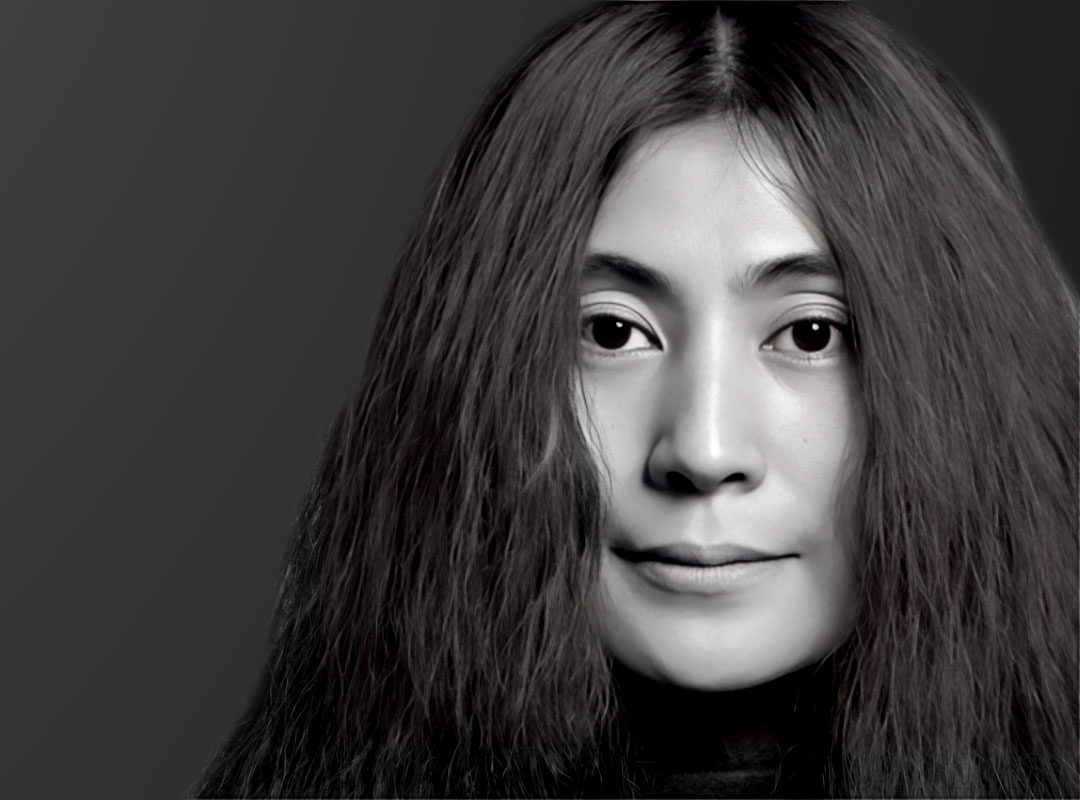
Carolyn and I have appreciated the work of pioneering Japanese avant-garde artist, musician, peace activist, and filmmaker Yoko Ono, whose work helped to shape conceptual art, performance art, and experimental music. She is best known for radical works like Cut Piece, her influential Fluxus contributions, and her lifelong commitment to participatory art that blurs the line between artist and audience. Widely recognized as John Lennon’s partner and creative collaborator, she also co-created iconic peace campaigns such as Bed-Ins for Peace and the song Imagine, leaving a lasting mark on both art history and global activism.
Yoko Ono was born in 1933 in Tokyo into a wealthy, aristocratic family with strong ties to banking, classical music, and intellectual culture. Her father was a successful banker who worked for the Yokohama Specie Bank and held prominent international postings, including in San Francisco and New York, giving the family a cosmopolitan outlook. Her mother came from a wealthy aristocratic family and was classically trained in music, especially piano, nurturing Yoko’s early exposure to the arts. Together, her parents embodied a blend of financial power, global mobility, and refined cultural education that strongly shaped her formative years.
Ono was raised in relative privilege, exposed early to piano lessons, poetry, and refined artistic traditions through her parents — especially her mother, who encouraged cultural and creative pursuits. Ono was an introspective, sensitive, and highly intelligent child who grew up amid both great privilege and emotional distance. She was shy, imaginative, and solitary, often retreating into music, poetry, and inner fantasy rather than social play. Early exposure to discipline, high expectations, and later the trauma of war helped foster her lifelong tendency toward minimalism, resilience, and art rooted in inner experience rather than external display.
Ono experienced a dramatic rupture in her childhood during World War II, as Japan descended into conflict and daily life became defined by fear, scarcity, and displacement. She and her family were forced to flee Tokyo during the Allied bombings, enduring hunger, air raids, and the collapse of the privilege she had known. These wartime years — marked by trauma, impermanence, and survival — profoundly shaped her later artistic focus on vulnerability, resilience, peace, and the psychological consequences of violence.
Ono came of age in postwar Japan during a period of national trauma and reconstruction under Allied occupation. She attended the elite Gakushuin School, where she received a rigorous education in literature, philosophy, and classical music, while grappling with the psychological aftermath of war and a sense of social dislocation. These years were formative in shaping her intellectual seriousness, emotional austerity, and early interest in abstraction, silence, and ideas over material form — core elements that would later define her art.
In 1952, Ono moved with her family to the United States, settling in New York, where she enrolled at Sarah Lawrence College and encountered experimental music, poetry, and philosophy. She began composing and performing avant-garde works, gravitating toward ideas over objects and challenging traditional forms. She married Japanese avant-garde composer Toshi Ichiyanagi in 1956 and, by the late 1950s, was emerging as a distinctive voice within New York’s experimental art and music circles.
During the early 1960s, Ono became a central figure in the New York avant-garde scene, hosting influential loft concerts and aligning with the emerging Fluxus movement — an avant-garde network focused on experimental, performance-based art. Operating from her New York loft, Ono created some of her most important early works at this time. Ono pioneered Instruction Paintings and Happenings that merged everyday life with art, influencing conceptual art through works like Cut Piece, a performance art piece where she sat silently on stage in her best clothing, inviting the audience to cut away pieces of her garment with scissors. In 1964, Ono’s conceptual instruction book Grapefruit was published, which crystallized her participatory approach to art.
In 1966, Ono exhibited at London’s Indica Gallery — where she met musician John Lennon — marking a pivotal turning point in both her artistic and personal life. Lennon climbed a ladder to view a small word through a magnifying glass at the top of one of her works — and found the word YES, which he later said immediately won him over for its optimism and generosity. That quiet, playful moment not only sparked their relationship but perfectly encapsulated Ono’s artistic ethos: subtle, participatory, and grounded in affirmation rather than provocation.
During the late 1960s and early 1970s, Ono entered a highly visible phase of her life and work through her partnership with Lennon, merging avant-garde art with global popular culture. Together they staged iconic peace actions such as the Bed-Ins for Peace, formed the Plastic Ono Band, and released politically charged, experimental music that challenged conventions of rock and celebrity. During these years, Ono became an international symbol of conceptual art, activism, and radical vulnerability — while also enduring intense public backlash that profoundly shaped her later life and art.
In 1969, Ono and Lennon married and staged the famous Bed-Ins for Peace, transforming their honeymoon into a living artwork and media intervention advocating nonviolence. Joined by countercultural figures — including our friends Timothy Leary and Rosemary Woodruff Leary — Ono helped reframe protest as a playful, intimate, consciousness-based act rather than confrontation. For Ono, the Bed-Ins embodied her core philosophy: that small, symbolic gestures — rooted in intention, imagination, and love — can ripple outward to influence collective awareness and global culture.
In 1973, Ono and Lennon had a temporary separation, followed by their reconciliation and the birth of their son, Sean, in 1975. Around this time, Ono largely stepped back from the public eye to focus on motherhood, while Lennon became a devoted stay-at-home father. In 1980, they reemerged creatively with the album Double Fantasy, celebrating domestic life and artistic partnership — just months before Lennon’s assassination, which abruptly ended this chapter and transformed Ono’s life forever. In the wake of this profound loss, Ono turned inward, drawing on the spiritual foundations that had long guided her life and art, which now became essential tools for surviving grief and transforming it into meaning.
Ono’s spiritual perspective blends Zen Buddhism, Shinto sensibility, and Humanistic Pacifism, emphasizing impermanence, mindfulness, and the creative power of intention. Rather than formal doctrine, her spirituality is experiential and participatory — rooted in silence, imagination, vulnerability, and the belief that small inner acts can ripple outward to change the world. For Ono, art itself is a spiritual practice: a means of healing trauma, dissolving ego boundaries, and inviting collective consciousness toward peace.
Ono’s life and work are deeply shaped by mystical and altered states rooted in her Zen practice, imagination, and trauma-transcendence. As a child during World War II, she described learning to mentally “travel” beyond hunger and fear — using imagination and inner focus in ways that later informed her minimalist, consciousness-centered art. Throughout her career, Ono has spoken of art as a portal to expanded awareness, with works like Sky Pieces, Grapefruit, and Cut Piece arising from states of silence, surrender, and ego-dissolution that closely resemble mystical or psychedelic insight.
In 1981, after Lennon’s death, both Lennon and Ono won a Grammy Award for Album of the Year for Double Fantasy, a landmark recognition of her music. During the 1980s, Ono lived in the aftermath of Lennon’s murder, a period defined by grief, resilience, and legacy-building. She became the primary steward of Lennon’s artistic and cultural legacy, overseeing posthumous releases, memorials, and the creation of Strawberry Fields in New York City’s Central Park. At the same time, Ono continued her own work — releasing deeply personal music such as Season of Glass, expanding her conceptual and peace-focused art, and reasserting herself as an independent artist whose voice was shaped by loss, endurance, and unwavering commitment to nonviolence.
During the early 1990s, Ono experienced a major reassessment of her work as museums, critics, and younger artists began to recognize her foundational role in conceptual and performance art. She mounted important international exhibitions, revived and expanded long-term participatory projects focused on peace and healing, and reemerged publicly as a serious art-historical figure rather than merely a celebrity adjunct. During this period, Ono also supported the early musical development of her son Sean, while solidifying her own legacy as a pioneering artist whose ideas had been decades ahead of their time.
In 1995, Ono released Rising, a raw, forward-looking album that connected her experimental roots to contemporary alternative music and introduced her work to a new generation. This period culminated in the landmark retrospective YES Yoko Ono at New York City’s Museum of Modern Art (MoMA) in 2000, which firmly repositioned her as a foundational figure in conceptual and performance art, while she continued global peace activism and public engagement. YES Yoko Ono won the International Association of Art Critics’ Best Museum Show Award in 2001, affirming her impact on art history.
During the first decade in the 21st century, Ono became increasingly visible as a global peace artist and cultural elder, expanding participatory works such as Wish Tree installations around the world. She actively reframed John Lennon’s legacy through the ongoing Imagine Peace campaign, using art as a vehicle for collective hope and nonviolence. This period culminated in the unveiling of the Imagine Peace Tower in Reykjavík, Iceland, in 2007, a monumental light installation dedicated to peace, memory, and global unity.
During this period, Ono enjoyed a renewed wave of recognition and creative energy, receiving major honors — including a Lifetime Achievement Golden Lion at the Venice Biennale in 2009, one of the highest honors in international contemporary art. In 2012, Ono was awarded the Oskar Kokoschka Prize in Austria, the country’s top award for contemporary art. Around this time, Ono revitalized her musical output with the Yoko Ono Plastic Ono Band, releasing acclaimed albums — such as Between My Head and the Sky and Take Me to the Land of Hell — that connected her avant-garde roots to modern experimental rock.
During the late 2010s and early 2020s, Ono was widely honored as a foundational figure in contemporary art and culture, with major retrospectives and exhibitions further solidifying her legacy. Her long-running participatory works continued to appear globally, reinforcing her role as a symbolic voice for peace and collective healing. During these years, Ono gradually stepped back from public life due to age and health, while her influence only deepened as younger generations embraced her ideas, art, and activism as visionary and enduring.
In recent years, Ono has largely remained out of public view, with day-to-day affairs increasingly overseen by her family, while her artistic and cultural presence continues to expand worldwide. Major museums, public institutions, and peace organizations have continued to exhibit and activate her long-running works, affirming her status as a canonical figure in contemporary art. In 2024, Ono was honored with the Edward MacDowell Medal, given for lifetime achievement in the arts. In the 21st century, Ono’s once-marginalized vision has become central to how art, activism, and spirituality intersect.
At 92, Ono is widely regarded as a living legacy: a visionary elder whose ideas about participation, healing, and peace have fully entered global cultural consciousness. Ono’s legacy is that of a radical visionary who helped redefine what art could be — shifting it from objects to ideas, actions, and participation. She is now widely recognized as a foundational figure in conceptual and performance art, whose works emphasized vulnerability, imagination, and the active role of the viewer decades before such approaches became mainstream. Beyond art history, Ono’s enduring legacy lies in her fusion of creativity and ethics: a lifelong commitment to peace, healing, and collective responsibility that transformed personal expression into a global, humanistic practice.
Here are some memorable quotes by Yoko Ono:
You may think I’m small, but I have a universe inside my mind.
Spring passes and one remembers one's innocence.
Summer passes and one remembers one's exuberance.
Autumn passes and one remembers one's reverence.
Winter passes and one remembers one's perseverance.
A dream you dream alone is only a dream. A dream you dream together is reality.
Use your blood to paint. Keep painting until you faint. Keep painting until you die.
It's better to dance than to march through life.
Art is my life and my life is art.
You can be very wild and still be very wise.
I thought art was a verb, rather than a noun.
Mirror becomes a razor when it's broken. A stick becomes a flute when it's loved.
Love is what it takes to fly.