Inner Landscapes: The Themes of Consciousness And Transformation In Carolyn Campagna Kleefeld’s Work

Inner Landscapes: The Themes of Consciousness And Transformation In Carolyn Campagna Kleefeld’s Work

from The Ritz Herald


Orignally posted:
May 28, 2026

Few artists manage to sustain a creative vision across decades of shifting cultural landscapes, but Carolyn Campagna Kleefeld has built an expansive body of work that holds remarkably steady at its philosophical core.

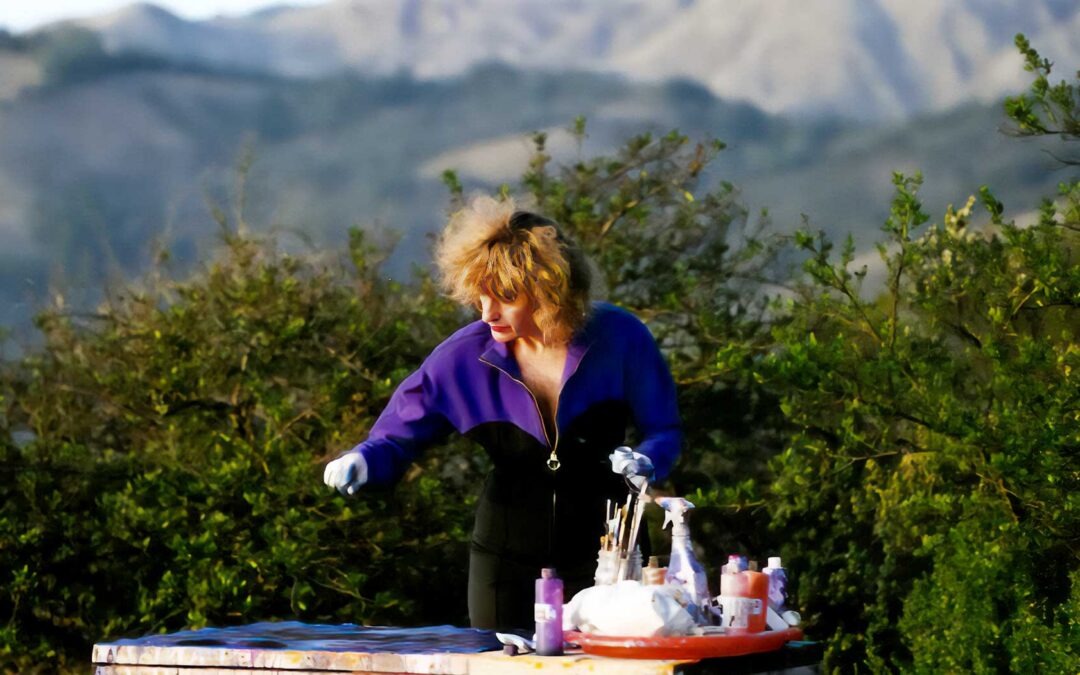
A multidisciplinary artist, poet and author who grew up in Southern California and studied art and psychology at UCLA, Kleefeld has spent more than four decades exploring the inner territories of the human mind, including its spiritual longings, symbolic languages and capacity for radical transformation. Her paintings, drawings and writings don’t simply document a life. They constitute a sustained inquiry into what it means to be a conscious being navigating an often mysterious universe.

Born in Catford, England, Kleefeld relocated to the United States as a child and eventually settled into the rugged solitude of Big Sur, California, where she has lived and worked since 1980. That coastal wilderness with its storms, silences and vast horizons has shaped her sensibility in ways both obvious and subtle. But it’s her inner landscape, as much as the outer one, that fuels a creative output now spanning twenty-five books and an extensive catalog of paintings and drawings held in museum and institutional collections internationally.

An Intuitive Approach to the Canvas and the Page

Kleefeld’s creative philosophy is rooted in intuition and process rather than predetermined outcome. She has described her art as “an innocent interactive mirror of my innermost process, whisking me out of time into the Timeless.” This framing of art as a portal rather than a product runs through everything she makes.

Her paintings range from romantic figurative to fully abstract, often featuring dense, symbolic imagery drawn from nature, mythology and psychological archetypes. Critics and scholars have noted the influence of chance-based and expressionist traditions in her visual practice, as well as what one exhibition catalog described as a “pantheistic reverence for the wilderness she inhabits.”

That reverence extends to the cosmos as well.

A 2024 exhibition at the Carolyn Campagna Kleefeld Contemporary Art Museum at California State University, Long Beach, titled “Cosmic Connections,” drew from her large abstract paintings of the late 1980s and early 1990s, a period when she was actively developing what she calls “the flow.”

Her understanding of herself as a creative being is embedded in a larger natural and spiritual universe. The exhibition reflected her ongoing exploration of “spiritual movements and consciousness-expansive practices,” language that captures the dual register in which she has always worked: the intensely personal alongside the metaphysically universal.

Consciousness as Subject and Method

What distinguishes Kleefeld from many of her contemporaries is her insistence on treating consciousness itself as both the subject and the method of her work. Her first book, Climates of the Mind, was translated into Braille by the Library of Congress and has been used in psychology courses at Cal State Long Beach, a recognition that her explorations of the inner life carry intellectual as well as aesthetic weight. Her writing, in the words of one reviewer, “performs a rare literary alchemy, fusing science and sensuality, genetics and generosity, global biology and personal biography.”

Kleefeld’s literary output spans poetry, philosophical prose and what might be called “visionary nonfiction.” It’s work that draws on psychology, spirituality and the natural world in roughly equal measure.

Her book The Alchemy of Possibility: Reinventing Your Personal Mythology blends painting, poetry and philosophy into a format she has compared to the I Ching, designed to be consulted as much as read linearly. “Creativity is the main life source,” she has said. “We each express it differently. And in expressing who we are, there’s a healing there.” That conviction and that creative expression and psychological health are inseparable and form the philosophical backbone of her entire oeuvre.

Her writings have been translated into more than fifteen languages, and several of her publications appear in bilingual and trilingual editions distributed internationally. Titles like Soul Seeds: Revelations and Drawings, Vagabond Dawns and Immortal Seeds: Bearing Gold from the Abyss are used as inspirational texts in universities and healing centers worldwide, suggesting a readership that seeks not just literary pleasure but genuine guidance through interior terrain...

...

Share Story:
Carolyn Campagna Kleefeld’s Philosophy of Creativity Beyond Convention

Carolyn Campagna Kleefeld’s Philosophy of Creativity Beyond Convention

from New York Weekly

by NY Weekly Contributor

Orignally posted:
May 12, 2026

Carolyn Campagna Kleefeld doesn’t make art the way most artists do, and that’s entirely the point. A multidisciplinary artist, poet, and author, Kleefeld has spent decades pursuing a creative practice rooted in intuition, metaphysical inquiry, and a deep reverence for the untamed forces of nature.

Working across painting, drawing, and mixed media, she’s built a body of work that resists easy categorization, blending abstract and figurative styles into something entirely her own. For Kleefeld, creativity isn’t a technique to be mastered. It’s a state of being to be surrendered to.

An Intuitive Core

At the heart of Kleefeld’s artistic philosophy is the concept of creating from what she calls an “unconditioned well of being.” She doesn’t approach the canvas with a predetermined outcome in mind. Instead, she lets the work emerge organically, guided by instinct and shaped by chance. This methodology places her within a lineage of chance-based creative traditions, those philosophies that trust the spontaneous over the controlled and find meaning in what arises rather than what’s imposed.

Her themes circle around symbolism, nature, and the metaphysical, territories that can’t be fully mapped or explained, only explored. There’s something almost spiritual in her approach, a willingness to inhabit the unknown and let it speak through color, line, and form. For Kleefeld, the studio isn’t a place of production. It’s a place of discovery.

A Life in Words and Images

What makes Kleefeld’s creative vision especially distinctive is that it doesn’t stop at the visual.

She’s equally committed to poetry and literary expression, and her books have been translated into more than 10 languages and distributed internationally. This cross-disciplinary reach from canvas to page reflects a philosophy that refuses to confine creativity to any single medium. For Kleefeld, words and images are simply different dialects of the same essential language.

This dual practice isn’t a novelty or a side pursuit. It’s central to who she is as an artist. Her writing shares the same preoccupations as her visual work: symbolism, inner transformation, and the interplay between the human and the natural world. Together, they form a unified creative worldview that’s rare in its consistency and depth...

Share Story:
Why Carolyn Campagna Kleefeld Supports Arts Education

Why Carolyn Campagna Kleefeld Supports Arts Education

It Doesn’t Take Long To Understand What Drives Carolyn Campagna Kleefeld’s Philanthropy.

by Swagger Staff

For the English-American visual artist, poet and author, art has never been a private pursuit. It’s a force she believes can reshape how people understand themselves and each other, and that conviction has led her to make some of the most significant investments in arts education in the United States in recent years.

Working across abstract and figurative styles in painting, drawing and mixed media, Kleefeld’s creative philosophy is rooted in intuition, symbolism and a deep belief in the power of self-expression. Her books have been translated into more than 10 languages and distributed internationally. A retrospective of her work was featured at the Frederick R. Weisman Museum of Art at Pepperdine University, and her pieces are held in museum and institutional collections across the country.

But her commitment to arts education isn’t incidental to her identity as an artist. It’s inseparable from it. The same intuitive, open-ended creativity that defines her studio practice is what she’s trying to protect and expand for the next generation of students, especially those who might never have access to it otherwise.

A New Kind of Cultural Actor

Arts education has been losing ground in American schools for decades. As institutions have shifted resources toward standardized testing and STEM subjects, arts programs have frequently been among the first casualties of budget cuts. The consequences for students are well-documented.

Research consistently shows that access to arts education produces outcomes that extend far beyond the studio or the stage. According to a study published by Education Next, students at schools with expanded arts programming were 20.7% less likely to have a disciplinary infraction, and school engagement rose by 8% of a standard deviation. Emotional and cognitive empathy also increased significantly, which are outcomes that no standardized test can manufacture.

The academic benefits are just as compelling. Data from the National Endowment for the Arts found that high school participation in arts activities was associated with higher GPAs, higher graduation rates and stronger college outcomes. Students who completed fine arts credits showed higher cumulative GPAs across core subjects including English language arts, math, science and social studies.

The stakes are particularly high for students from low-income households. According to Americans for the Arts, students from low-income backgrounds who had arts-rich instruction in school were five times less likely to drop out. That’s a disparity that underscores just how profoundly unequal access to arts education has become across American communities.

This is the landscape Carolyn Campagna Kleefeld has chosen to invest in.

Share Story:
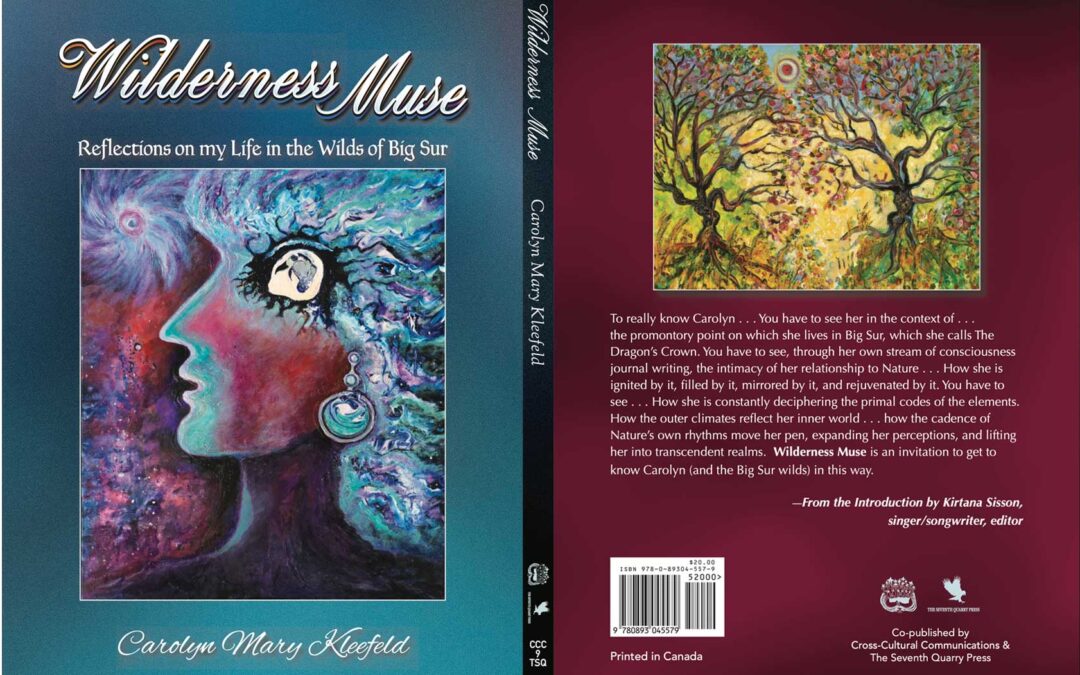
Coming this Month: Wilderness Muse: Reflections on My Life in the Wilds of Big Sur

Coming this Month: Wilderness Muse: Reflections on My Life in the Wilds of Big Sur

Carolyn Mary Kleefeld’s latest release is a luminous collection of journal writings that explore an intimate relationship with the natural world.

We are excited to announce the upcoming release of Wilderness Muse — a gathering of moments from the edge of land and sea where wind, water, mountains, and sky emerge as profound teachers and companions. Through years of contemplative living in Big Sur, nature is revealed not as something separate, but as a living, breathing presence — an elemental mirror that reflects, shapes, and awakens the human spirit.

Drawn from personal journals written by Carolyn over many years, these entries move beyond observation into poetic transmission — offering glimpses into an inner landscape shaped by the rhythms of tides, the language of trees, the silence of stars, and the unseen currents that flow through all things. The result is a work that invites readers into a space of deep reflection, where the boundaries between self and world soften, and a more essential awareness begins to emerge.

Wilderness Muse will be available in May through Amazon and on this website.

Share Story:
Rolling Stone Takes a Look at the Evolving Relationship Between Artists and Cultural Institutions through Carolyn Campagna Kleefeld’s Work

Rolling Stone Takes a Look at the Evolving Relationship Between Artists and Cultural Institutions through Carolyn Campagna Kleefeld’s Work

A Look at The Evolving Relationship Between Artists and Cultural Institutions through Carolyn Campagna Kleefeld’s Work

In Partnership with Talha Munir by ALEX FORD

When you walk through the doors of the Carolyn Campagna Kleefeld Contemporary Art Museum at California State University, Long Beach, you’re stepping into a space that reflects one of the most meaningful shifts in the contemporary art world: the emergence of the artist-patron.

Carolyn Campagna Kleefeld isn’t simply a philanthropist who wrote a check nor just an artist whose work hangs on gallery walls.

She is both, and just as her work often blends literary and visual elements to create a new form of artistic interpretation, Kleefeld has helped redefine what the relationship between artists and cultural institutions can look like.

A New Kind of Cultural Actor

Historically, the relationship between wealthy patrons and art institutions followed a familiar pattern where a collector or benefactor provided financial support, and in return the institution bore their name or displayed work from their collection. The patron and the artist were almost always different people.

Kleefeld represents something newer and more dynamic. As donor, artist and subject, she has redefined those traditional distinctions into a single, stronger and more dynamic relationship with the institutions she supports.

This kind of triple role was on full display when Kleefeld made the largest donation in California State University, Long Beach’s history in 2019 in the form of a $10 million gift as part of a $24 million fundraising campaign toward the expansion of what was then called the University Art Museum. She went beyond simple financial commitments in a much more personal expression of her support by also donating more than 120 of her own artworks, her personal archives, her library and more than 20 books she had authored to the museum’s permanent collection.

When the museum reopened in February 2022 after a full renovation, it housed 178 of her drawings and paintings as part of its holdings, which is a body of work that enriches the institution academically and visually while reflecting her sustained artistic vision.

Kleefeld’s donation also enabled the museum to expand its storage space and, in turn, its own collection. Most importantly, the museum was able to maintain the Hampton Collection, which would have been lost without the added storage.

What you see in that arrangement isn’t just generosity but intentionality. Kleefeld didn’t separate her financial giving from her artistic identity. She brought them together, signaling that an artist’s relationship with an institution can be just as creative and personal as the work itself.

How Artist-Institution Relationships Have Evolved

To appreciate what Kleefeld represents, it helps to understand how museum funding and artist relationships have changed over the past two decades.

Naming rights, which were long reserved for major wings or entire buildings, have become a central tool for institutions seeking to grow their capacity and expand their programming. Museums across the country now rely increasingly on transformational private gifts to fund everything from construction to endowments.

What has emerged alongside that trend is a new category of donor: the artist-philanthropist.

These are people whose giving is inseparable from their creative legacy. Rather than simply funding institutions that display other people’s work, they invest in spaces that can also contextualize and preserve their own. The result is a more layered relationship between benefactor and institution where the donor’s artistic vision is part of the gift itself.

The American Alliance of Museums’ Code of Ethics calls on institutions to “take steps to maintain their integrity so as to warrant public confidence.” For museums, welcoming artist-philanthropists like Kleefeld is one way to meet that standard. Her gifts have expanded infrastructure, deepened collections and broadened access, all without cost to the communities these institutions serve.

An Artist Whose Work Earns Its Place

Central to understanding Kleefeld’s relationship with institutions is understanding the depth of her artistic career. Born in South London and raised in California, she studied art and psychology at UCLA and went on to develop a body of work spanning romantic figurative painting and bold abstract expression. She has also authored 25 books, which have been translated into more than 10 languages and are distributed internationally. Acclaimed titles include The Alchemy of Possibility: Reinventing Your Personal Mythology and Soul Seeds: Revelations and Drawings, making her one of the rare cultural figures who works fluidly across both visual and literary forms.

Her work has been exhibited at institutions well beyond those she has funded. The Frederick R. Weisman Museum of Art at Pepperdine University presented a full retrospective of her paintings and drawings in 2008, accompanied by an exhibition catalog titled Carolyn Mary Kleefeld: Visions from Big Sur with commentary by curator Michael Zakian. The California State University, Long Beach Museum describes her work as “intuitive, symbolic expressionism relative to her lived experience.”

That established artistic identity matters in the context of artist-institution relationships. It means that Kleefeld’s 178 pieces now held in the California State University, Long Beach Museum’s permanent collection of over 2,000 objects sit alongside celebrated modern and contemporary artists as the work of a serious practitioner with decades of exhibition history behind her. Her dual role as donor and artist strengthens rather than complicates the institution’s collection.

Expanding the Model: A New Arts Center in Massachusetts

Kleefeld’s main philanthropic intent is to inspire students through her art. A plaque displayed in the Contemporary Art Museum at California State University, Long Beach bearing her name reflects this sentiment perfectly and reads, “My life’s passion has been to create art from an unconditioned well of being and to inspire such a journey in others. To have my art and writing available permanently in this educational setting is a dream realized. My aspiration is that both students and visitors to the university will embark on their own journeys of inner discovery and creative expression. . . May the Carolyn Campagna Kleefeld Contemporary Art Museum at California State University, Long Beach be a source of inspiration for future generations of students and visitors to recognize the profound impact creativity can have on all our lives.”

Kleefeld has carried this model of engaged artistic philanthropy beyond California. She is currently funding the Campagna Kleefeld Center for Creativity in the Arts at Massachusetts College of Liberal Arts (MCLA), supporting the construction and initial operation of a state-of-the-art arts and teaching center that will serve as the college’s primary gallery and programming hub.

The space is designed to function as a public venue and a hands-on learning environment for students. MCLA President James F. Birge, Ph.D., said of the gift: “Carolyn Kleefeld’s extraordinary generosity will allow MCLA to build and steward a cutting-edge facility that will exponentially enhance the quality of our teaching, expose all our students to new and exciting forms of art, and serve the broader community in immeasurable ways. Carolyn’s forward-thinking gift is a game-changer, not only for our students and faculty but also Berkshire County and its surrounding communities, and will continue to be for generations to come.”

When you look at this second major institutional investment, you see the same philosophy at work: Kleefeld’s approach represents true cultural leadership by example. She isn’t simply donating money. She’s helping to shape the environments in which future artists will learn, create and encounter art. That is the hallmark of an artist who thinks institutionally and someone whose relationship with cultural spaces goes beyond transactional giving into something more like stewardship.

What Kleefeld’s Story Tells Us About the Future

As you consider the future of artist-institution relationships, Kleefeld’s engagement with California State University, Long Beach and MCLA offers an instructive example.

Museums and cultural centers increasingly depend on major gifts to survive and expand. University President Jane Conoley praised, “Carolyn’s impact on California art has been nothing short of remarkable and we are delighted that the University Art Museum will be part of her lasting legacy, as well as provide us with the opportunity to showcase her work and that of other significant artists.”

University spokesperson Gregory Woods noted that “these gifts are essential in expanding educational opportunities available for our students and provide cultural enrichment for our community,” while

When the donor is also a practicing artist, that relationship can produce something richer than funding alone. Her endowment at California State University, Long Beach funds annual scholarships for College of the Arts students, supports an interdisciplinary lecture series, finances a student intern position and provides ongoing museum programming enhancements. The 11,000-square-foot museum complex is always free to the public.

At MCLA, an entirely new building is rising that will serve students and the surrounding community for generations. These are the fruits of a relationship between an artist and the institutions she believes in and one built on creative conviction as much as financial generosity.

What you’re witnessing through Carolyn Campagna Kleefeld’s work isn’t simply the story of one artist and two museums.

It’s a case study in how the relationship between artists and cultural institutions is evolving toward something more personal, more integrated and more enduring. As philanthropic giving continues to shape the cultural landscape, Kleefeld’s model shows that the most meaningful partnerships are those where the artist and the institution grow together.


Share Story:
Campagna Kleefeld Center for Creativity in the Arts to be Established at Massachusetts College of Liberal Arts in North Adams, MA

Campagna Kleefeld Center for Creativity in the Arts to be Established at Massachusetts College of Liberal Arts in North Adams, MA

Campagna Kleefeld Center for Creativity in the Arts

Illustration is an Artist's Conception

As related in the press release from Massachusetts College of Liberal Arts, The Campagna Kleefeld Center for Creativity in the Arts will create a space for the exploration of creativity, enhancing all students’ experiences on campus, linking the arts with academic disciplines, from humanities and social, biological, and physical sciences to business and computer science — and serve as an essential part of the MCLA learning experience. James Birge, president of MCLA says, “Carolyn’s real gift to MCLA is the inspiration to be creative, to have a space where we can be challenged to define what art is and how creativity is a form of expression of who we are, and how we value one another.

As the new primary gallery and arts programming space on campus, The Campagna Kleefeld Center for Creativity in the Arts will support MCLA programs by providing opportunities for students to engage with artists, their work, and the community. It will serve as a dynamic and flexible space for faculty engagement and curricular innovation, fostering meaningful interactions with a rotating array of exhibits and programs. This new venue will also support MCLA’s Benedetti Teaching Artists-in-Residence, student artists-in-residence, and student artists.

A cornerstone of The Campagna Kleefeld Center for Creativity in the Arts will be its integration of Carolyn Kleefeld’s visual art, writing, and poetry, offering ongoing opportunities for students to curate and engage with her work. Carolyn is the author of twenty-five books, many of which are bilingual and trilingual translations, distributed worldwide. Student engagement with Carolyn's work may take many forms, including independent and collaborative projects that examine a current exhibit, internships that focus on situating Carolyn's work both in The Campagna Kleefeld Center for Creativity in the Arts but also in secure areas across campus, and coursework that engages Carolyn's visual art, writing and poetry in a wide range of contexts, especially in terms of demonstrating and celebrating the creative process.

A compelling aspect at MCLA, is its location in an art mecca. MASS MoCA (The Massachusetts Museum of Contemporary Art) is also in North Adams, and the Clark Institute and Williams College, with its large art museums, are nearby and all these art institutions collaborate and share programs.

As also stated by President Birge, “Carolyn’s forward-thinking gift is a game-changer, not only for our students and faculty but also Berkshire County and its surrounding communities and will continue to be for generations to come.

About MCLA

At MCLA, we’re here for all — and focused on each — of our students. Classes are taught by educators who care deeply about teaching, and about seeing their students thrive on every level of their lives. In every way possible, the experience at MCLA is designed to elevate our students as individuals, leaders, and communicators, fully empowered to make their impressions on the world. In addition to our 130-year commitment to public education, we have fortified our dedication to equitable academic excellence. MCLA has appeared on U.S. News & World Report’s list of Top Ten Public Colleges for 10 consecutive years, earning the No. 6 spot on the list of Top Public Liberal Arts Schools in the nation for 2025, after earning the No. 7 spot the prior three years. The College’s focus on affordable education and economic prosperity is reflected in additional 2025 U.S. News Rankings: No. 5 for Top Performer on Social Mobility for liberal arts colleges in the state and No. 2 for Top Performer on Social Mobility for public liberal arts colleges in the country.

Share Story:
Loading...